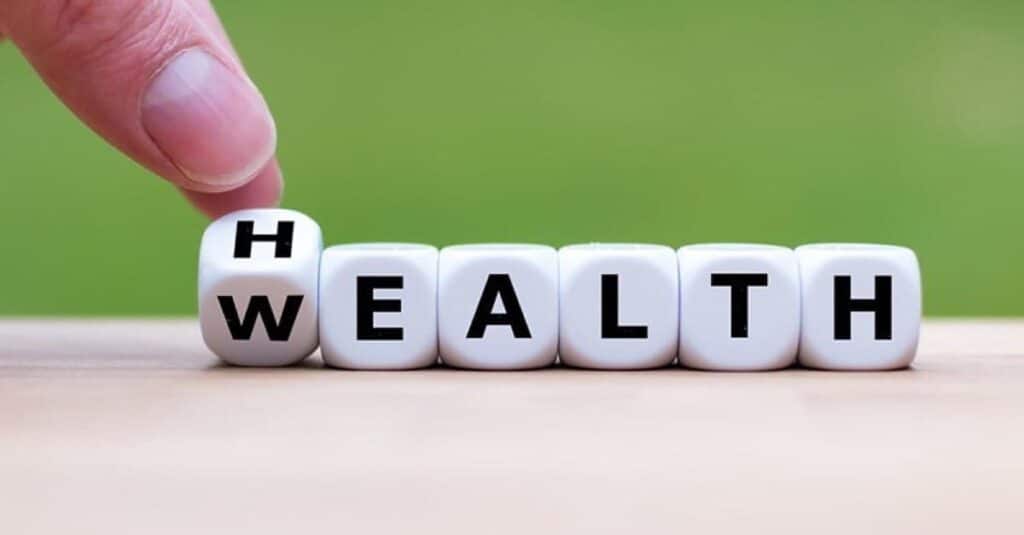
“Health is wealth. The phrase has never been more literal than it is today. Health is no longer just a personal aspiration, but a major economic asset and one of the most powerful growth drivers in the global market. This is confirmed by the latest report on the future of well-being produced by McKinsey, based on a survey of more than 9,000 consumers in China, Germany, the UK and the US.
The data is compelling: the global wellness market is already worth close to 2 trillion dollars a year. Only in the United States does it reach 500 billion dollars, with an annual growth rate of close to 10 %. Even more revealing is the cultural change that accompanies these figures: the 84 % of US consumers now consider wellbeing a top priority in their daily lives., a percentage comparable to the 94 % in China and the 79 % in the United Kingdom.
As McKinsey partner Anna Pione points out, “We knew that consumers were placing increasing importance on wellness, but what continues to surprise us year after year is the extent to which it has become a top priority. Wellness is no longer a trend; it is an emotional, economic and social infrastructure that cuts across generations.
What we mean by “wellness” today”
For decades, health was interpreted as simply the absence of disease. Today, the concept has evolved into a much broader, holistic and proactive view. McKinsey defines wellness through six large dimensions:
- Physical health
- Fitness and movement
- Dream
- Mindfulness and mental balance
- Appearance and personal image
- Nutrition
This new wellness map reflects a profound consumer transformation: consumers are no longer just looking to cure, but to optimise, prevent y feeling better overall. Self-care has gone from being a luxury to a structural necessity of the contemporary lifestyle.
The most market-driving generations
The study also reveals a key generational shift. Generation Z and Millennials are the big drivers of wellness consumption, with above-average spending in almost all categories: fitness, nutrition, sleep, appearance and health. Only in the strictly medical field does Generation Z fall below the average, a fact that experts interpret as a greater focus on prevention rather than illness.
In terms of expenditure, the categories of appearance and health account for between 40 % and 55 % of purchases., followed by fitness, nutrition and sleep, which are between 15 % and 25 %. Mindfulness, although growing, remains the segment with the lowest direct consumer penetration.
This pattern confirms a reality: wellness is no longer limited to the gym or food, but ranges from aesthetics to technology applied to self-care, emotional management and quality of rest.
A cultural change that also transforms companies
The rise of wellness is not only reshaping personal habits, but also corporate strategies. More and more organisations understand that investing in the health of customers and employees is not just a matter of ethics, but also an ethical issue. competitiveness decision. User experience, productivity, loyalty and brand reputation are directly linked to wellbeing.
For McKinsey itself, this phenomenon marks a new era: consumers now expect brands to not only sell products, but also to accompany healthy lifestyles, They offer personalised solutions and demonstrate a real commitment to physical and mental health.
Well-being as the universal language of the future
The growth of the wellness market is not just a post-pandemic fad, but a structural change: we are living longer, under more pressure, with more digital stimuli and more awareness of the fragility of physical and mental balance. In this context, wellness becomes a tool for adaptation, resilience and quality of life.
As reflected in the data, health is no longer just a right or an individual aspiration, but one of the economic and cultural pillars of the 21st century.. Wellness has ceased to be a sector and has become a common language that cuts across consumption, work, technology, leisure and longevity.
And everything points to the fact that this market, far from reaching its peak, will continue to expand at the same pace as our need to live more... and better.