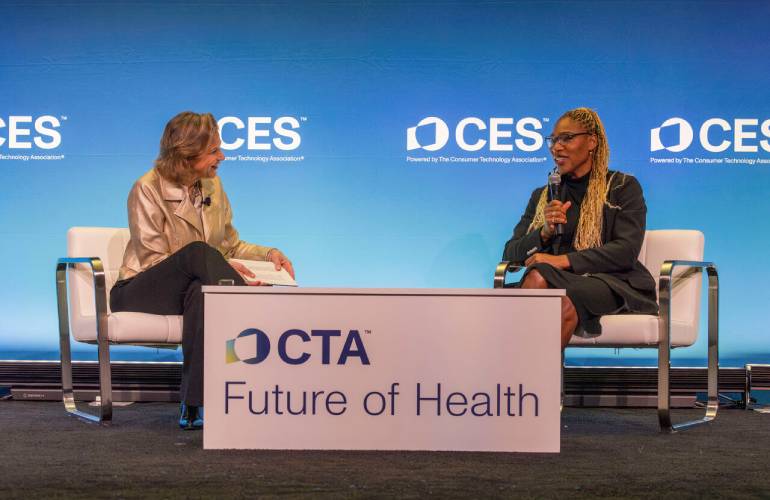
The Las Vegas CES has definitively confirmed that wellness is no longer peripheral territory in the technological universe. The most recent edition of the event shows how innovation in health, wellness and longevity has become a strategic focus for large corporations, startups and the ecosystem health tech global. The result is a new paradigm: predictive, personalised and prevention-focused technology, where artificial intelligence acts as the nervous system of self-care.
From gadget to everyday health ecosystem
One of the major transformations observed at the ESC is the shift from the stand-alone device to the integrated health ecosystem. Smart scales capable of analysing dozens of biomarkers, mirrors that estimate physiological parameters through the face or home sensors that passively collect metabolic data reflect a profound change: the home becomes an active space for preventive health.
These increasingly intuitive and non-invasive solutions bring traditionally clinical capabilities to the user's day-to-day life, enabling a more efficient and effective continuous monitoring of physical fitness before disease onset.
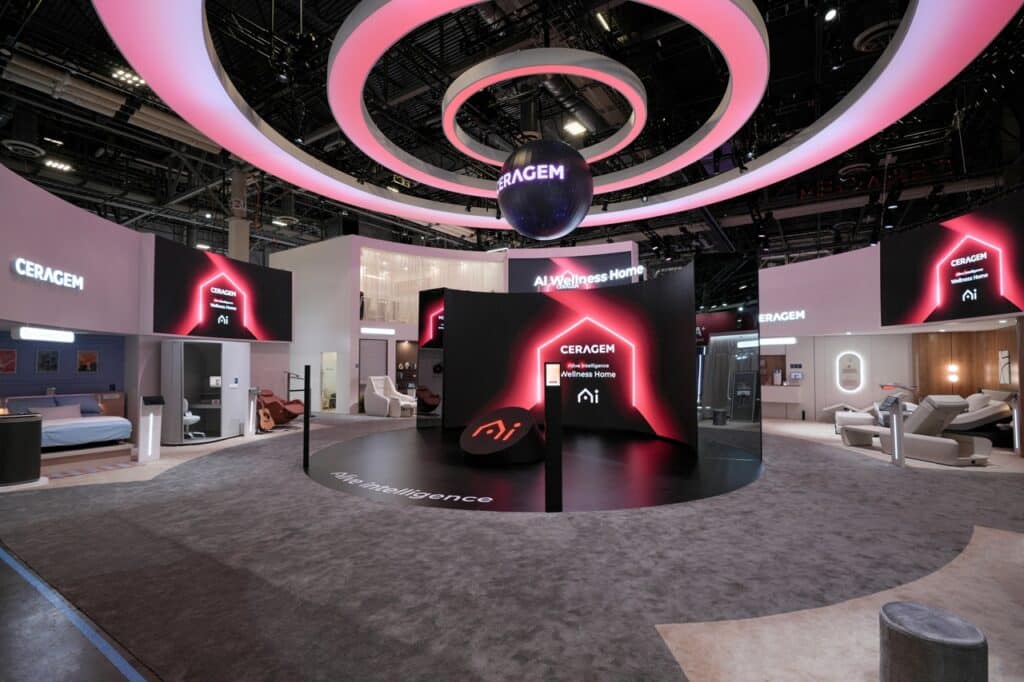
Wearables that interpret, not just measure
The ESC has also made it clear that the wearables have moved beyond the stage of simple data recording. The new generation of devices incorporates artificial intelligence capable of interpreting complex physiological patterns related to sleep, stress, physical recovery, glucose or even cognitive load.
In this context, well-being is no longer based on isolated metrics, but is built on customised and actionable recommendations, adapted to the biological and behavioural profile of each person. The boundary between fitness, The concept of health and productivity is diluted, integrating body and mind in a more holistic view of wellbeing.
Metabolic health and proactive chronic disease management
Another major trend at CES, highlighted by the medical technology press, was the advancement of medical technology solutions. proactive metabolic health management. AI-powered continuous glucose monitoring systems or smart insulin delivery devices show how technology is evolving towards more humane, unobtrusive and life-compatible models.
Although these innovations originate in the medical field, their impact on wellness is clear: anticipating the body's response to food, stress or lifestyle opens the door to a new way of thinking about the body's response to food, stress or lifestyle. personalised prevention, key to longevity and quality of life.

The body as an augmentable system
The relationship between technology and the human body also took centre stage at CES. Exoskeletons, assistive motion solutions and rehabilitation technologies reinforce a view of the body not as something to be corrected, but as something that can be accompanied and optimised.
This approach connects directly to the narrative of active longevity and healthy ageing, one of the great cross-cutting themes of contemporary wellbeing.
Artificial intelligence: the new pillar of wellness
If there is one element that connects all these innovations, it is artificial intelligence. At CES, AI is no longer an add-on function, but rather the core of personalised wellbeing. Its ability to integrate biometrics, habits, context and behaviour allows a shift from a reactive to a predictive approach, where technology acts as a continuous guide to self-care.
This evolution points towards precision medicine - and wellness - where every decision is based on individual data rather than population averages.
From clinical health to everyday wellbeing
Perhaps the most relevant conclusion of the ESC is the progressive blurring of the boundary between medical health and everyday wellbeing. Many of the technologies presented are not medical devices in the strict sense of the term, but they do tools for a deeper understanding of the body, The aim is to improve daily decisions related to nutrition, rest, movement and stress management.
Well-being thus ceases to be an abstract aspiration and becomes a measurable, measurable process that can be monitored and is dynamic.
Technology with human purpose
The big technology brands have reinforced this vision with a more emotional and human discourse: affective intelligence, connected experiences and design focused on quality of life. In this new scenario, innovation is no longer measured only by its technological power, but also by its real ability to improve how we live, move and take care of ourselves.
CES sends a clear message: the future of wellbeing will not just be more digital, but more conscious. Technology is no longer just recording what we do; it is starting to help us understand who we are and how we can live better and longer.