In the realm of scientific wellness and longevity, few supplements generate as much confusion as the NAC (N-acetylcysteine) and the NAD+ (nicotinamide adenine dinucleotide). Both are associated with concepts such as cellular energy, detoxification, healthy ageing and mitochondrial function, but they are not the same, they do not act the same and they are not measured the same.. Understanding their differences is key to effective and safe supplementation.
Why do people confuse NAC and NAD?
The confusion is mainly due to three factors:
- Both are involved in fundamental cellular processes, especially in redox homeostasis and energy metabolism.
- They are related to ageing and oxidative stress., two central themes in today's preventive medicine.
- NAD is not directly supplemented in most cases., but precursors, which generates a narrative similar to that of the NAC as a “functional precursor”.
However, its physiological role is different.
What NAC is and how it works
The N-acetylcysteine is a derivative of the amino acid cysteine, and the main precursor of glutathione, the body's most important endogenous antioxidant.
Main functions of the NAC:
- Increases intracellular glutathione levels
- Reduces oxidative stress
- Supports liver function and detoxification
- Modulates inflammation and immune response
- It has neuroprotective and mucolytic effects.
Its action is indirect but powerfuldoes not act as an isolated antioxidant, but strengthens the endogenous antioxidant system.
What is NAD and why is it key to longevity?
The NAD⁺ is an essential coenzyme present in all living cells. It is directly involved in:
- Energy production (ATP)
- Mitochondrial function
- DNA repair
- Epigenetic regulation (sirtuins)
- Circadian rhythms and cellular ageing
The levels of NAD⁺ decrease progressively with age, chronic stress, inflammation and metabolic diseases.
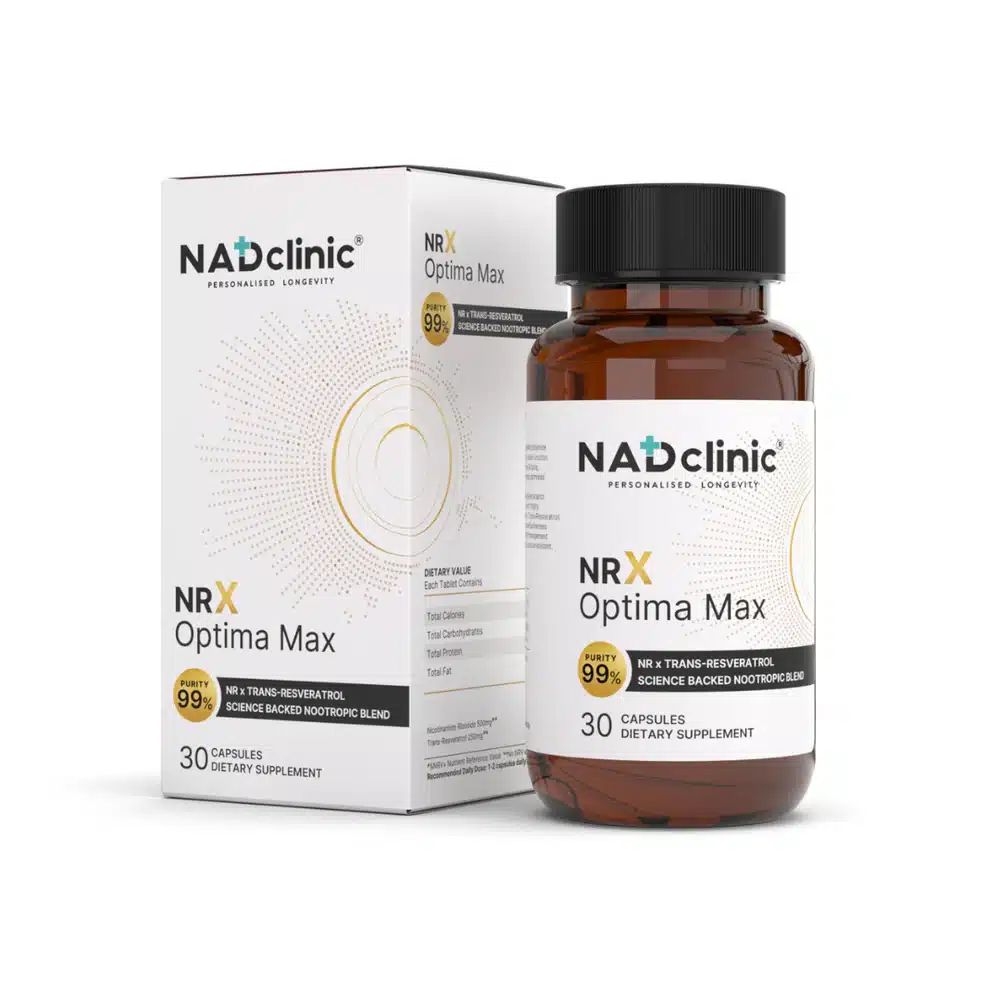
In oral supplementation NAD⁺ is usually administered directly or through its precursors such as:
- NR (nicotinamide riboside)
- NMN (nicotinamide mononucleotide)
Are NAC and NAD compatible?
Yes. They are compatible and, in many contexts, complementary..
- NAC acts mainly on the redox balance and cellular detoxification.
- The NAD⁺ acts on the energy, cell signalling and longevity.
In fact, a cellular environment with low oxidative stress (favoured by NAC) facilitates a more efficient use of NAD⁺.. They do not compete with each other or block each other's effects when used in appropriate doses.
How their values are measured in the body
NAC
- It is not directly measured in routine clinical practice.
- Its effectiveness is assessed indirectly by:
- Reduced glutathione (GSH) levels
- Oxidative stress markers
- Liver function (in clinical settings)
NAD⁺
- It can be measured in blood, plasma or mononuclear cells.
- In research and specialised clinics it is evaluated:
- NAD⁺/NADH Ratio
- Indirect markers of mitochondrial function
In wellness, the decision to supplement is often based more on symptoms, biological age and metabolic context than in routine measurements.
When to prefer NAC
NAC is usually more appropriate when the main objective is to:
- Reduce high oxidative stress
- Support liver detoxification
- Improve immune response
- Treating fatigue associated with inflammation
- Respiratory or neurological support
- Exposure to toxins, pharmaceuticals or pollution
It is common in phases of “metabolic cleansing” or recovery.
When to prefer NAD+ (or its precursors)
NAD⁺ supplementation is more appropriate when searching:
- Improved cellular energy and vitality
- Supporting longevity and healthy ageing
- Optimising cognitive performance
- Improved mitochondrial function
- Long-term anti-ageing and anti-inflammatory strategies
It is more common in optimisation and prevention protocols.
Contraindications and precautions
NAC
- May cause gastrointestinal discomfort (nausea, diarrhoea)
- Caution in people with uncontrolled asthma
- May interfere with certain chemotherapy treatments
- Prolonged use at high doses without supervision is not recommended.
NAD+
- Potential side effects: insomnia, nervousness, headache
- Caution in people with active cancer (due to its role in cell metabolism).
- Not recommended without supervision in pregnancy or breastfeeding
- Excessive doses can upset metabolic balance
Best way to take them
NAC
- Form: capsules or powder
- Usual dose: 600-1,200 mg/day
- Best time: on an empty stomach or away from protein-rich meals
- Useful associations: vitamin C, selenium, glycine
NAD+
- Preferred form: NMN or high purity NR
- Usual dose: 250-500 mg/day
- Best time: in the morning
- Useful associations: resveratrol, quercetin, physical exercise
NAC and NAD are not interchangeable, but complementary. The first protects and balances the cellular environment; the second optimises energy and longevity from the metabolic core. Choosing one or the other - or combining them - depends on the objective, physiological state and time of life.
In advanced supplementation, more is not always betterThe key is strategy, dosage and context.