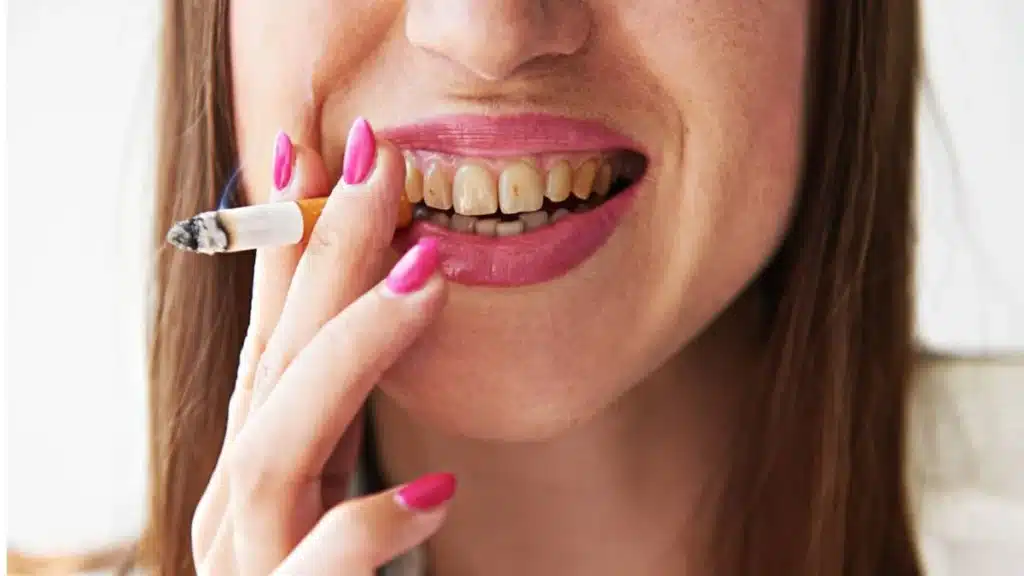
Science has made it clear for decades that smoking is a major cause of preventable disease. However, millions of people still smoke in Spain and Europe, despite the known risks to cardiovascular health, respiratory health and cancer. What many do not know is that the mouth is often one of the first places where tobacco leaves its mark.
Gum disease, tooth loss and oral cancer are closely linked to tobacco use. This is why more and more experts are advocating that the dental practice can become a strategic space for preventing smoking and helping to quit smoking.
With this in mind, the Spanish Society of Periodontology and Osseointegration (SEPA) has strengthened its commitment to prevention through new partnerships with the Nofumadores.org and the European Network for Smoking and Tobacco Prevention, The project, which is already a partnership with the National Committee for Smoking Prevention.
“Smoking directly affects oral health, but it also offers us an opportunity to intervene through prevention,” he explains. Paula Matesanz, The dental practice can help prevent people from starting to smoke and also accompany those who want to quit,“ says SEPA president. ”The dental practice can help prevent people from starting to smoke and also accompany those who want to quit.
Mouth health, the key to ageing well
The relationship between oral health and longevity will be one of the main topics to be discussed at the VIII Dentaid-Sepa Symposium, which will be held on 14 March at the Rafael del Pino Auditorium of Madrid.
The meeting will bring together some thirty national and international experts to analyse an increasingly relevant issue in a society that is living longer: what our mouth needs to reach our 60s with health, function and quality of life.
Maintaining healthy gums, functional teeth and good chewing ability is not just a matter of aesthetics. It has a direct impact on nutrition, personal autonomy and general well-being. In short, a healthy mouth in your 60s can make the difference between ageing with independence or limitations.
The symposium -presented by the journalists Ana Blanco y Oriol Nolis- will address how to maintain oral health throughout life through habits adapted to each stage. In this process, experts underline the central role of gum health, which is considered the basis for the functionality and aesthetics of the mouth.
More years of life, more teeth to look after
The longer life expectancy of the population has also brought about an important change: more and more people are reaching old age. retaining most of their teeth. This progress is a health achievement, but it also poses new challenges.
Periodontal diseases and tooth decay remain the most common problems in the elderly population, along with other conditions such as xerostomia or dry mouth, often associated with taking multiple medications.
For this reason, specialists insist on the need to adapting oral hygiene routines to the real needs of each age group. Key recommendations include:
- A effective mechanical brushing diary
- The systematic use of interdental brushes
- The fluoride therapy as a preventive strategy
- Regular check-ups for early detection of periodontal disease or potentially malignant lesions
In addition, maintaining oral health after the age of 60 also involves taking into account systemic factors such as diabetes, polymedication, cognitive impairment or motor limitations, which may affect the ability to adequately care for the mouth.
Tobacco, one of the great enemies of oral health
Among all risk factors, smoking remains one of the most harmful. Smoking significantly increases the risk of periodontitis, hinders tissue healing and reduces the effectiveness of many dental treatments, including implants.
For Raquel Fernández Megina, According to the president of Nofumadores.org, involving oral health professionals is key to making progress in the fight against tobacco: “Smoking cessation intervention in the dental practice multiplies the real chances of quitting smoking”.
In the same vein, Noa Rey Torres, CNPT president, believes that Spain is at a decisive moment to reinforce tobacco control policies and also to respond to the rise of new nicotine products.

New risks for young people
The experts also warn of the growing popularity of vapes and nicotine pouches, which many adolescents mistakenly perceive as less harmful alternatives to traditional tobacco.
According to the periodontist Regina Izquierdo, The dentist's office can play a key role in prevention, says the coordinator of SEPA's Working Group on Oral Health and Tobacco. “Dentists see a large part of the population on a regular basis, which allows us to inform, advise and accompany patients in the process of quitting smoking.
Towards a tobacco-free generation
As part of this joint strategy, several organisations will be promoting an international session on 4 June, entitled “Working together to stop tobacco and nicotine”.”, with the participation of experts from more than 25 countries.
The ultimate goal is ambitious: moving towards a tobacco- and nicotine-free society. A challenge that involves not only public health policies, but also the involvement of all health professionals.
Because, as experts remind us, ageing well starts well before the age of 60, And taking care of your mouth - just like giving up tobacco - is one of the most important decisions you can make to achieve this.