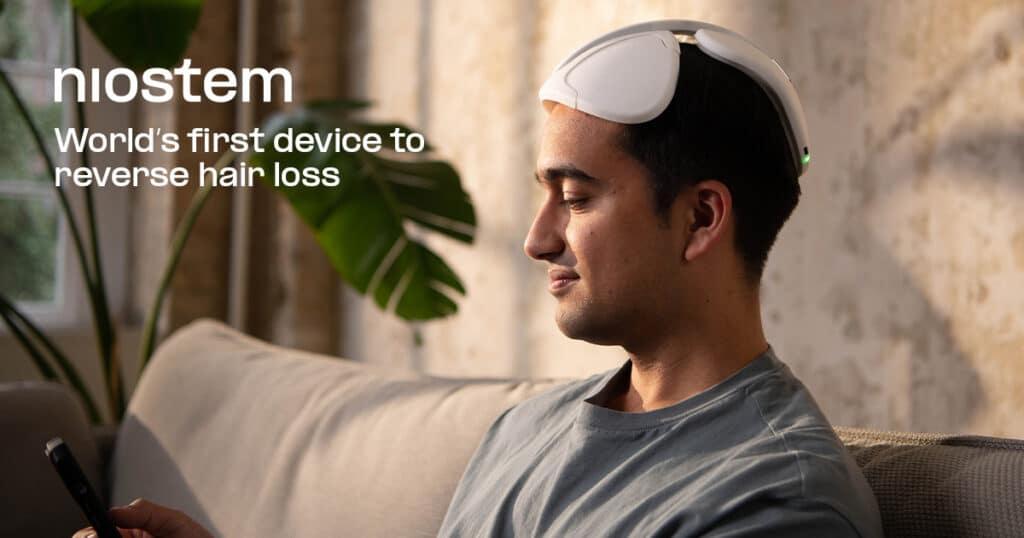
In contemporary culture - especially among young men - hair is no longer just an aesthetic issue. Hair quality, density and vitality are increasingly perceived as indicators of health, youth and even vital energy. A strong, well-groomed mane projects confidence, well-being and, in many social and professional contexts, influences the first impression we make.
On the contrary, the so-called “poor hair”.” hair - thinning, thinning or showing early signs of thinning - can have an impact that goes beyond the mirror. Numerous wellness specialists agree that progressive hair loss at an early age can affect self-esteem, personal confidence and the way a man relates to his environment - from emotional relationships to professional image.
Today, however, the technological innovation is starting to offer solutions that are different from the traditional ones.
The most common form of hair loss in the world is androgenetic alopecia, also known as male pattern baldness (although it also affects women). In this process, the hair follicles gradually miniaturise until they no longer produce visible hair.
For a long time it was thought that the follicle simply disappeared. But scientific research has shown something key: in many cases, the stem cells within the follicle are still alive, albeit dormant.
In other words, the follicle is not necessarily destroyed; it is in a dormant state.
This change in perspective has opened up a new approach to hair loss treatment: instead of creating new follicles, the aim can be to reactivate those that still exist.
A technology born of regenerative biology
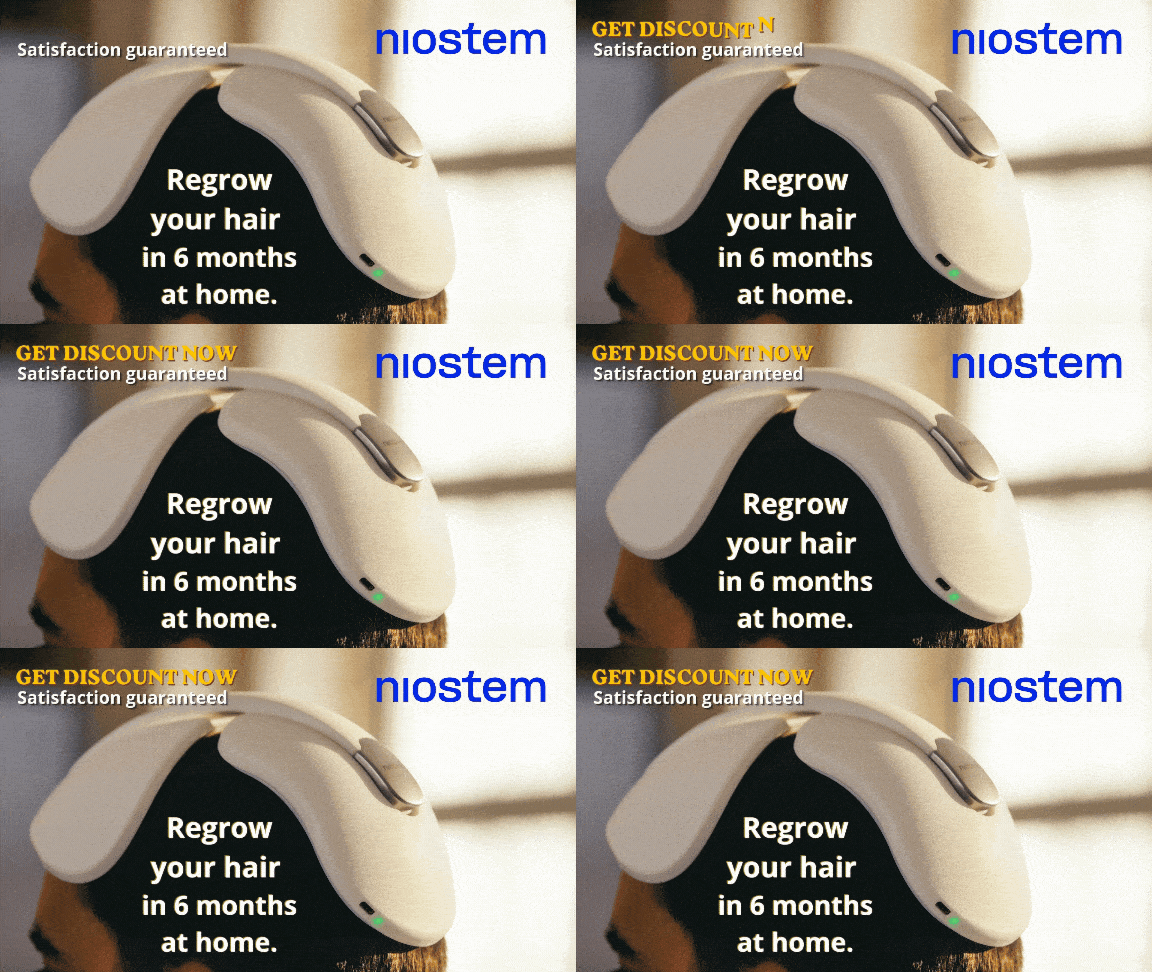
In this context, the development of the German company niostem, specialising in wearable technology applied to hair regeneration.
The innovation originates from research led by scientist Dr. Chacón-Martínez at the Max Planck Institute for Biology of Ageing, where he studies how to reactivate age-related regenerative mechanisms in the skin.
On the basis of these studies, the company developed a portable device which stimulates the scalp with precisely controlled low-intensity electrical signals. This technology is called Low-Level Electrical Stimulation (LLES) and is part of its proprietary approach called Stem Cell Reactivation Technology.
The aim: to reactivate dormant hair follicle stem cells.
Mechanism of action: LLES technology reactivates the follicle
The system acts on the cellular environment of the follicle by means of mild electrical impulses that influence local biological activity. Depending on the technology developed, these stimuli are designed to:
- Reactivating dormant hair follicle stem cells
- Improve the biological environment of the follicle
- Encourage the hair to return to the active growth phase (anagen phase).
This technology, protected under patent EP4200009B1, is unique in its ability to signal directly to follicular stem cells.
The device is worn on the head and connects to a mobile app (Android or iOS) that guides the treatment sessions.
The protocol is simple and designed to be integrated into everyday life:
- 30 minutes a day
- 6-7 days per week
- Domestic use
- Can be used while reading, working or resting.
One of the most relevant aspects of this technology is that it is not drug-based.
Many classic hair loss treatments involve drugs or periodic procedures that can be costly, invasive or difficult to maintain in the long term. In contrast, this approach uses bioelectrical stimulation.
This implies:
- No systemic drug exposure
- Non-invasive treatment
- No known systemic side effects associated with medicines
- Possibility of prolonged use as part of hair care routine
For many young men who want to improve the quality of their hair but are not contemplating a hair transplant or ongoing medical treatment, this technological alternative is particularly attractive.
Clinical studies and outcomes: from pilot study to gold standard
The efficacy of niostem and its LLES technology has been validated. in clinical trials analysing its impact on hair density and thickness after 6 months of constant use.
1. Pilot Study Published: In a peer-reviewed scientific publication in 2025 in the journal Journal of Cosmetic Dermatology titled “Novel Electrotrichogenic Device Promotes Hair Growth in Men With Androgenetic Alopecia: A Pilot Study”.”, In the study, 21 men with androgenetic alopecia who used the device daily for six months were analysed.
The results they showed:
- Average increase in 19,3 % in capillary density
- Average increase in 8.8 % in hair thickness
2. Randomised Clinical Trial - Next Publication: To raise the rigour, Dr. Chacón-Martínez's team completed a double-blind, placebo-controlled study (sham-controlled) with 81 men for 6 months. The results, currently under review for publication, confirm superior efficacy:
The results they said:
- Significant increase of 25.27 % in terminal hair density (coarse and visible hair)
- An average increase of 26.44 % in cumulative capillary thickness, demonstrating the capacity of the Stem Cell Reactivation Technology to reverse miniaturisation.
- Mean difference of 24.40 hairs per cm² in total density vs. placebo
These data reinforce an important point: hair growth is a gradual biological process and requires consistency.
According to the available studies, measurable improvements are usually observed around the six months of constant use. However, the key factor is the state of the follicle.
Since the technology works by reactivating existing follicles, the earlier the treatment is started, the greater the potential for visible hair recovery..
Ready to restore your hair density?
Join those who have already transformed their hair with niostem technology.
Take advantage of our 180-day warranty and see the results for yourself!
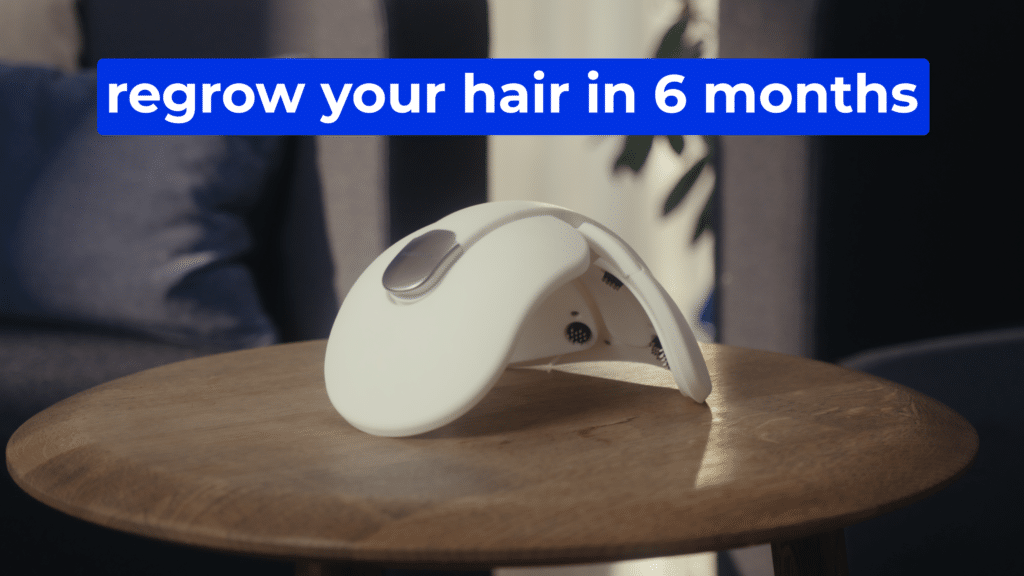
Guaranteed results and availability
In order to build user confidence, the company offers a 180-day performance guarantee.
If the client follows the recommended protocol (30 minutes per day), documents his or her progress with monthly photographs and does not see measurable improvements, he or she can request a refund according to the terms and conditions.
The device was launched commercially in 2023 after several years of scientific and engineering development, initially through a crowdfunding campaign on Indiegogo. It is currently being used by customers in Europe and other international markets.
The company operates from Cologne (Germany) as spin-off of the Max Planck Institute and ships the product all over Europe.
The relationship between physical appearance, identity and emotional well-being is increasingly recognised by holistic health experts. For many young men, regaining the quality of their hair is not only about improving their image, but also about regaining a sense of control over their body, their health and their presence in the world.
At a time when wellness is understood as a balance between biology, technology and lifestyle, solutions like this reflect where the aesthetic medicine of the future is heading: increasingly less invasive, more personalised interventions based on the body's natural regeneration.
And perhaps that's the key: not just treating hair loss, but understanding what's going on at the root of the problem.
Discount of 5% for all our readers by entering the code WF5 when ordering. More details and ordering at: www.niostem.com