For years, the dominant female aesthetic canon was clear, recognisable and, in many cases, homogeneous: extremely slim bodies accompanied by striking, almost disproportionate breast volume. Plastic surgery, especially breast augmentation, not only accompanied this trend, but amplified it. However, something has changed - and not least in the last decade.
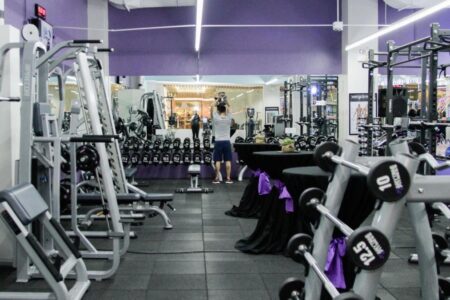
Today, the female body ideal seems to be shifting towards the a different aesthetic: more functional, more athletic, more “real” in its construction. A body where defined musculature, firmness and proportion replace exaggerated volume as an aspirational symbol. This shift is neither casual nor superficial; it responds to cultural, social and scientific transformations that are redefining both the perception of the body and the medical decisions made about it.
Traditional breast augmentation, especially between the 1990s and the beginning of the 2010s, pursued a very specific objective: to increase volume. Large prostheses, high necklines and an absolute prominence of the breast within the female silhouette.
Today, however, plastic surgeons report a significant change in demand: patients seek harmonisation, not prominence. This translates into:
- Smaller prostheses
- Greater emphasis on lifting (mastopexy) than on augmentation
- Natural results respecting the original anatomy
- Integration with a worked body (gluteus, core, back)
This shift connects directly to the rise of fitness, strength training and longevity as an aspirational narrative. The body is no longer a static object but a dynamic project.
Fit aesthetics: health, performance and social perception
The rise of disciplines such as functional training, Pilates and strength training has changed the perception of physical attractiveness. A slim body not only communicates aesthetics, but also discipline, metabolic health and self-care.
This phenomenon has several readings:
- BiologicalMore muscle mass is associated with longevity and better hormonal health.
- Socialvisible effort (muscle) replaces artificial result (extreme bulk)
- Digitalsocial networks have amplified more diverse, but also more worked bodies.
In this context, the chest ceases to be an isolated element and becomes part of a coherent whole.
At what age do women undergo surgery today and why?
Breast augmentation is still one of the most demanded interventions, but their motivations and vital moments have evolved:
20-30 years: identity construction
- Search for body proportion
- Aesthetic influence (networks, environment)
- First intervention, usually with small to moderate implants
30-45 years: motherhood and recovery
- Correction of changes after pregnancy and breastfeeding
- Breast lift (more than augmentation)
- The search for naturalness and coherence with the body
45+ years: maintenance and well-being
- Re-interventions or prosthesis replacements
- Improvement of tissue quality
- Medical rather than aesthetic approach.
This breakdown reveals a key change: breast augmentation no longer responds solely to an external ideal, but to internal, functional and emotional needs.
The emergence of minimally invasive surgery
In this new paradigm, technologies such as MIA FEMTECH emerge as a direct response to this demand for naturalness and less intervention.
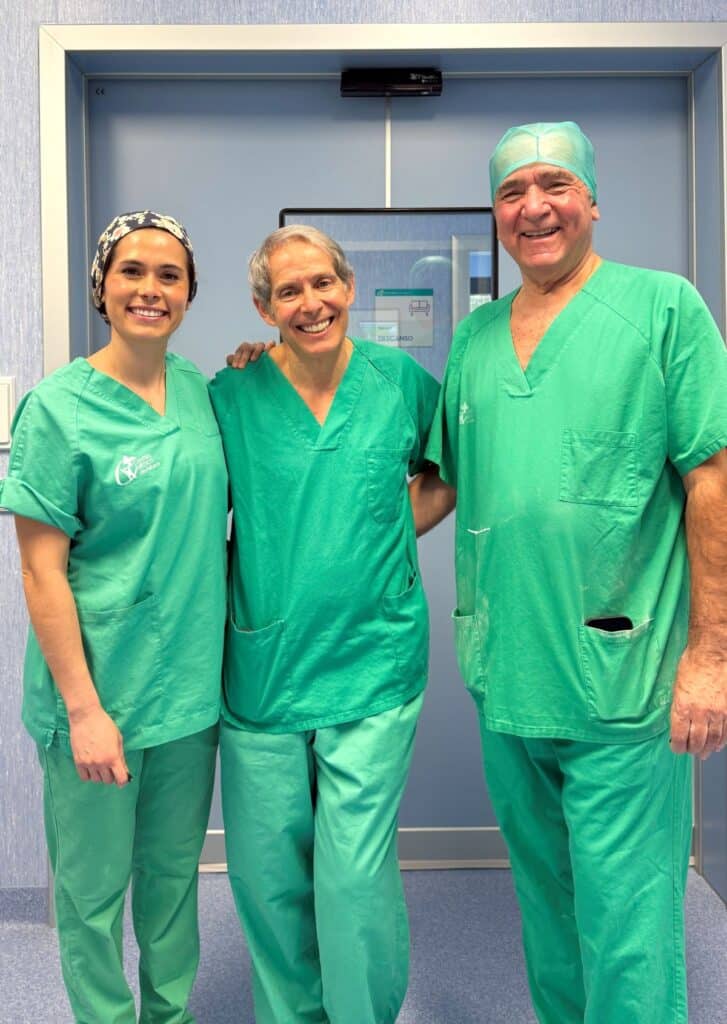
The recent arrival of this technique in Asturias, by the hand of the of the DEMYA Oviedo - Clínica Graíño marks a turning point in the way breast augmentation is understood. This procedure proposes:
- Incision in the armpit (no visible scar on the chest)
- Local anaesthesia and sedation
- Virtually immediate recovery
- Smaller implants and natural approach.
Rather than an increase, it is seen as a “breast harmonisation”.”, The concept of preservation surgery is aligned with the concept of preservation surgery: respecting tissues, minimising impact and optimising results.
Despite its minimally invasive nature, it is important not to dilute a fundamental medical reality: any breast implant, irrespective of the technique used, involves a breast implant:
- Introduction of a foreign body
- Limited lifetime (not permanent devices)
- Need for regular clinical follow-up
- Possible replacement or revision over time.
Technological sophistication does not eliminate the nature of the procedure, but enhances its execution. But medical commitment and maintenance remain an inherent part of the process.
The evolution of breast augmentation is, in reality, a symptom of something broader: the change in women's relationship with their bodies. From volume as a symbol of femininity, we are moving towards:
- Functionality as a value
- Health as aesthetics
- Individuality versus standard
Plastic surgery, far from disappearing, is adapting to this new narrative. And in that adaptation, techniques such as MIA FEMTECH™ are not only medical innovation, but also a reflection of a cultural transformation.
(Royalty-free photos, provided for distribution))