The explosion of advanced diagnostic tests has created a troubling paradox: patients with hundreds of biomarkers at their fingertips and healthcare professionals who don't know how to translate them into therapy. Nordic Labs and dnalife are presenting a training program in Madrid to address this gap.
We live in the age of precision diagnostics. Never before have we had access to so much information about our own bodies: blood tests to measure biomarkers of longevity, genetic tests that reveal inherited predispositions, epigenetic analyses that show how the environment has shaped the expression of those genes, studies of gut microbiota, insulin resistance tests, sleep monitoring, inflammatory profiles, micronutrient panels… The list grows every year, and with it, a promise that the healthcare sector has not yet fully delivered: truly personalized medicine.
Because there's a problem that no one talks about out loud, but that any honest professional recognizes: Having the data is not the same as knowing what to do with it.
The rise of the highly informed patient in preventive medicine
Every week, thousands of people across Europe go directly to specialized laboratories to request advanced tests that their primary care physician would never order. They do so on their own initiative, driven by a desire to prevent disease, optimize their energy levels, body composition, and cognitive performance. They receive reports dozens of pages long, filled with tables, polymorphic genes, reference values, percentiles, and cross-referenced recommendations. And then comes the awkward moment: who explains what it all means?
The answer, increasingly often, is artificial intelligence. Patients are copying and pasting their test results into an AI chat to try to understand whether the MTHFR gene or the APOE4 variant should change their diet, supplementation, or exercise routine. This situation, beyond its anecdotal nature, points to a structural flaw in the current healthcare system.
And what is truly revealing is that Some healthcare professionals also turn to external tools to interpret increasingly complex datasets.
The doctor facing the genetic report: a necessary honesty
Traditional medical training, even the most up-to-date, does not prepare physicians to interpret a complete nutrigenomic panel, correlate genetic variants with drug responses, or understand how the interaction between lipid metabolism genes and methylation status can influence dietary guidelines. This is not because physicians are incompetent, but because This science is rapidly evolving, enormously complex, and is not yet part of the standard curriculum of any medical or nutrition school..
The result is a first-rate clinical paradox: key aspects of diagnosis have been delegated to tests—which have become increasingly accessible and detailed—while some of the most valuable tools of clinical medicine have been abandoned, perhaps without realizing it: in-depth history, detailed examination, the questions that only a professional who understands the patient as a unique biological system can ask.
The end result is that prescribed treatments tend to look dangerously similar. Generic anti-inflammatory diets, standard omega-3 and vitamin D supplements, one-size-fits-all exercise guidelines. Personalized medicine in name, but not in practice. And in some cases, something worse: Inappropriate therapies, diets that activate inflammatory pathways in patients with certain genetic variants, useless or even counterproductive supplements, or hidden risks that a misinterpreted report may fail to detect or, worse, ignore..
The gap between current diagnostic capacity and the actual therapeutic capacity of healthcare professionals has two main roots.
The first one is the Delegation of diagnosis to testing without clinical integration. When the value of the consultation shifts to the laboratory, the professional loses the habit—and sometimes the confidence—of exploring, asking questions, and contextualizing. The 40-page report replaces the 40-minute conversation. And without that conversation, the data floats without any anchor in the patient's reality.
The second one is the real complexity of gene and epigenetic interactions. The way in which a variant in the VDR gene affects vitamin D absorption interacts with the methylation profile, gut microbiota, oxidative stress levels, and saturated fat intake. These interactions are not linear, not intuitive, and cannot be learned by reading isolated articles on PubMed. They require systematic, structured training directly applied to clinical practice.
Nordic Labs and dnalife bring training to clinicians
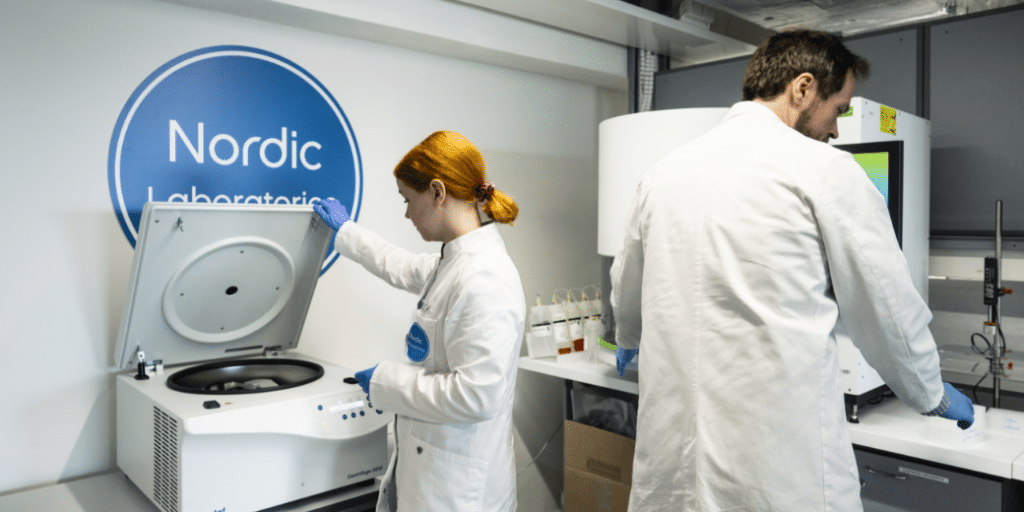
Given this scenario, Nordic Labs —European reference laboratory in advanced diagnostics of preventive and functional medicine— together with DNA Life, a leading company in genetic and nutrigenomic testing with a presence in more than 40 countries, have developed a training program specifically designed to fill this gap.
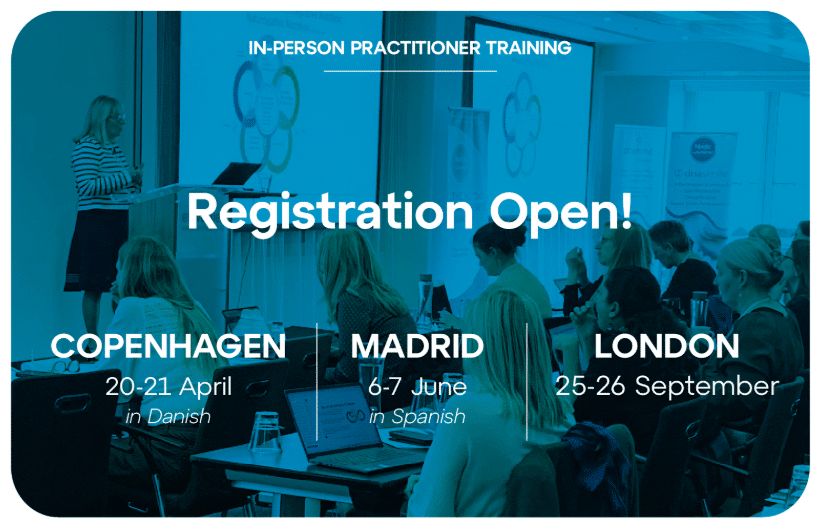
It's not a conference. It's not a two-hour webinar. It's a In-person Certification Course, In Madrid, in Spanish, for two full days (June 6-7), aimed at doctors, nutritionists and health professionals who want to move from data to clinical judgment.
The objective is concrete: that upon completion of the training, the professional will be able to interpret the results of genetic tests with confidence, integrate them into their clinical practice and offer care truly based on the genetics of each patient.
Course program: from fundamentals to real clinical cases
The training is structured into two intensive days taught by Daniela Seabra, Daniela Seabra is a clinical nutritionist with over 25 years of experience, certified by the Institute for Functional Medicine (IFM) in the United States, and CEO of the Daniela Seabra Clinic in Portugal. A specialist in nutrition for brain function and gastrointestinal health, Seabra integrates advanced functional nutrition with genetic analysis as a key tool for addressing chronic conditions and optimizing health. She is also an expert in the ReCODE protocol for brain health and longevity, with extensive experience as an international lecturer in postgraduate programs in Portugal, Spain, and Brazil.
Saturday, June 6: The first day begins with the fundamentals of genetics, epigenetics, nutrigenetics, and nutrigenomics, and introduces the DNA Core test. The training then delves into major biological areas: methylation, detoxification, inflammation, oxidative stress, and lipid metabolism, always in relation to the specific genes that modulate them. The afternoon is dedicated to practical case studies and group work.
Sunday, June 7: The second day addresses insulin sensitivity and its genetic basis, micronutrient requirements (vitamin A, choline, vitamin C, vitamin D, calcium, iron), food intolerance and sensitivity, and macronutrients in the context of weight management. More case studies and a specific section dedicated to... genetics of weight control already the genetics of the exercise response, These are two areas where individual variability is greatest and where generic recommendations most frequently fail. The program concludes with a question-and-answer session and clinical synthesis.
All content is taught in Spanish and has an eminently practical approach: it is not about memorizing gene variants, but about developing the clinical judgment to act on them.
The DNA Core test: the report that can finally be explained to the patient
At the heart of the program is the DNA Core test, dnalife's flagship test, Now available in Spanish. This analysis studies gene-environment interactions and generates personalized recommendations in four key areas:
Essential biological processes: Methylation, detoxification, and lipid metabolism are three pathways that influence everything from cardiovascular risk to the body's ability to eliminate toxins or manage homocysteine.
Macro and micronutrient requirements: These are based not on population charts, but on each patient's individual genetic response. We don't all absorb vitamin D the same way, nor do we process folate the same way, nor do we tolerate the same levels of carbohydrates.
Weight control: including genetic risk of obesity, eating behavior, response to specific diets, and satiety signaling.
Answer to the exercise: Strength and endurance potential, optimal recovery time, and risk of injury. This information is invaluable for prescribing truly personalized physical activity.
The report is designed with intuitive icons and graphics and accessible language, so that the professional can convey the results to the patient without losing scientific rigor. Taking the test during the training —the “With Test” option— allows the attendee to interpret their own results in real time, turning learning into a directly lived experience.
Preventive medicine hinges on the next ten years. Chronic diseases—metabolic, cardiovascular, neurodegenerative, and autoimmune—most have a long window of prevention that can only be fully utilized if predispositions are detected early and action is taken before the damage becomes irreversible. The tests exist. The technology exists. What's lacking are professionals who can translate that information into concrete, personalized, and safe clinical action.
That is precisely the function of this training program. It is not about turning doctors into geneticists, or nutritionists into bioinformaticians. It is about giving them the conceptual and practical tools so that the genetic data already available in their consultations ceases to be inert data and becomes the starting point for truly individualized medicine.
dnalife Certification Course | Nutrigenetics and Nutrigenomics in Clinical Practice
Organized by: Nordic Labs in collaboration with DNA Life Speaker: Daniela Seabra — Clinical nutritionist, IFM Certified Practitioner, CEO Daniela Seabra Clinic (Portugal) Dates: June 6 and 7, 2026 (Lunch included both days)
Place: NH National — Paseo del Prado, 48, 28014 Madrid Language: Spanish Format: In-person, 2 full days
Registration options: Certification (Without Testing): €349 Certification + DNA Core Test: €449
Registration and information: education.dnalifevms.com | www.dnalife.healthcare | geral@nordicgroup.eu
The course will also be offered in other European cities in the near future., Request information from: events@nordicgroup.eu
Genetic knowledge is not the destination. It's the map. Knowing how to read it makes the difference between prescribing the same thing for everyone and changing each patient's life.
*Royalty-free photos, provided for use and distribution.