Do we need an algorithm to tell us we're aging poorly, or is climbing four flights of stairs enough to find out?
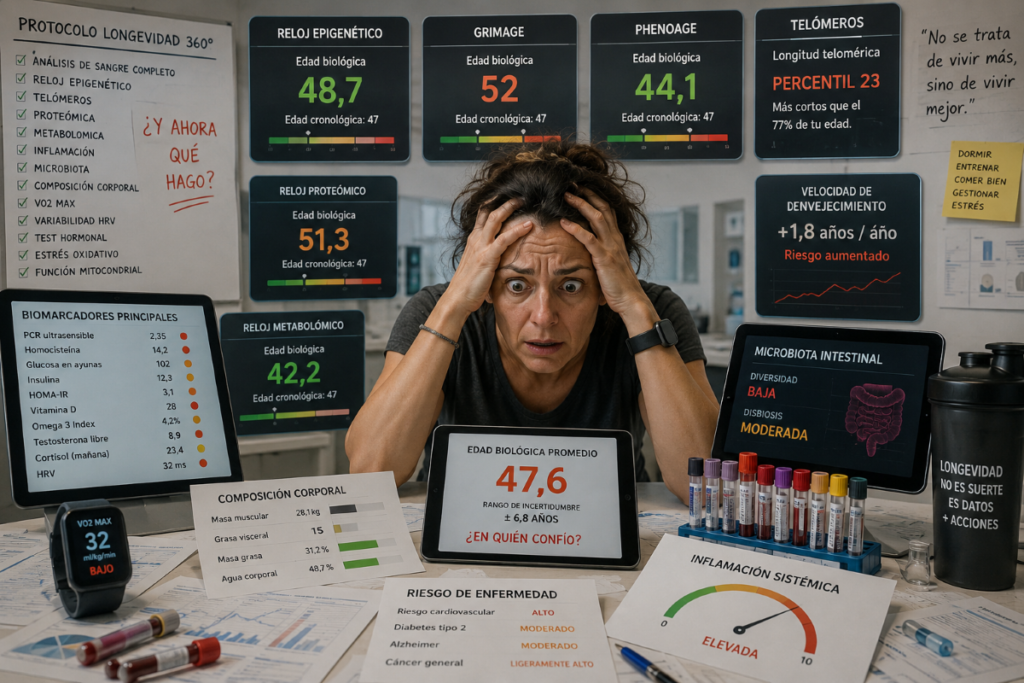
What if your ID said 52, but your cells said 44? What if a blood test could prove you've reversed aging by five years in just a few months? What if a therapy, a supplement, or a longevity protocol could literally turn back the clock?
The promise is irresistible. So much so that it has become one of the pillars of the longevity industry. Today, tests that claim to measure biological age are proliferating, along with clinics offering programs to reduce it and technologies promising to prove, with data in hand, that the body is aging more slowly.
However, the deeper you dig into the scientific literature, the more evident an uncomfortable realitybecomes: there is no single biological clock, nor is there a universally accepted measure of biological age.
Biological age does not exist
At least not as a physical entity. No one can draw a blood sample and find a variable called "biological age" in it. What does exist are different biomarkers that reflect specific aspects of aging and mathematical models that attempt to translate that information into an estimate.
In other words, biological age is not measured; it is calculated, and depending on which data are used to perform that calculation, the result can vary considerably..
This is an important nuance because much of today's marketing presents these numbers as if they were an objective truth, when in reality they are a statistical interpretation of multiple biological signals.
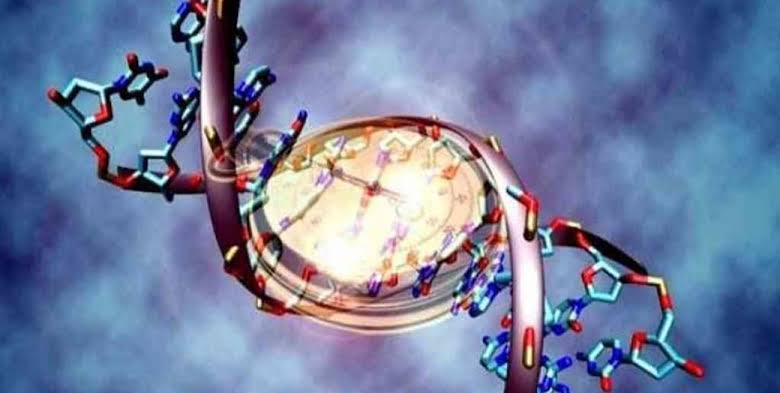
There is not just one clock; there are many.
The term “biological clock” groups together very different technologies.
Some are based on conventional clinical parameters: glucose, cholesterol, inflammation, kidney function, blood pressure, or body composition.
Others (proteomic) analyze circulating proteins, blood metabolites, or gene expression patterns.
The most well-known are epigenetic clocks, epigenetic clocks, which study DNA methylation patterns—small chemical modifications that regulate gene activity (e.g., Horvath Clock, Hannum Clock, GrimAge, PhenoAge, DunedinPACE).
These are currently generating the most scientific interest because they have shown a remarkable ability to correlate with disease, frailty, and mortality. But even within this group, there are different models and algorithms, each with its own strengths and limitations.
Those that analyze RNA are transcriptomic clocks: they attempt to assess which genes are active at any given moment, reflect more dynamic physiological states, and can change more quickly. They still have less clinical validation than epigenetic clocks.
That is why the same person can obtain different biological ages depending on the lab performing the measurement.
| Clock Type | What It Measures | Approximate Price |
|---|---|---|
| Telomeres | Telomere length in leukocytes | 100-400 € |
| Clinical Clock | Standard lab work + algorithm | 100-500 € |
| Metabolomic Clock | Dozens or hundreds of blood metabolites | 300-1.000 € |
| Proteomic Clock | Hundreds or thousands of proteins | 500-2.500 € |
| Basic Epigenetic Clock | DNA methylation | 250-600 € |
| Advanced Epigenetic Clock | Methylation + aging rate analysis | 600-2.000 € |
| Premium Longevity Programs | Combination of multiple clocks and biomarkers | €2,000–€15,000 or more |
If the number changes, does that mean we've rejuvenated?
Let's imagine a common scenario.
After a week of little sleep, overwork, heavy meals, alcohol, and no exercise, a person decides to measure their biological age. The result indicates they are 50 biologically.
Two weeks later, they repeat the test. During that time, they have trained, rested properly, reduced alcohol, and improved their diet. The new measurement shows 46 years.
The temptation is to conclude they have rejuvenated four years. The reality is probably less spectacular.
What has improved is the body's physiological state.. Certain inflammatory markers have decreased, some metabolic parameters have improved, and the algorithm interprets this new scenario as more favorable.
That does not necessarily mean the cells have regressed four years in time.
It means the body is functioning better. And although the two are often confused, they are not equivalent.
And what about telomeres? From scientific star to debated marker
For years, telomeres were presented as the great natural biological clock.
Their logic seemed flawless. These structures protect the ends of chromosomes and tend to shorten as cells divide. The shorter the telomeres, the greater the accumulated biological wear and tear appears to be.
The reality has turned out to be much more complex.
People of the same age can show enormous differences in telomere length. Exceptionally long-lived individuals can have relatively short telomeres, and some people with long telomeres still develop age-related diseases.
Telomeres provide valuable information, but they are no longer considered the definitive marker many imagined two decades ago. This brings us to one of the most interesting questions.
If a therapy manages to reduce your biological age by five years in a matter of weeks, does that mean your telomeres have also rejuvenated? In most cases, no.
Telomeres do not typically lengthen and shorten as quickly as some metabolic or inflammatory biomarkers can change.
That is why it is perfectly possible to observe a significant improvement in certain biological clocks while telomere length remains virtually unchanged.
Far from being a contradiction, this reflects that both systems are observing different aspects of aging.
The longevity industry has grasped something very simple: we humans love numbers.
An abstract concept like aging is hard to sell. A concrete number is far more powerful. Telling someone they've reduced their systemic inflammation lacks the emotional impact of telling them they've rejuvenated three years.
That's why many commercial programs use biological age as their primary success indicator.
The problem is that we still don't know to what extent modifying that number necessarily translates into a real long-term health improvement. And that difference is crucial.

If you've never measured yourself, where do you start?
Paradoxically, probably not with telomeres.
As of today, if someone wants a reasonably useful snapshot of their biological state, epigenetic clocks have a stronger scientific foundation and greater predictive power than telomere length alone. Even so, an epigenetic clock should be interpreted within a broader context.
The real conversation about longevity doesn't start with a saliva sample or end with a number on a report. It starts by observing much more tangible indicators: cardiorespiratory capacity, muscle strength, lean mass, insulin sensitivity, sleep quality, inflammation, cognitive function, and metabolic health.
Because, in the end, the most important question isn't how old your cells say you are. The question is how many more years your body can stay healthy under these conditions?
Biological clocks represent one of the most promising tools for studying human aging. Some have revolutionized research and could become essential instruments for evaluating future longevity therapies. However, turning them into an absolute truth is premature.
Today we know they can provide valuable information; we also know they have significant limitations. What we still don't know is how much clinical meaning each year gained or lost has in those reports that so many people observe with fascination..
In an era obsessed with quantifying everything, longevity still resists being summed up in a single number.
There are people spending 1,000 euros on an epigenetic test without knowing their VO2max, grip strength, muscle mass, or insulin resistance index—metrics that today predict mortality and healthy aging with much more robust and actionable evidence. I'd start there.