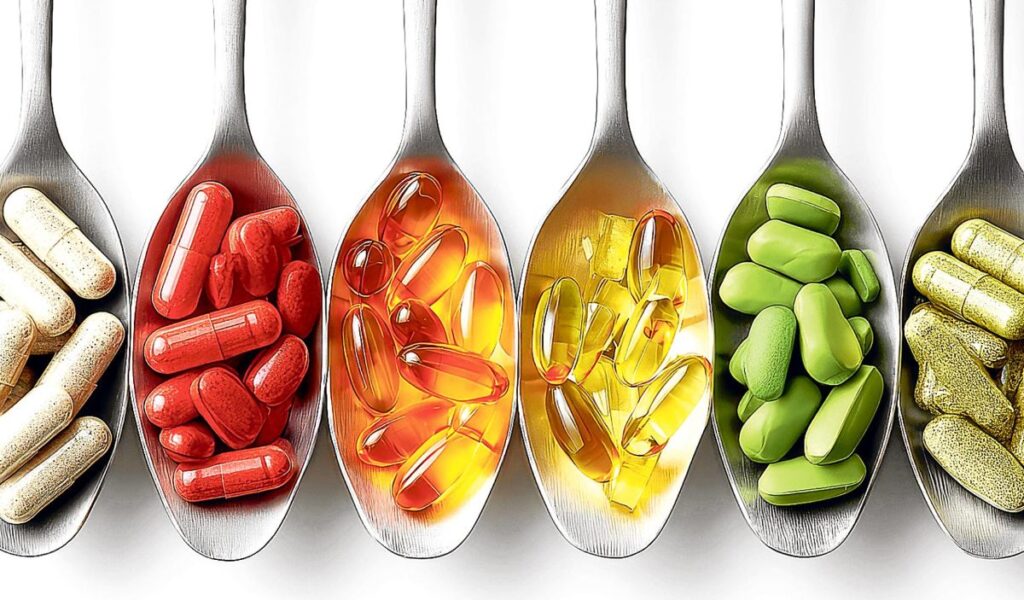
We already know that, in general, it makes sense to first check if a deficiency actually exists before taking a supplement. The “shower” principle (“I take everything my favorite health influencers recommend”) may be easy to follow, but it can backfire. Because with some micronutrients (and other supplements), excess can actually be harmful. This applies especially to fat-soluble vitamins and trace elements.
Today we're talking about the exceptions to the “test first, then supplement” rule: not all essential nutrients need to be measured in blood before taking them. In some cases, the benefits are clear even without lab tests, the risks are manageable, and deficiency is not unlikely. But be careful: we're not saying everyone should supplement these compounds — it's an individual decision, and this article aims to help guide you.
And: “taking it without further testing” doesn't mean “consuming it blindly.” That's why you'll find here a nuanced list of ten micronutrients you can typically start with even without lab analysis, in some cases with notes on when it would make sense to investigate further.
Magnesium – the underestimated all-rounder
Why consider supplementing it?
Magnesium is involved in over 300 enzymatic reactions: from muscle relaxation to energy production and stress regulation. The need increases with exercise, stress, caffeine, or certain medications (e.g., proton pump inhibitors).
Experts assume there is a widespread deficiency.
The different forms of magnesium deserve their own article, but citrate, malate, and bisglycinate are usually reasonable options. The NRV (nutrient reference value) is 375 mg daily.
Two nuances: to reach 375 mg of elemental magnesium, you often need more than 3 grams of the compound depending on the form. And with stress or exercise, the need is likely higher.
In any case: 300 mg daily as a supplement usually doesn't cause problems.
What happens in case of excess?
The most common is acute diarrhea. If it occurs, it's best to switch to bisglycinate, malate, or taurate.
What if I want to measure it?
Serum magnesium is unreliable because most of it is inside cells. For greater accuracy, a whole blood mineral analysis is used.
Vitamin C – the classic water-soluble vitamin
Why consider supplementing it?
It's essential for the immune system, skin, connective tissue, and as an antioxidant. Needs increase with physical stress, infections, injuries, or inflammation.
The NRV is 80 mg, although there is much debate. Linus Pauling took up to 18 g daily. Supplementation of 200–500 mg daily is usually considered reasonable; during infections or recovery, more could be useful.
Important: do not combine with selenium.
What happens in case of excess?
High doses can cause diarrhea and, in susceptible people, increase the risk of kidney stones.
What if I want to measure it?
The sample must be handled quickly and protected from light; ideally, it is analyzed directly in the lab.
NAC (N-acetylcysteine) – cellular protection and mucolytic
Why consider it?
It increases the production of glutathione, one of the body's most important antioxidants. It's useful for oxidative stress, pollution, or chronic inflammation.
It also acts as a classic mucolytic and can protect against pollutant particles.
Typical dose: 600 mg one to three times a day.
What happens in case of excess?
Very high doses can cause nausea, vomiting, or diarrhea. Caution in asthma or sulfur intolerance.
Glycine or collagen – joints, sleep, and structure
Why consider it?
Glycine is a key amino acid in connective tissue and has a calming effect on the nervous system. It can improve skin, joints, regeneration, and sleep.
Typical dose: 3–10 g daily.
Excess?
Very high doses can cause gastrointestinal discomfort.
EAA (essential amino acid pattern) – efficient protein
Why consider it?
It provides essential amino acids in optimal proportions, with high bioavailability. Useful in sports, aging, or low-protein diets.
Dose: 5–10 g daily or according to protein requirements.
Excess?
Practically harmless, except for the cost.
B-complex – underestimated energy
Why consider it?
Key for energy, nervous system, and metabolism. Useful in stress, sports, alcohol, vegan diets, or pregnancy.
Important to use active forms.
Excess?
Generally excreted in urine, except B6 in prolonged high doses.
Choline – brain and liver function
Why consider it?
Precursor to acetylcholine and essential for the liver. Relevant in vegan diets or high cognitive demand.
Recommended forms: alpha-GPC, CDP-choline, or phosphatidylcholine.
Excess?
Can cause “fishy” body odor and digestive or cardiovascular effects.
Coenzyme Q10 – mitochondrial catalyst
Why consider it?
Fundamental for cellular energy production. Decreases with age.
Important for people taking statins.
Dose: 100–200 mg daily.
Excess?
Can cause insomnia or digestive discomfort at high doses.
Creatine – muscle and brain
Why consider it?
Improves strength, recovery, and cognitive function, especially in older adults or vegetarians.
Dose: 5 g daily.
Excess?
Generally safe; may cause water retention or mild digestive discomfort.
Taurine – cellular protector
Why consider it?
Regulates cell volume, cardiovascular and nervous system. Interesting in stress, sports, or plant-based diets.
Dose: 500 mg – 10 g daily.
Excess?
Very well tolerated in general.
Micronutrients you probably need more of… but should measure first
Vitamin D
Important, but elevated levels require calcium control.
Omega-3
Optimal index: 8–11%. Excess potentially problematic.
Selenium
Narrow margin between deficiency and toxicity.
Iodine
Critical for thyroid; excess can worsen thyroid dysfunction.