Living longer is no longer a strictly medical achievement; it is the greatest structural challenge facing the economy and the contemporary labor market. To break down this impact, from October 14 to 16 the LifeSpan Summit 2026. will be held. The forum will bring together around 400 professionals, including scientists, financiers, and corporate executives, to debate at the Hotel Vincci Selección Posada del Patio, in the historic city center.
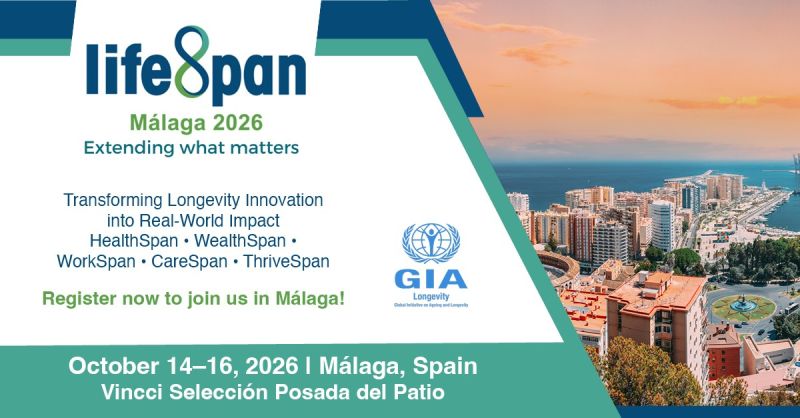
Behind the event is the Global Initiative on Ageing and Longevity (GIA Longevity), an international organization backed by the United Nations that has established its headquarters precisely in Málaga. The entity's strategy involves moving healthy aging out of purely care-based niches and placing it at the center of global investment decisions and public policies.
The institutional deployment confirms this shift. The mayor of Málaga, Francisco de la Torre, will preside over the opening ceremony at the City Hall, leading into a three-day agenda that will combine technical debate panels with executive working sessions. Participants will include analysts and senior officials from the World Bankthe OECD, UNDESA y UNITAR, alongside representatives from Imserso and top-tier technology firms. The goal is not to discuss retirement, but to rewrite the rules of the global financial and healthcare game.

The working sessions are divided into three critical areas for the wellness sector:
- Preventive medicine and healthspan: The scientific debate moves beyond the obsession with adding years to focus on maintaining autonomy. Advances in regenerative biotechnology, digital health, and therapies aimed at slowing cognitive decline will be examined.
- Labor reform and long-term savings: With a much longer active life expectancy, current pension and insurance models fall short. Financial panels will address investment in the senior sector, estate planning, and how companies must make their structures more flexible to retain talent through continuous training.
- Community and aging with purpose: Lifestyle management will be the focus of the final day. Roundtable discussions will cover preventing isolation, designing accessible urban environments, and developing personal projects that keep the older population connected and active in society.
Ultimately, the October event aims to put data, science, and investment solutions on the table for a demographic shift that is already here.