The same thing happens every year. At the end of summer, more people notice more hair than usual on their pillow, brush, or shower drain. The so-called seasonal autumn shedding is a phenomenon well known to dermatologists, and although in most cases it is temporary, it also acts as a trigger that accelerates or makes more evident an alopecia that was already progressing.
The difference between starting treatment when hair loss is already visible versus doing so a few weeks earlier can be significant. Hair follows a biological cycle of growth, rest, and shedding, so any strategy aimed at strengthening the follicle needs time to show results. Waiting until September or October means arriving too late for many people.
In this context, technology is changing the way hair loss is approached. Until a few years ago, options included continuous medication, injections, sessions at specialized clinics, or, in advanced cases, hair transplants. Now, home devices that aim to stimulate the follicle from home in a completely non-invasive way are beginning to emerge.
One of the developments generating the most attention is niostem, a wearable designed to be used for just 30 minutes a day while the user works, reads, or watches TV. Its main appeal lies precisely in its simplicity: it requires no travel, no needles, no pain, and avoids dependence on regular clinic visits.
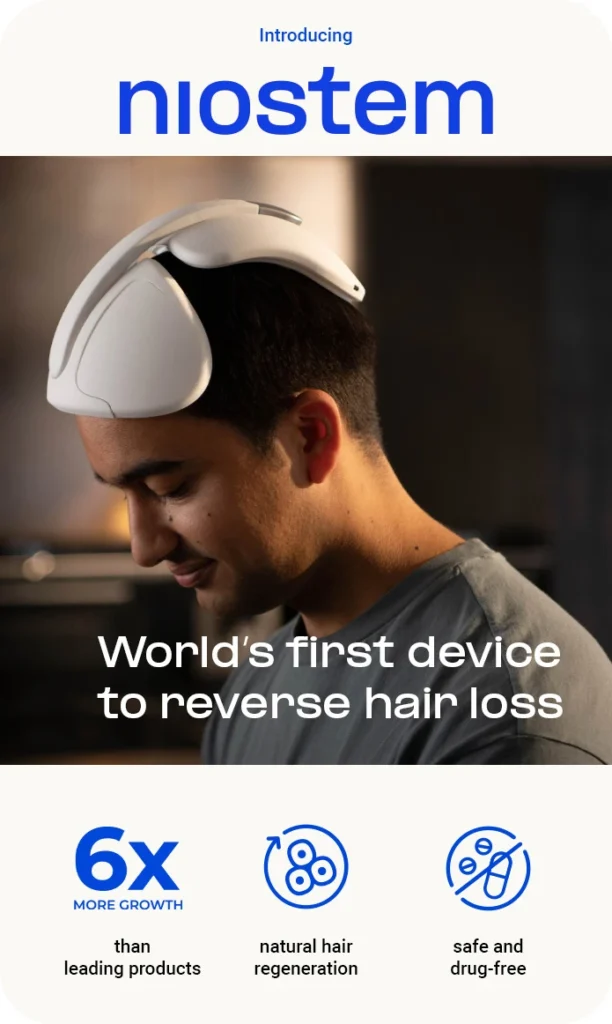
The technology developed by the German company uses low-intensity bioelectrical stimulation to reactivate hair follicle stem cells that remain inactive in androgenetic alopecia. According to data published by the company and a peer-reviewed pilot study, after six months of daily use, increases in hair density and thickness were observed, with no serious adverse effects reported. However, it is worth noting that initial research has the usual limitations of pilot studies—such as a small sample size—so larger clinical trials will ultimately define the real scope of this technology.
What is interesting is that this type of solution brings a technological treatment to the patient's home. Convenience is often one of the main obstacles to maintaining long-term therapies. A device that can be used at home facilitates adherence and eliminates one of the major drawbacks of many hair treatments: the need to regularly visit a clinic.
It also changes the economic barrier. The device niostem can be purchased with a one-time payment of 1,249 euros, but the company has opted for a subscription model that significantly reduces the initial outlay. It currently offers a system of 89 euros per month, with a minimum commitment of six months and a total of 14 monthly payments, at which point the user becomes the owner of the device. The subscription also includes the mobile app and periodic replacement of the electrodes needed for treatment.
This model responds to an obvious reality: many people delay starting treatment because the initial investment is high or because they don't know if it will work for them. Spreading out the cost makes it easier to access technology that, until recently, was only available in clinical settings.
Androgenetic alopecia remains the most common cause of hair loss in both men and, increasingly, women. It affects approximately half of men before age 50 and also increases in prevalence among women after menopause. The earlier action is taken, the greater the chances of preserving still-viable follicles. Once they are permanently gone, no therapy can recover them.
That is precisely why specialists insist that treatment should be understood as a preventive as well as corrective measure. The goal is not only to regain hair but to prevent further loss.
With the end of summer just around the corner, starting a preventive strategy can be smarter than reacting when hair loss is already evident. And if that strategy can be done from home, without pain, without systemic medication, and with a monthly investment similar to many consumer subscriptions, it is understandable that this type of device is generating growing interest among those seeking practical alternatives for hair care.
In a market saturated with cosmetics and solutions with little scientific evidence, the arrival of technologies based on biostimulation opens a new avenue worth watching closely. Prevention remains the best treatment for alopecia, and in that sense, the calendar favors those who decide to start before autumn makes visible a problem that, in reality, often begins many months earlier.