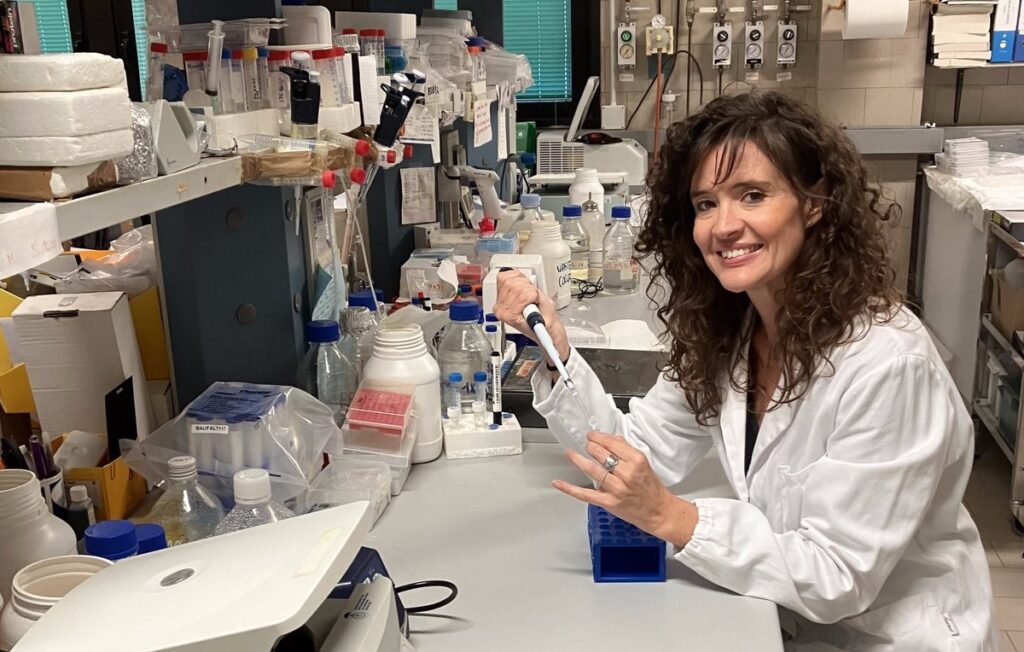
The relationship between the gut and the brain continues to reveal new connections. A study led by neuroscientist Paola Tognini, from the Sant’Anna School of Advanced Studies in Pisa (Italy), provides new evidence that modifying the composition of the gut microbiome could influence the brain's ability to adapt, learn, and recover from damage, a process known as neuroplasticity.
Although the research has been conducted exclusively in preclinical models, its results open a new line of interest for aging and longevity medicine, where preserving cognitive function has become one of the main goals.
A less flexible brain over time
Neuroplasticity allows the brain to form new neural connections, adapt to changes, and partially repair damage caused by disease or injury. This ability progressively declines with age, affecting functions such as memory, learning, or recovery after a stroke.
The work by Tognini and her team suggests that the gut microbiome could play a much more significant role in this process than previously thought.
The study, published as a preprint at on bioRxiv by Professor Tognini's team Paola Tognini, from the Scuola Superiore Sant’Anna in Pisa, must now be confirmed through clinical trials in humans before these findings can be translated into new therapeutic strategies.
The researchers observed that altering the microbiome with high doses of antibiotics significantly reduced brain plasticity. However, when the microbiota was subsequently restored through a fecal transplant from young individuals, that capacity began to recover.
More than a thousand genes changed their activity
One of the most striking findings of the study was the change in expression of over 1,000 genes after modifying the gut microbiome.
Among them were genes involved in the formation and maintenance of myelin, the protective layer that coats nerve fibers and allows electrical impulses to travel quickly and efficiently through the nervous system.
The researchers also identified changes related to the integrity of the blood-brain barrier, the structure that protects the brain from potentially harmful substances in the bloodstream.
These results suggest that the microbiome could simultaneously intervene in different biological mechanisms related to brain aging.
A hypothesis that still needs to be confirmed in humans
The authors emphasize that these results cannot yet be extrapolated to clinical practice.
The work has been carried out in animal models, and it will still be necessary to identify which specific microorganisms are involved in these effects, as well as to demonstrate that the same mechanisms occur in humans.
Even so, the research reinforces a scientific line that has gained momentum in recent years: the gut microbiome not only participates in digestion or immune system regulation but can also influence complex neurological processes.
New perspectives for longevity medicine
Interest in the microbiome has grown significantly within preventive and longevity medicine. Numerous specialized clinics already incorporate microbiota analysis, personalized nutrition programs, and strategies aimed at improving gut health.
This study points to an even more ambitious possibility: that, in the future, it may be possible to intervene on the composition of the microbiome to promote a younger biological profile, help preserve brain function, increase resilience to aging, and even improve recovery after certain neurological injuries.
For now, that scenario remains within the realm of research. However, each new study reinforces the idea that the gut and the brain maintain a much closer dialogue than science imagined just a decade ago, making the microbiome one of the most promising fields for understanding how the body ages and how it might do so more healthily.
Reference study
Damiani F., Changizi Ashtiani K., Tognozzi A., et al. The Critical Period Microbiota Shape Brain Plasticity. on bioRxiv (preprint), 2026. DOI: 10.64898/2026.06.08.730811. The work demonstrates in animal models that altering the microbiome with antibiotics reduces brain plasticity and that transplanting young microbiota partially restores that capacity, accompanied by changes in the expression of genes related to myelination and the blood-brain barrier.