Current clinical evidence indicates that, in situations of chronic stress and burnout, In addition to being psychological, stress response patterns are not only psychological, but are consolidated at the level neurophysiological, The brain networks involved in emotional regulation and cognitive performance are also altered, generating stable alterations in the dynamics and connectivity of brain networks involved in emotional regulation and cognitive performance.
This difficulty in “deactivating” the state of stress helps to explain why burnout and absenteeism rates continue to rise, even in contexts where wellness, mindfulness or coping strategies are available. In many cases, these interventions fail to change the underlying neurophysiological dysfunction.
In this context, a recent clinical study published in the magazine Cureus provides a relevant scientific basis by exploring an innovative approach to non-invasive neuromodulation: the protocol Brain Wave Optimisation Gamma (BWO-G) based on Radio Electric Asymmetric Conveyer (REAC) Technology .
Neurophysiological evidence and clinical improvements
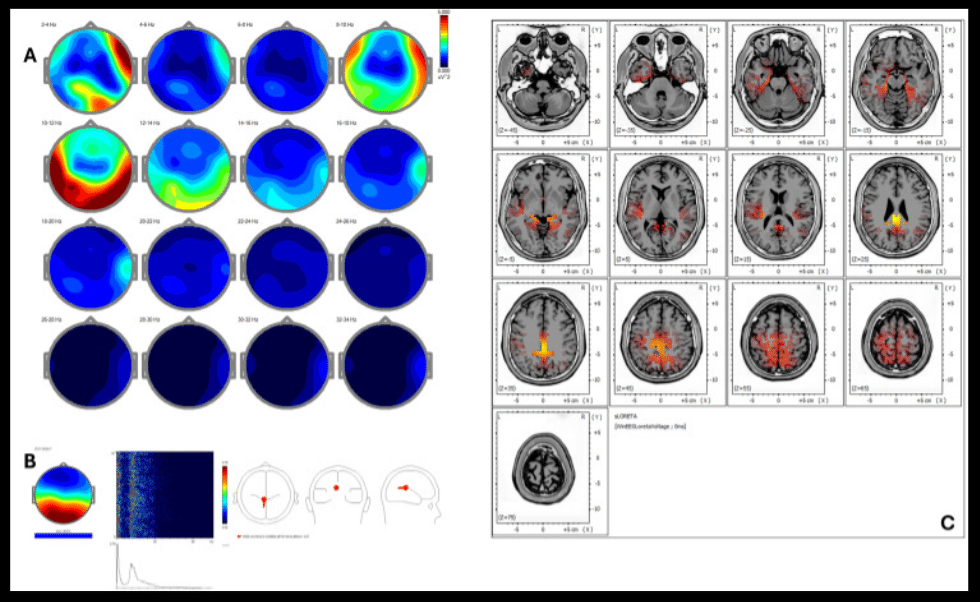
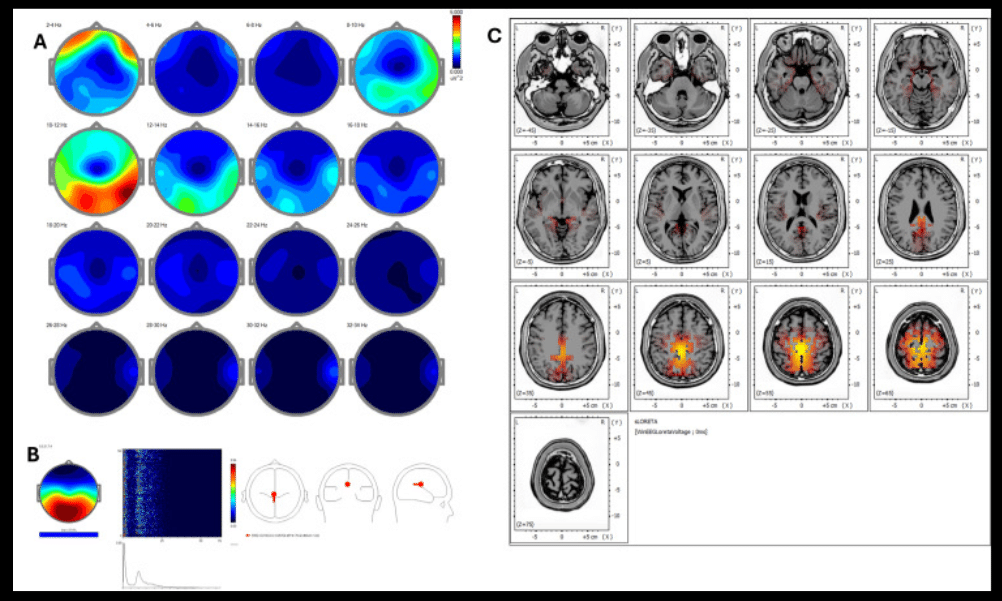
The retrospective study included five people with prolonged exposure to work-related stress. Through 18 sessions of REAC BWO-G, cortical activity before and after treatment was assessed using advanced neurophysiological analysis techniques (qEEG, ICA and sLORETA).
The results showed:
- Consistent trends towards greater symmetry in key EEG bands (delta, theta and alpha).
- Reorganisation of cortical activity towards networks associated with emotional regulation and cognition.
- Perceived clinical improvements in emotional stability, sleep quality and mental clarity.
- Neurophysiological patterns compatible with increased resilience to stress.
The authors stress that these findings are in line with the scientific literature linking chronic stress to alterations in brain connectivity. While acknowledging the need for larger and more controlled studies, the results suggest that non-invasive interventions such as REAC BWO-G could support functional recovery in severe stress contexts, with no reported adverse effects.
Towards a holistic approach to workplace wellbeing
The growing impact of work-related stress and burnout requires a response that goes beyond partial solutions. A comprehensive approach should combine:
- Active prevention in the workplace, through realistic wellness policies and healthy job design.
- Access to safe, effective and evidence-based treatments, The aim of this report is to provide a comprehensive overview of the impact of the crisis on the health and safety of the population.
- Coordination between companies, health and social security systems, to reduce the social and economic impact of absenteeism.
Antonio LópezCEO of Seostar believes that “dealing with work-related stress is not only a matter of individual health, but also a strategic priority for economic and social sustainability. We need to educate and learn to recognising the symptoms without trying to hide them or blame ourselves for suffering from them. Listening to the signals the body gives us is fundamental to to prevent pathologies and perhaps the warning comes from those who see us from the outside.
The businessman from Murcia says that in his extensive experience with managers and multinationals, HR managers are rarely concerned with people's well-being, blindly look at the well-being of the company by valuing the productivity of the employee, without considering that their level of stress affects their mental health and therefore determines their level of presence and performance.

A growing problem with systemic impact
Absenteeism linked to chronic stress, burnout and emotional exhaustion has become one of the great contemporary challenges for public health and productivity. The most recent data put the rate of absenteeism in Spain at around 6.7 % of agreed hours, with more than 8.7 million deregistration processes, near 368 million lost working days and a cost exceeding 30 billion euros per year.
Casualties due to mental health disorders already account for approximately 17 % of total absences from work, According to data from Manpower and CEOE, this is consolidating as one of the main risk factors in the current working environment.
Beyond traditional psychological and pharmacological therapies, there is a wide range of interventions aimed at stress relief - meditation, yoga, massage, retreats or relaxation techniques - that can bring temporary benefits. However, in many cases they do not achieve a sustained resolution, and the symptoms reappear upon return to the usual work context.
These data reinforce the need to therapeutic approaches that also act on the neurophysiological basis of stress, integrating wellness, science and prevention to offer lasting solutions.