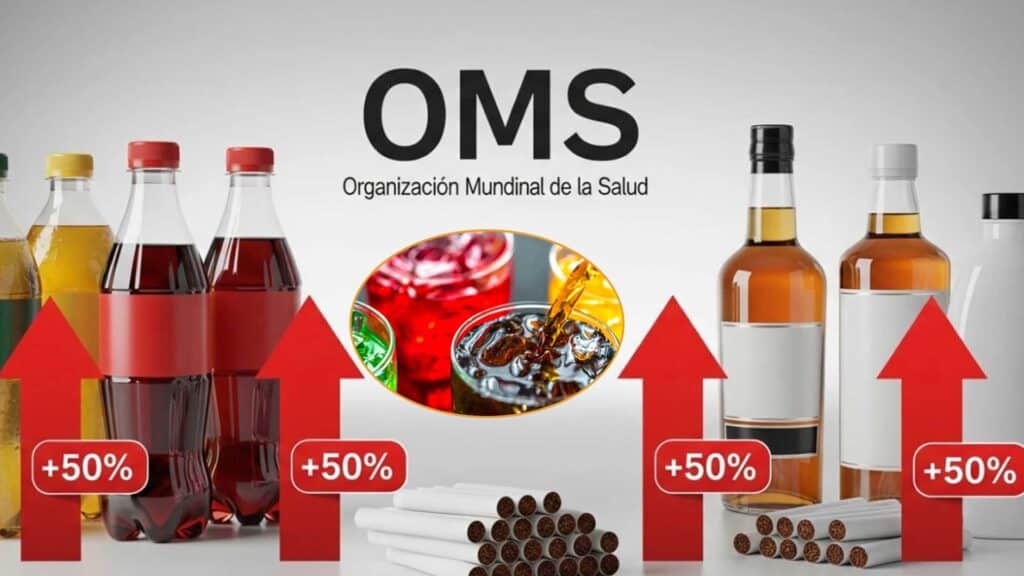
The World Health Organisation (WHO) argues that health taxes on alcohol and sugar-sweetened beverages could generate up to USD 1 trillion (EUR 0.92 trillion) in global public revenues over the next decade. Although the debate is usually presented from an Anglo-Saxon or US perspective, The warning is not unique to the US: Europe is at the same fiscal and health crossroads., The situation is, in some respects, even more contradictory.
The additional revenue would be raised through levies on products with a well-documented negative impact on health, and would serve to strengthen health systems that are increasingly strained by rising health inequalities. preventable non-communicable diseases, such as obesity, type 2 diabetes, cardiovascular disease, certain cancers and alcohol-related injuries.
“3 by 35”: a strategy that directly challenges Europe
The proposal is part of the “3 by 35”, launched by the WHO in 2024, the aim of which is to increase the real price of tobacco, alcohol and sugar-sweetened beverages by at least 50 % by 2035, The main way in which this is done is through taxation.
The WHO estimates that this measure would raise an additional $1 trillion globally. However, beyond the figure, the underlying message is uncomfortable for many European governments: keeping health-damaging products artificially cheap has a fiscal and health cost far higher than the short-term economic benefit they generate..
“Health taxes are one of the most powerful tools for promoting health and preventing disease,” said Dr Tedros Adhanom Ghebreyesus, WHO Director-General. “By raising taxes on products such as tobacco, sugar-sweetened beverages and alcohol, governments can reduce harmful consumption and free up resources for essential health services.
Europe: low prices, high costs
WHO warns that both alcohol and sugar-sweetened beverages are becoming progressively more affordable, especially in Europe, where taxes do not keep pace with inflation and income growth. This passive fiscal policy translates into higher consumption and, consequently, into a sustained increase in public health spending.
In the European case, the contradiction is particularly evident:
- Alcohol consumption in Europe is among the highest in the world.
- Wine continues to be exempt from excise duty in at least 25 European countries.
- Sugar-sweetened beverages are taxed in some countries, but at rates that are considered to be low and ineffective by the WHO itself.
The result is an economic model in which the state collects little revenue from the sale of harmful products, but bears most of the health care costs associated with its use..
Sugar: symbolic taxes in the face of a structural problem
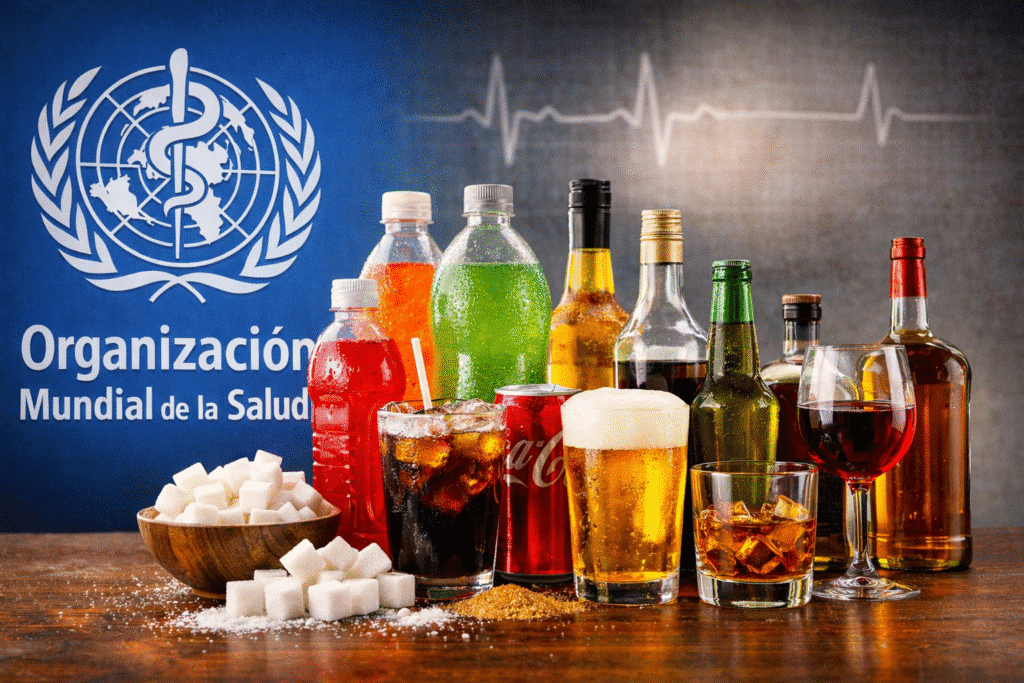
The Global Report on the Use of Taxation of Sugar-Sweetened Beverages 2025 shows that 116 countries apply some form of tax on these beverages. However, many categories with high sugar content - such as sweetened milk drinks or ready-to-drink coffees - remain untaxed.
The WHO considers these taxes to be, in most cases, more symbolic than transformativeThe average tax represents just 2 % of the price of a sugary soft drink. In other words, does not make the product sufficiently expensive to substantially change consumer behaviour..
European countries such as France, Ireland, Hungary and the United Kingdom have moved in this direction, but in an uneven and fragmented way.
The British example: progress and limits
The UK tax on sugary drinks, introduced in 2018 and recently extended, has shown to taxation can generate real positive effects:
- Prevention of more than 5,000 cases of obesity per year in primary school girls.
- Reduction of 12 % in tooth extractions for caries in children under 18 years of age.
However, NHS data show that social inequalities in childhood obesity continue to widen, which is evidence that taxation alone is not enough if it is not accompanied by broader social and preventive policies.
In addition, the revenues generated are not obligatorily linked to health spending, which limits its structural impact. Key sectors such as sport and physical activity have seen cuts rather than reinforcements, despite being part of the solution.
Alcohol: profitable for the market, ruinous for the State
The Global Report on the Use of Alcohol Taxation 2025 reveals that 167 countries taxes on alcohol, but in most of them these levies have not kept pace with inflation, making alcohol more affordable today than it was a decade ago.
The WHO underlines an uncomfortable fact: alcohol is classified as a Group 1 carcinogen, It is in the same category as tobacco or asbestos, and is linked to at least seven types of cancer. Even so, the level of social awareness remains low and health warnings are virtually non-existent in Europe.
In economic terms, alcohol generates tax revenues, but also:
- It increases health expenditure.
- It reduces labour productivity.
- It increases costs associated with accidents, violence and chronic diseases.
From a macroeconomic point of view, the balance sheet for the State tends to be negative.
Is it economically sound to raise taxes or to keep them low?
From a purely short-term fiscal logic, keeping taxes low may seem attractive, This is because it encourages consumption and ensures constant revenue collection. However, this reasoning ignores three key factors:
- Deferred health care cost
Every euro not collected today translates into several euros of health spending tomorrow. Non-communicable diseases represent one of the largest items of public expenditure in Europe. - Consumption elasticity
Evidence shows that, especially in sugar-sweetened beverages and alcohol, Well-designed tax increases reduce consumption without eliminating it., The EU's policy is to maintain revenue while reducing harm. - Double dividend levy
Health taxes generate a double benefit:- Direct tax revenues.
- Indirect savings through reduced pressure on the health and social system.
From a structural economic perspective, raising taxes on harmful products is more profitable for the state than keeping them artificially cheap., provided that the revenues are reinvested in prevention, education and public health.
The role of the wellness sector and the prevention economy
While the on-trade still relies heavily on alcohol as a revenue driver, the tightening of taxation provides an opportunity to redefining the economic welfare model. Spas, wellness centres and health operators can align with public policies by offering:
- Prescribed physical activity programmes.
- Alcohol-free environments.
- Food low in sugar and high in nutritional value.
- Preventive interventions with institutional support.
In this context, the recent publication by the WHO of its first guidelines on the use of GLP-1 drugs for obesity reinforces a clear message: prevention is no longer just a health discourse, but an economic necessity.
What the WHO says is not just a warning to the United States. Europe faces the same dilemma, but with a greater health burden and deeper political resistance, especially around alcohol and certain foods.
The question is no longer whether health taxes work, but whether they do. how much it costs a state not to enforce them. And the evidence points to the fact that keeping products that make people sick cheap is, in the medium and long term, one of the most expensive policies a country can afford. (honest).