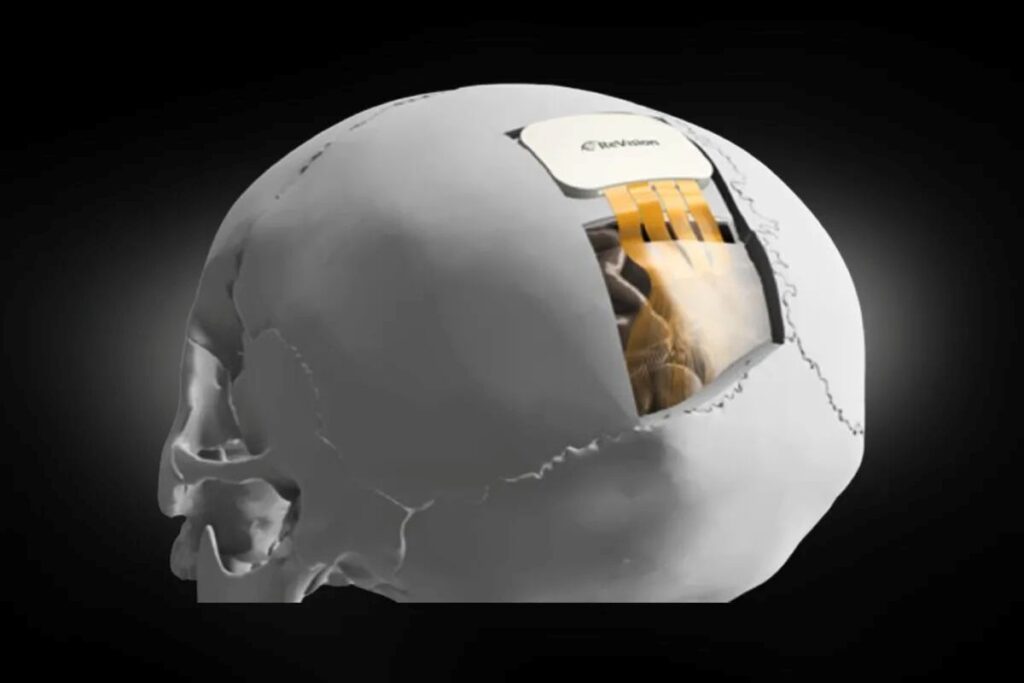
The race of neurotechnology applied to visual health has just taken a giant leap. The Belgian startup ReVision Implant has announced that its cortical visual prosthesis, called the Occular system, has received the designation of “Breakthrough Device” from the FDA (the U.S. Food and Drug Administration).
This recognition is no small feat: it accelerates regulatory timelines and opens a direct communication channel with FDA experts, paving the way for the long-awaited clinical trials in humans.
How does the Occular system work?
Unlike other technologies that attempt to repair or replace damaged eye cells, ReVision Implant's system creates a complete “bypass” of the traditional ocular system. It is specifically designed for people with severe blindness whose vision loss cannot be resolved with retinal implants or therapies targeting the optic nerve.
The device combines two essential components:
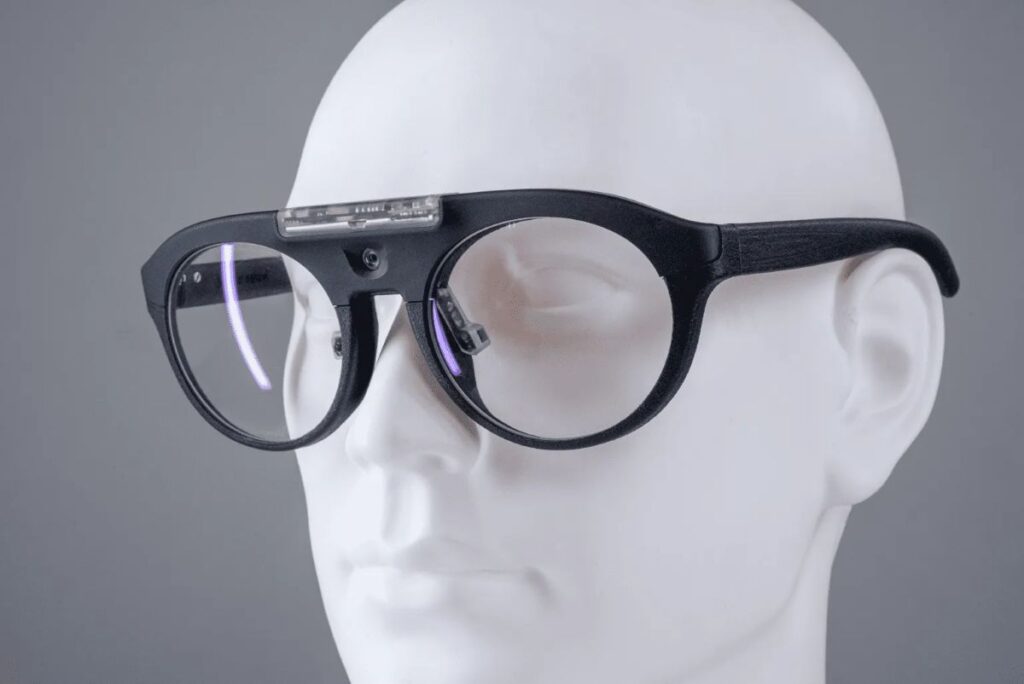
- External component (wearable): A miniature camera mounted on wireless glasses captures images from the environment.
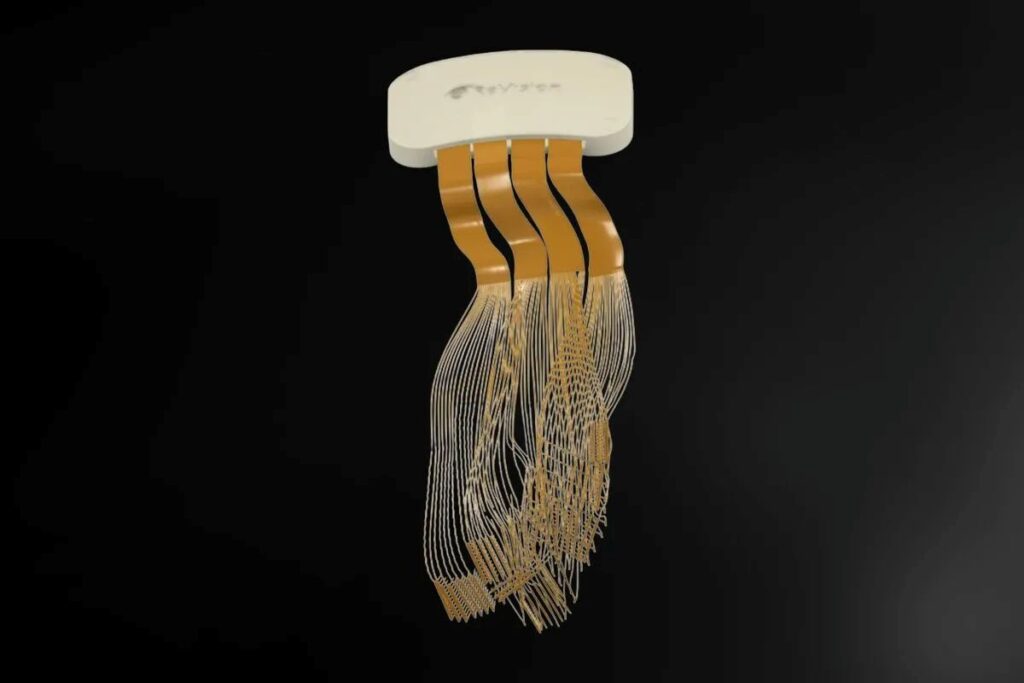
- Internal component (implant): These visual signals are processed and transmitted to a brain implant composed of dense arrays of ultra-flexible microelectrodes placed directly on the primary visual cortex.
The science behind the miracle: The electrodes stimulate neurons through electrical impulses, creating patterns that the brain interprets as points of light called phosphenes (similar to the flashes we see when rubbing our eyes). By activating multiple points simultaneously, simple visual patterns are formed, allowing the user to identify objects or avoid obstacles.

Why is this a paradigm shift compared to retinal implants?
Frederik Ceyssens, co-founder and CEO of ReVision Implant (born from the prestigious KU Leuvenuniversity), explains that while retinal implants are useful, they require a large portion of the retina to remain intact.
“The Occular system is more invasive because it is a brain implant, but it completely bypasses the optic nerve and retina. Therefore, it will be useful for nearly all cases of blindness,” says Ceyssens, highlighting that the primary target is those types of blindness that appear at early ages.
Additionally, the implant's architecture stands out for its extreme flexibility and biocompatibility. Being so thin, the device moves in sync with brain tissue, drastically reducing the risk of inflammation or long-term scar formation, while also allowing the system to scale to hundreds or thousands of electrodes to cover both central and peripheral vision.
From laboratory models to the first human volunteers
The technology already has solid preclinical backing. After more than two years of studies in animal models (mice and non-human primates), ReVision demonstrated consistent activation of the visual cortex and confirmed that subjects could differentiate between various stimulation patterns.
But the most promising are the preliminary human data, obtained through a research collaboration with Miguel Hernández University (UMH) in Spain:
- The pilot trial: Three blind volunteers received an implant with a small electrode array.
- The results: The patients managed to regain some degree of functional vision, allowing them to improve spatial orientation, locate objects, and recognize basic shapes, such as letters.
- The current challenge: This initial success covered only 11% of the visual cortex. ReVision's goal now is to radically expand this coverage using their own advanced electrode arrays to demonstrate the full concept in humans.
When will it reach patients?
With the FDA's backing and priority channel, ReVision Implant has a clear roadmap:
- End of this year: An initial short-term clinical study is planned, leveraging already scheduled brain surgery to test specific aspects of the implant in humans.
- Summer 2027: If the relevant regulatory approvals are obtained, the company plans to launch the first formal early-stage clinical trials with blind volunteers.
Visual neurotechnology is advancing at an unprecedented pace, and although technical and surgical challenges remain, systems like Occular promise to radically transform the autonomy and quality of life for millions of people with profound blindness worldwide.