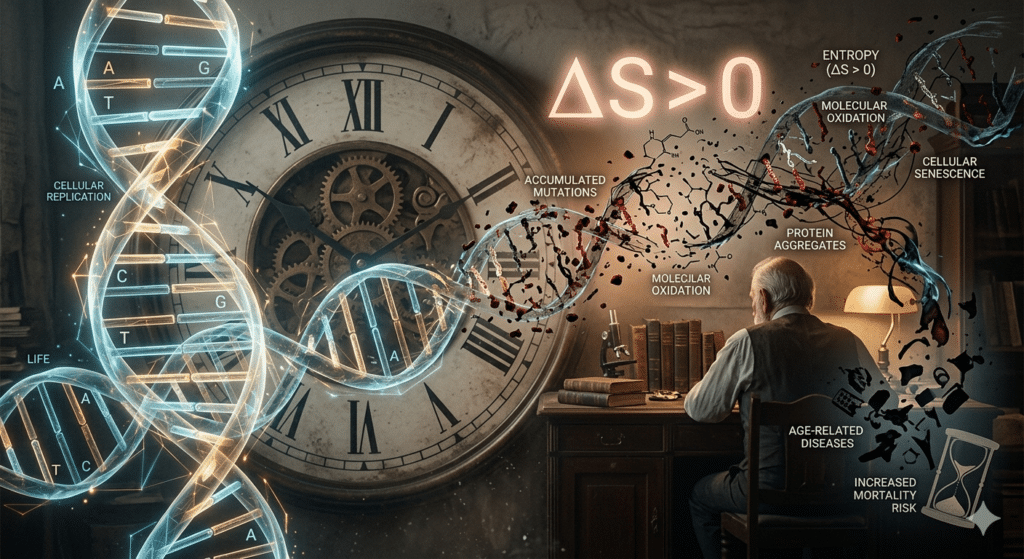
New research by biotech company Gero poses a different view of why we age. According to a study recently published in the journal Aging Biology, human ageing may be driven primarily by the entropy, a fundamental principle of physics that describes the natural tendency of complex systems to evolve from order to disorder.
This approach, inspired by the Second Law of Thermodynamics, proposes that as the years go by, there is a progressive accumulation of irreversible molecular changes in the body. These changes gradually increase the risk of age-related diseases and, ultimately, mortality. The model opens a new perspective for understanding the biology of ageing and could guide the development of therapies aimed at prolonging healthy life.
What is entropy as applied to biological ageing?
In physical terms, entropy describes the inevitable tendency of systems to lose organisation over time. When applied to human biology, this concept manifests itself as cumulative molecular damage in cells and tissues.
These changes include, for example:
- Errors in DNA methylation.
- Genetic mutations that accumulate with age.
- Alterations in cellular repair mechanisms.
- Progressive deterioration of the body's ability to maintain homeostasis.
Over time, this set of alterations makes the body more vulnerable to chronic and degenerative diseases. Although some current interventions - such as cellular reprogramming or senolytic drugs - can address certain aspects of ageing, they do not completely eliminate the irreversible changes driven by ageing.
Gero's study relies on the analysis of large human biomedical databases, including longitudinal records and DNA methylation profiles from the UK Biobank. From this data, the researchers developed models that describe how entropic damage accumulates over a lifetime.
The company uses artificial intelligence and machine learning models based on physical principles to identify causal pathways that explain the functional decline and progression of age-related diseases. This approach inverts the traditional paradigm of drug discovery from microscopic study of individual molecules to macroscopic analysis of ageing processes in human populations.
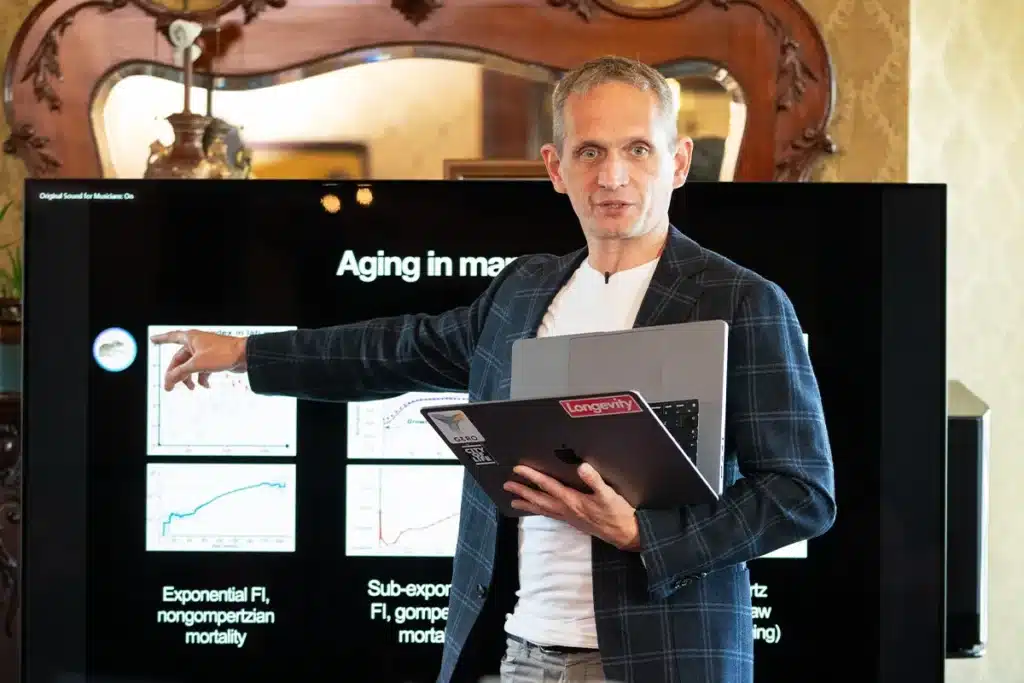
According to the theoretical physicist and CEO of the company, Peter Fedichev, Understanding ageing from the perspective of statistical physics can simplify biological complexity and accelerate the development of effective therapies.
The proposed model distinguishes two main mechanisms that explain age-related decline:
- Age-related diseases
These are identifiable systemic failures - such as hypertension or certain metabolic pathologies - which in many cases can be treated or controlled. - Cumulative microscopic molecular damage
It is the result of imperfect cellular repair processes that generate irreversible changes over time. It is this second mechanism that is hypothesised to be dominated by entropy.
This distinction has relevant implications for longevity medicine: controlling disease does not necessarily eliminate the deep ageing process if molecular damage continues to accumulate.
Why animal models may not reflect human ageing
One of the most controversial points of the study is the criticism of the use of mice as the main model to investigate ageing. Mice are short-lived and often die from age-related diseases before entropic damage accumulates significantly.
In contrast, humans can control many pathologies through medical treatments, allowing molecular damage to continue to accumulate over decades. This suggests that human ageing and that of short-lived species follow different biological dynamics.
According to Fedichev, this contrast explains why some anti-ageing treatments show promising results in animals but have limited effects in humans.
Based on their model, the researchers identified possible molecular targets that could regulate the entropic processes of ageing. The idea is to develop drugs capable of reducing or slowing down the accumulation of molecular damage.
If this strategy is successful, it could:
- Extending the period of life free of serious diseases.
- Delay the onset of multiple age-related pathologies simultaneously.
- Significantly improve the healthspan o healthy lifespan.
The company describes its approach within advanced levels of longevity research, ranging from therapeutic prevention of diseases of ageing to, at more ambitious stages, systemic reversal of ageing.
Is there a biological limit to human life?
The model also raises a fundamental question in longevity science: whether entropy imposes limits on life extension. According to the researchers, even if therapies capable of slowing ageing are developed, the accumulation of irreversible molecular damage could set a biological ceiling near the end of life. 120 years.
This does not mean that it is not possible to live longer in good health, but that completely reversing ageing may be extremely difficult from a thermodynamic point of view.
The entropic hypothesis of ageing introduces an important conceptual shift: instead of focusing solely on repairing or reversing specific markers of ageing, it proposes to approach the process from a systems perspective based on physics and human big data.
If confirmed in future studies, this approach could redefine the way longevity therapies are designed and direct research towards interventions capable of acting on the fundamental processes that determine biological decline.
For the rapidly advancing science of ageing - a field where biology, medicine, artificial intelligence and physics converge - understanding the role of entropy could be the key to the next great leap: extending not only the length of life, but also its quality.