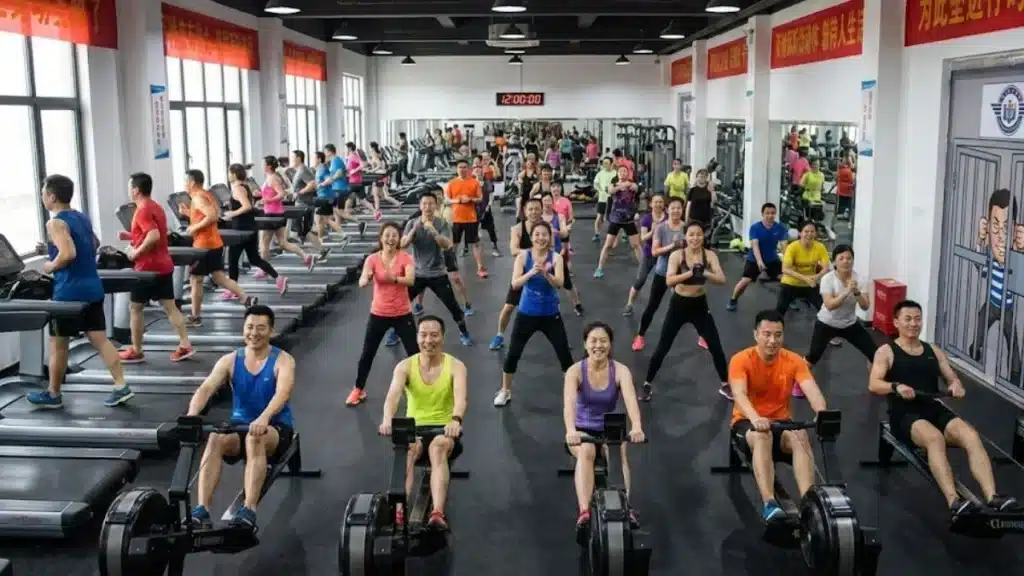
China is facing one of the biggest health challenges in its recent history: the accelerated growth of overweight and obesity in a population that, until a few decades ago, associated these problems with the West. More than 50% of Chinese adults are now overweight, and projections point to a steady increase unless effective measures are taken. In this context, initiatives have emerged that are as striking as they are controversial: the so-called “fat prisons”.”, The centres are closed centres where obese people voluntarily lock themselves up for a month to lose weight under a strict regime of diet, exercise and discipline.
Although the term “prison” is a media term, these spaces legally function as intensive weight loss camps. Its popularity has skyrocketed between 2025 and 2026 thanks to social media and international reporting, becoming a symbol of a radical response to a growing public health problem.
How these centres work
Participants agree to stay for approximately 28 days in a closed environment, The daily routine often includes rigid schedules, surveillance and strict rules. The daily routine usually includes up to four hours of supervised physical exercise, combined with a carefully controlled low-calorie diet. The aim is clear: to bring about rapid and visible weight loss in just a few weeks.
According to press reports, declines of between 4 and 14 kilos in less than a month, The results, while striking, should be interpreted with caution. There are no peer-reviewed scientific studies that systematically evaluate the efficacy, safety and sustainability of this model in the medium and long term.
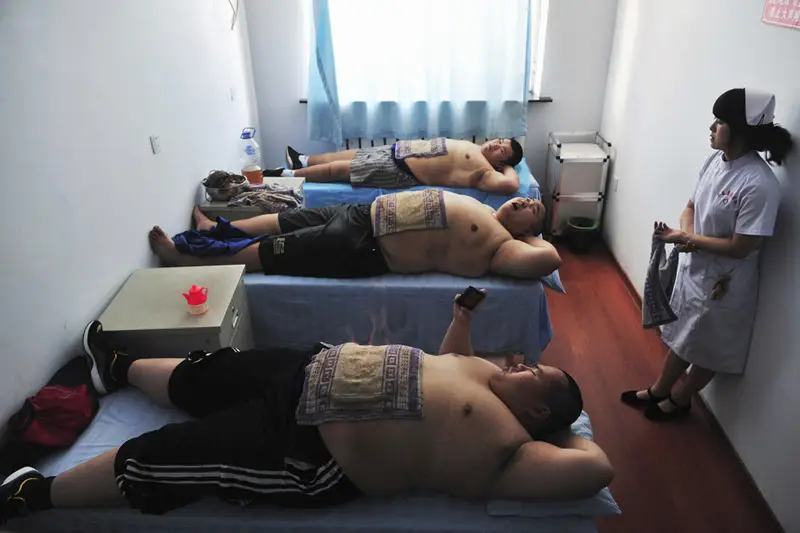
The role of the community: does it help to maintain healthy habits?
One of the arguments in favour of such centres is that living and training in community, The general scientific evidence partially supports this idea: weight loss programmes based on group support and community tend to show a positive impact on weight loss. The overall scientific evidence partially supports this idea: weight loss programmes based on group support and community tend to show better adhesion in the short and medium term than individual home-based interventions.
However, experts agree on one key point: the community only works if there is continuity. A closed, intensive setting can initiate change, but without further accompaniment - nutritional education, psychological support and behavioural strategies - most people regain the lost weight. In the case of “fat prisons”, there is no data to confirm that the habits acquired during the month are maintained after the programme ends.
Quick results, uncertain sustainability
From a welfare point of view, the main problem with these programmes is their focus on the accelerated weight loss. The scientific literature on obesity is clear: sharp declines are often accompanied by a high rebound rate if real and sustained lifestyle changes are not integrated.
In addition, the combination of intense exercise and calorie restriction may involve physical and psychological risks without proper medical supervision, especially in people with severe obesity or associated pathologies.
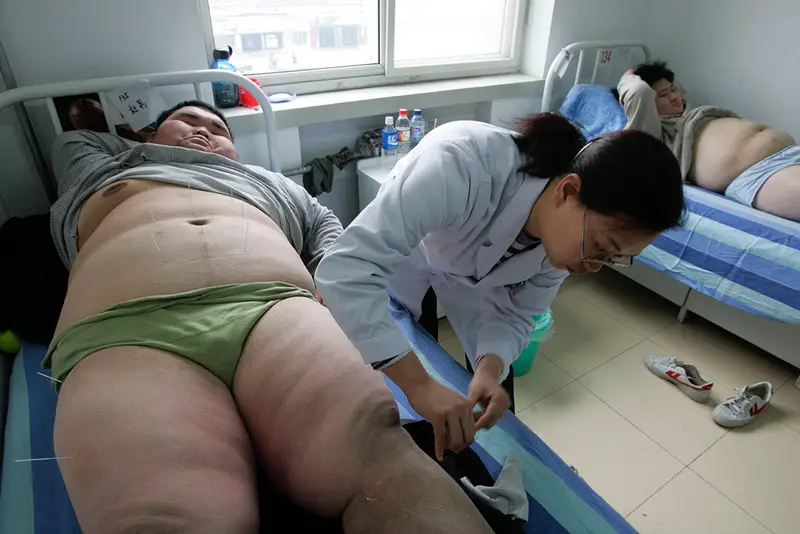
Are drugs such as semaglutide used?
Despite the fact that China has recently approved the use of anti-obesity drugs such as semaglutide (Wegovy) and is progressively incorporating them into the clinical management of excess weight, There is no evidence that these drugs are part of closed programmes. that have gone viral on the internet. The “fat prisons” are reportedly based exclusively on physical discipline, diet and environmental control.
This reinforces the idea that these centres respond more to a behavioural and cultural logic than a holistic medical approach.
Culture, discipline and social acceptance
The relative acceptance of these programmes in China cannot be understood without their cultural context. Discipline, effort, and self-improvement through demand are deeply rooted in the Confucian tradition and in contemporary education. In this framework, voluntarily submitting to a rigid environment can be interpreted as an act of responsibility and commitment to health, rather than as a coercive measure.
This cultural factor explains why initiatives that would be controversial in Europe or the United States find greater social tolerance in China, although this does not automatically make them effective or exportable.

Costs, benefits and emerging business
The cost of these programmes ranges from 600 and 1,500 dollars per month, The figures, including accommodation, meals and training, are relatively affordable in the intensive wellness market. For operators, they represent an opportunity within the so called "wellness market". slimming economy, The sector is growing, driven by the urgency for quick solutions to obesity.
For the user, the main benefit is the initial motivation and the feeling of a physical “reboot”. The risk is to mistake this impulse for real and lasting change.
A model exportable to Europe?
The short answer is no, at least not in its current form. Restrictions on freedom, even voluntary ones, pose legal, ethical and regulatory issues in most European countries. In addition, public health systems prioritise evidence-based approaches, psychological support and long-term sustainability.
However, some elements could inspire adapted models: residential wellness programmes, with an educational approach, medical supervision, psychological support and continuity after the stay. The key is not confinement, but the integration of change in real life.
China's so-called “fat prisons” are an extreme reflection of a global urgency: how to tackle an obesity epidemic that is advancing faster than traditional solutions. They function as an initial catalyst, but there is no evidence that they guarantee lasting changes in lifestyle habits..
From a health and wellbeing perspective, the message is clear: discipline can initiate change, community can reinforce it, but only education, accompaniment and autonomy can consolidate it.. The challenge is not to lose weight in one month, but to learn to live differently for years.