Red light and near infrared have moved from laboratories and specific medical applications into the wellness, aesthetics, sports recovery, and longevity markets. The technology has a biological basis and clinical evidence for some indications, although the market has oversimplified to extremes that are difficult to justify an intervention that depends on very specific parameters. For the consumer, the question is knowing what they are buying. For a wellness or medical center, the responsibility is greater: knowing what technology is being used, for what indication, at what dose, and with what evidence.
Photobiomodulation, known internationally as PBM, for photobiomodulation, describes the use of specific wavelengths of light to produce biological changes in tissues. Terms such as photobiostimulation, low-level light therapy o LLLT. also appear in the literature. “Biohacking” belongs to another realm: it is an expression of the personal optimization culture and not a scientific or regulatory category. PBM can be part of a biohacking protocol, just as it can be part of medicine, dermatology, rehabilitation, or wellness, but its nature is that of a modality of photobiology and photomedicine.
Its foundation does not consist of “giving energy” to the body in a generic sense. Certain cellular molecules can absorb photons and modify signals related to mitochondrial metabolism, ATP, reactive oxygen species, nitric oxide, calcium, inflammation, and tissue repair. The existence of these mechanisms does not imply that any exposure to red light produces any benefit. The effect depends on the interaction between wavelength, dose, irradiance, time, tissue, and therapeutic target.
“Red light,” “infrared,” “near infrared,” and “NIR” are not synonyms.
The red light commonly used in PBM is approximately between 620 and 700 nm and is especially interesting for superficial tissues, including the skin. Near infrared occupies approximately the 700-1,400 nm region, although in clinical photobiomodulation, wavelengths between approximately 780 and 1,100 nm are especially common.
Within that spectrum, wavelengths such as 630, 660, 810, 830, 850, and 1064 nm appear, but there is no simple correspondence whereby each number has a single function.
Red around 630-660 nm is frequently used in dermatological and superficial applications. 810-830 nm appear repeatedly in research on deep tissue, nerves, muscle, and transcranial photobiomodulation. 850 nm is common in body panels. 1064 nm is gaining interest in deep applications, especially for pain and musculoskeletal problems.
The choice depends on the target tissue, not on which number is highest; knowing that a machine uses 660 and 850 nm does not allow you to know what dose the body is receiving. You need to know the irradiance, usually expressed in mW/cm², and the fluence, expressed in J/cm².
The basic relationship is: Fluence = irradiance × time.
A 20-minute exposure at 10 mW/cm² is approximately equivalent to 12 J/cm². The same 20-minute exposure at 100 mW/cm² is equivalent to 120 J/cm². The time is exactly the same; the dose is ten times higher.
The situation becomes even more complicated due to the so-called biphasic response of PBM: a dose that is too low may not produce an appreciable effect, and increasing the dose indefinitely does not guarantee better results either. The scientific literature has described response windows in which a given exposure is favorable while higher doses may reduce the response.
That is why a recommendation such as “use red light for 15 minutes three times a week” is meaningless if we do not know what light and what power are being administered during those 15 minutes.
There is no biological boundary that says a light can only produce photobiomodulation if it is inside a clinic. A correctly designed home device can provide an exposure capable of producing biological effects. Nor are all medical devices necessarily more effective than all consumer devices.
The difference lies in the intended purpose, the performance, the safety, the documentation, the regulation, and, above all, the correspondence between the protocol and the available evidence.
For some specific applications, there are reasonably solid clinical results with specific devices and protocols. Androgenetic alopecia is a good example. Certain applications in peripheral neuropathy, wound healing, and other conditions also have favorable evidence. That does not allow one to claim that any red panel can treat those conditions.
Is a medical device needed to produce a biological effect?
Not necessarily, but it may be necessary when the intention is to make a medical claim, treat a disease, or use the technology as a health intervention, depending on the intended purpose and the applicable regulatory framework.
European and U.S. regulation does not simply classify machines according to whether they are “red” or “infrared.” The declared purpose and the risk are fundamental elements.
The expression “medical grade” is not in itself a guarantee of efficacy either. A center should be able to explain what it means exactly in the case of its equipment, what certification it has, what its intended use is, and what evidence supports the indications it offers.
In Europe, moreover, there are specific requirements for certain products without a medical purpose that use optical radiation and are included in Annex XVI of the MDR.
The ethical question for a center is simple: if wellness is offered, talk about wellness; if medical treatment is offered, have the corresponding health and regulatory framework.
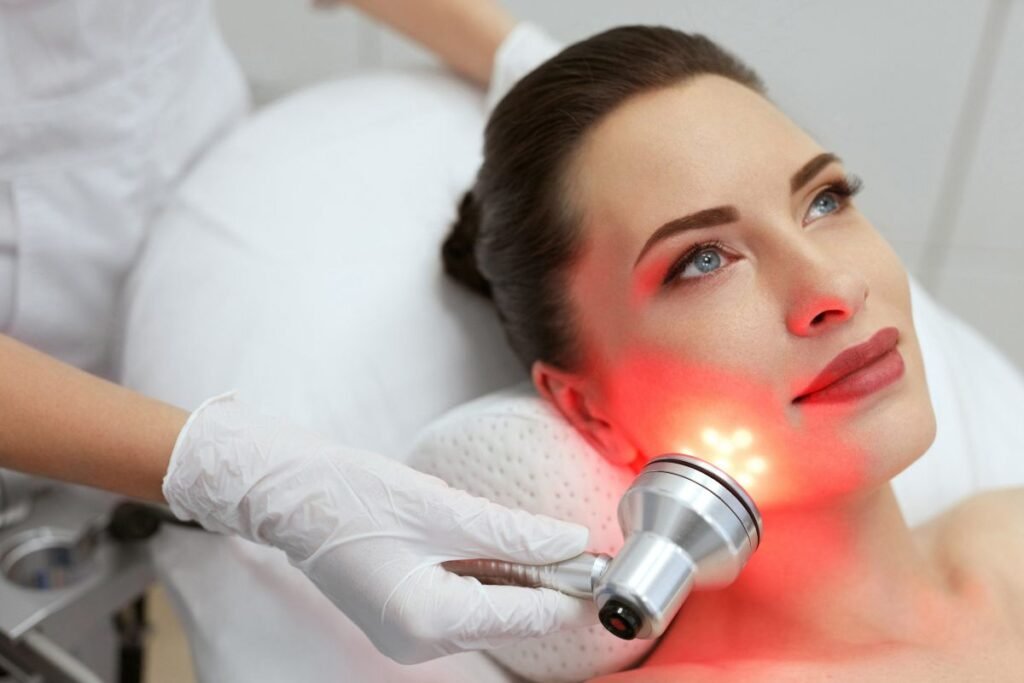
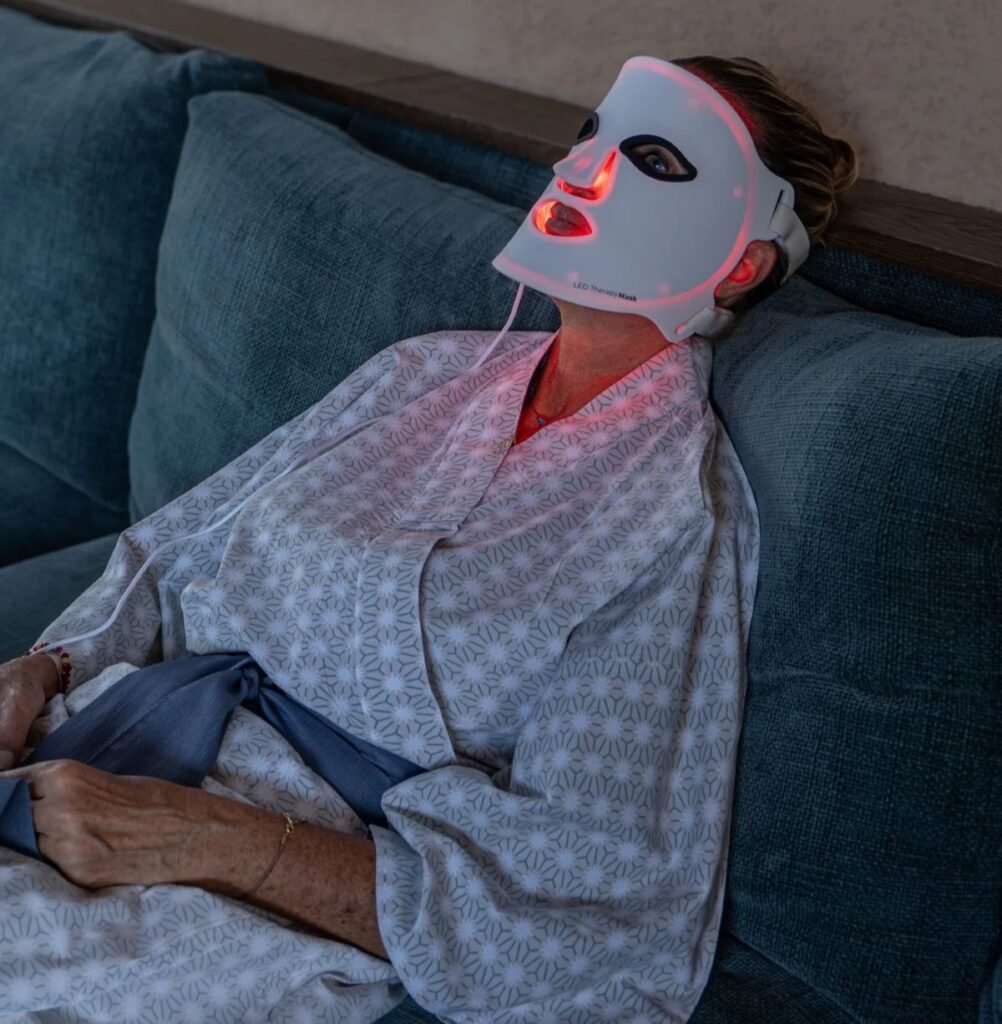
A facial mask directs light onto a limited surface and may be appropriate for specific skin goals.
A scalp device is designed to work on the scalp and follicles.
A transcranial helmet attempts to get a sufficient number of photons through the scalp and skull to reach brain structures. In this context, wavelength, power, emitter distribution, and anatomy become extraordinarily important.
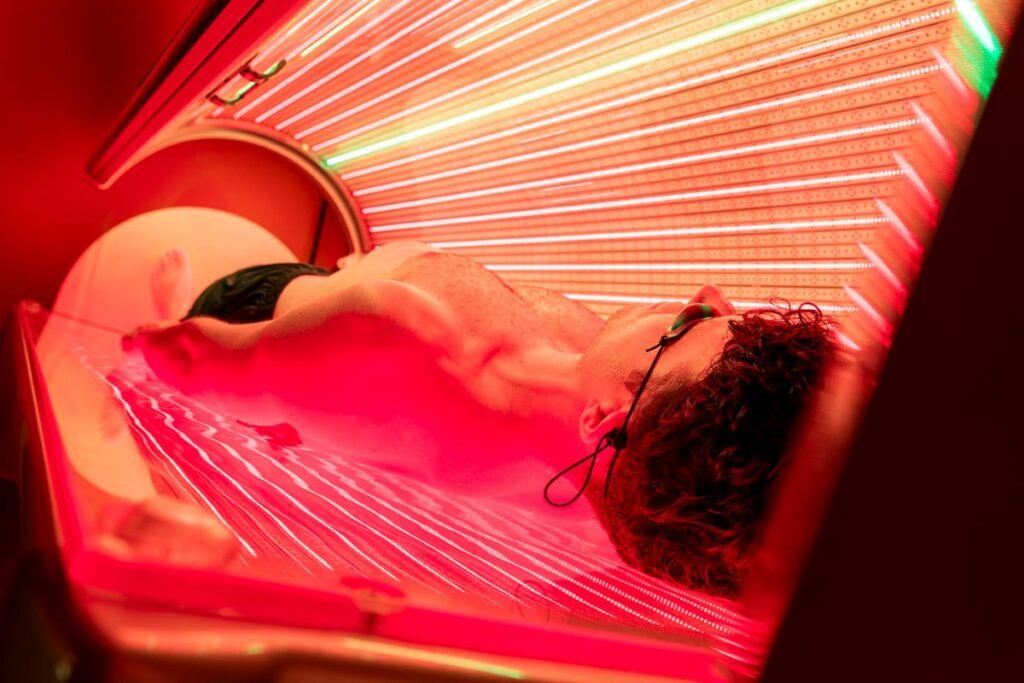
A full-body panel illuminates large surfaces of skin and peripheral tissues. That can make sense for muscular goals, recovery, or broad dermatological applications.
But illuminating more surface area does not automatically mean producing a greater systemic effect, nor is there evidence to support the claim that illuminating only the brain is equivalent to illuminating the entire body.
Sunlight does not work as a large natural PBM session: vitamin D is synthesized primarily in the skin through UVB radiation, and the brain does not receive sunlight to synthesize vitamin D and then distribute it to the rest of the body. PBM uses a specific fraction of the spectrum and seeks to trigger photochemical responses in the exposed tissues.
Research on systemic PBM is promising, but far less established than some localized applications. A specific review of full-body PBM found only five human studies that met its criteria and concluded that the evidence was still insufficient to establish general systemic benefits. This has an important practical consequence: a center should not sell a full-body bed as a proven technology to “rejuvenate the entire body” simply because it illuminates the entire body.
The treated surface and the systemic effect are two different issues: a device does not have a universal dose regardless of where it is placed. The irradiance the skin receives depends on distance, optics, angle, and the characteristics of the source.
That is why “use at 20 centimeters” only makes sense when accompanied by information about the irradiance obtained at those 20 centimeters. A panel may be designed to be used at 10, 20, or 30 centimeters; a mask may be in direct contact with the skin; a helmet may maintain a fixed geometry; a laser may be applied directly to a specific area.
A center may have excellent technology and use it correctly, but it can also have technically sophisticated equipment and reduce the treatment to a generic commercial protocol: the difference lies in dosimetry. A professional protocol should identify:
- wavelength or wavelengths;
- irradiance;
- fluence;
- time;
- distance;
- treated surface;
- continuous or pulsed emission;
- session frequency;
- number of sessions;
- indication;
- contraindications and precautions;
- and evidence justifying the protocol.
This does not mean the professional has to calculate every session from scratch. A serious manufacturer can provide a validated protocol for a specific device. What the person administering the treatment should know is what they are administering and why.
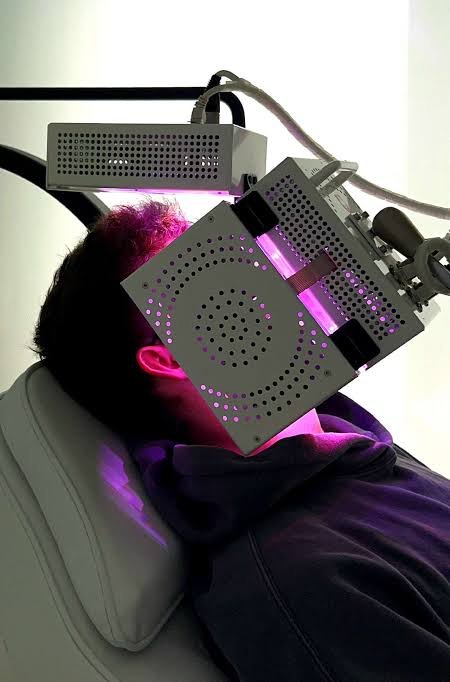
Duration is not an indicator of quality either. A 30-minute session is not necessarily better than a 10-minute one. Everything depends on the irradiance and the dose needed for the goal. For the same reason, a machine that provides 100 mW/cm² is not automatically superior to another that provides 50 mW/cm².
The question is whether that irradiance allows the appropriate dose to be reached in a reasonable time and within the appropriate biological window: more power does not necessarily mean more efficacy.
Five technical questions make it possible to quickly detect whether the center truly knows the technology:
- What wavelength does the device use?
- What is the irradiance my skin receives?
- What fluence will I receive in the session?
- At what distance is it applied, and how has that irradiance been measured?
- What is the complete protocol, and what evidence supports the goal being offered to me?
If the answer is “it activates the mitochondria,” the question still has not been answered. If the center can provide the parameters, explain the indication, and show the basis of the protocol, there is a much more solid foundation for evaluating the treatment.
You do not need to become a physicist specializing in optics to buy a good device, but you do need to learn how to read a technical specification sheet. At minimum, it should include:
- Wavelength: expressed in nanometers.
- Irradiance: mW/cm² or W/cm².
- Measurement distance: at what distance the stated irradiance is obtained.
- Fluence: J/cm² or sufficient information to calculate it.
- Recommended time: linked to that irradiance.
- Frequency: number of sessions and frequency.
- Treatment area: especially important in panels.
- Eye safety: protection guidance where applicable.
- Contraindications and warnings.
- Intended use and regulatory status.
- Identifiable manufacturer and technical documentation.
If a machine advertises five different benefits and does not provide irradiance, the information needed to calculate the dose, or studies related to its parameters, that should raise caution.
PBM has a generally favorable safety profile when used correctly. The international consensus published in 2025 considers the modality safe in adults and found no evidence of DNA damage associated with red light PBM.
That does not mean every exposure is harmless: an excessive dose may be unnecessary, and certain sources can produce thermal effects; irritation, sensitivity, discomfort, pigmentation changes, or burns may appear depending on the technology and the exposure.
The eyes require special consideration, especially with devices aimed at the face or head. Photobiological safety standards establish criteria for evaluating these risks.
Photosensitivity, certain photosensitizing medications, eye diseases, certain conditions, and other clinical situations must also be taken into account. Contraindications depend on the device and the indication, so a list of precautions from one machine should not be automatically extrapolated to another.
The fundamental idea is: “low intensity” does not mean “no dose,” and “red light” does not mean “no risks.”.
What should a center that wants to incorporate this technology do?
The first step should be to define what problem the center wants to solve.
If the goal is to offer a general wellness experience, the protocol can be simple, provided it is properly defined and expectations are communicated honestly.
If the goal is to work on skin, alopecia, muscle recovery, pain, or another specific condition, the center should select the device based on the indication and the evidence, not the other way around.
The professional sequence should be: indication → evidence → wavelength → dosimetry → device → protocol → training → follow-up. Buying the equipment first and then looking for what benefits can be advertised completely reverses the process.
Professional training is just as important as the machine
A professional who incorporates PBM does not need to become a photobiology researcher, but they should understand the fundamental concepts of optics and dosimetry.
Adequate training should include: photobiology, light-tissue interaction, wavelengths, irradiance, fluence, biphasic response, temporal parameters, photobiological safety, indications, contraindications, critical reading of studies, and use of the specific device.
Professional organizations such as WALT, the World Association for Photobiomodulation Therapy, offer specific training in PBM. For a medical center, moreover, the level of knowledge should correspond to the clinical indications it intends to offer.
The manufacturer's data sheet does not take into account that irradiance can change over time, and in professional equipment it is reasonable to establish maintenance and verification procedures.
This is particularly relevant in large panels, where irradiance may not be uniform across the entire surface. A center that charges for a dosed intervention should be able to demonstrate that its equipment maintains performance compatible with the protocol being used. Dose traceability is part of service quality.
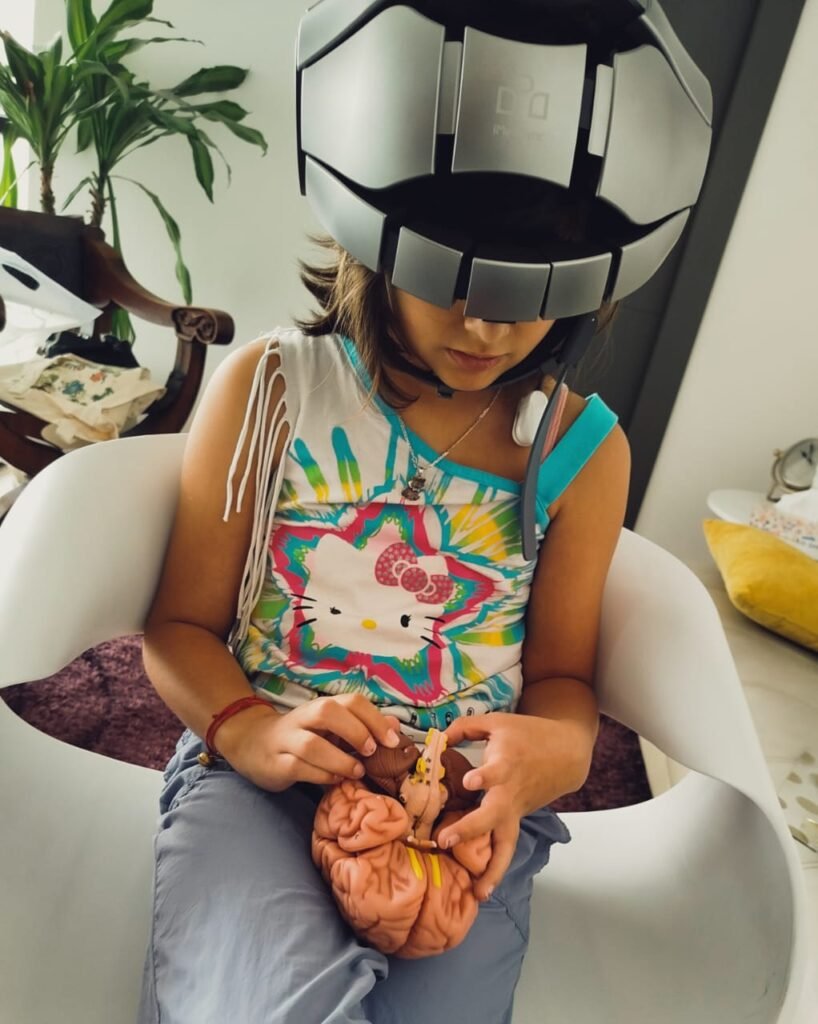
The concept of “medical grade” deserves closer scrutiny
“Medical grade” is a commercial expression that can create a false sense of security. It does not automatically mean: “this device works.” Nor does it mean: “this device is better than any home product.”.
You have to ask which body has certified it, under what regulation, for what purpose, with what classification, and what indications are actually authorized or supported.
A device can be technically excellent and have no evidence for a given indication, and a product intended for wellness can offer a biologically active exposure without being intended to treat diseases.
Technology, regulation, and clinical efficacy are three different questions.
The market is evolving toward multimodal systems with multiple wavelengths, portable devices, micro-LED arrays, pulsed emission, systems adapted to anatomy, and technologies capable of concentrating light in specific tissues.
In deep applications, 1064 nm represents a particularly interesting line of research. In neurophotobiomodulation, 810-850 nm and 1064 nm are being studied with different geometries and protocols. In dermatology, combinations of red and NIR continue to be developed.
A simple device that correctly administers a studied dose for a specific indication can be a much more sensible professional choice than a state-of-the-art machine with ten functions and no specific clinical evidence.
Photobiomodulation should not be evaluated by asking only: “Does red light work?” but rather “Has this wavelength, applied at this irradiance, for this time, with this fluence, on this tissue, and at this frequency, been shown to produce the effect being promised?”
If the answer is documented, there is a scientific basis for using the technology.
If we only know the color of the light, the duration of the session, and a list of promises, we still do not really know what treatment we are administering.
Consumers don't need to buy the most powerful machine or necessarily go to a clinic; they need to know what device they're using, what dose it delivers, what objective there is evidence for, and what the recommended protocol is. A good home device used correctly can make sense, a professional session can make a lot of sense, but a professional session without dosimetry doesn't gain effectiveness just because it's performed in a clinic.
For a wellness center: The opportunity lies in offering an honest service, with realistic expectations and documented parameters. There's no need to promise longevity, detoxification, systemic rejuvenation, or “cellular optimization” for the technology to be interesting. Credibility can be built around something much simpler: knowing exactly what you're doing.
For a medical center: selecting the indication, reviewing the evidence, understanding the device's intended use, establishing inclusion and exclusion criteria, training staff, controlling the parameters, and recording the treatment allows PBM to be integrated into responsible clinical practice.
Photobiomodulation has enough science behind it that it doesn't need exaggerations — precisely for that reason, it deserves to be treated as a technology and not as a promise.