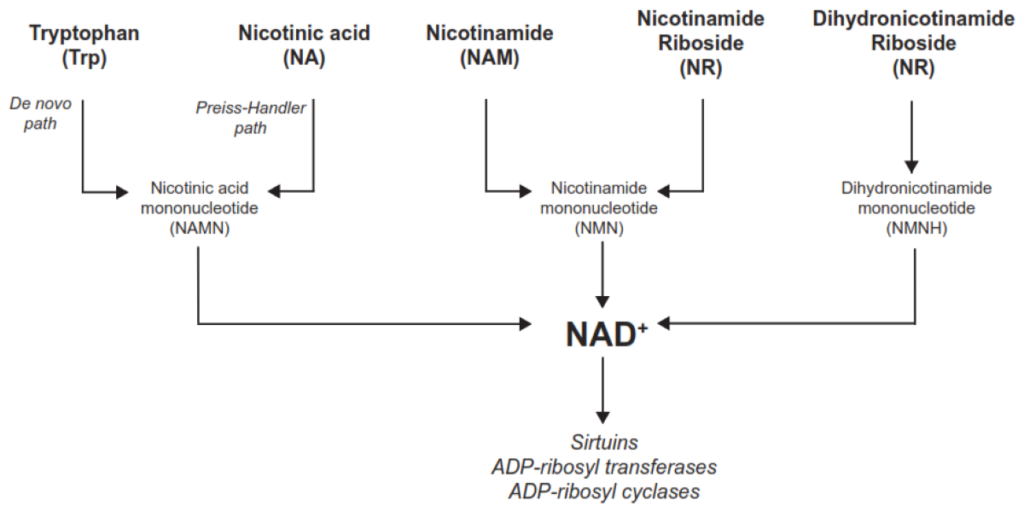
Before NMN burst onto the market and became one of the most popular supplements in the longevity space, few consumers had heard of NAD+. However, this molecule has been central to research on cellular metabolism, aging, and energy production for decades. Its progressive decline with age has been linked to reduced mitochondrial efficiency, disruptions in DNA repair mechanisms, and a gradual loss of cellular resilience.
The enormous media attention NAD+ has received has led to the emergence of hundreds of supplements promising to restore its levels. The problem is that, under that same label, very different biological strategies coexist, with varying degrees of evidence. Some provide precursors like NMN or nicotinamide riboside (NR); others incorporate NAD+ directly; and a new generation of formulations attempts to act on multiple metabolic pathways at once.
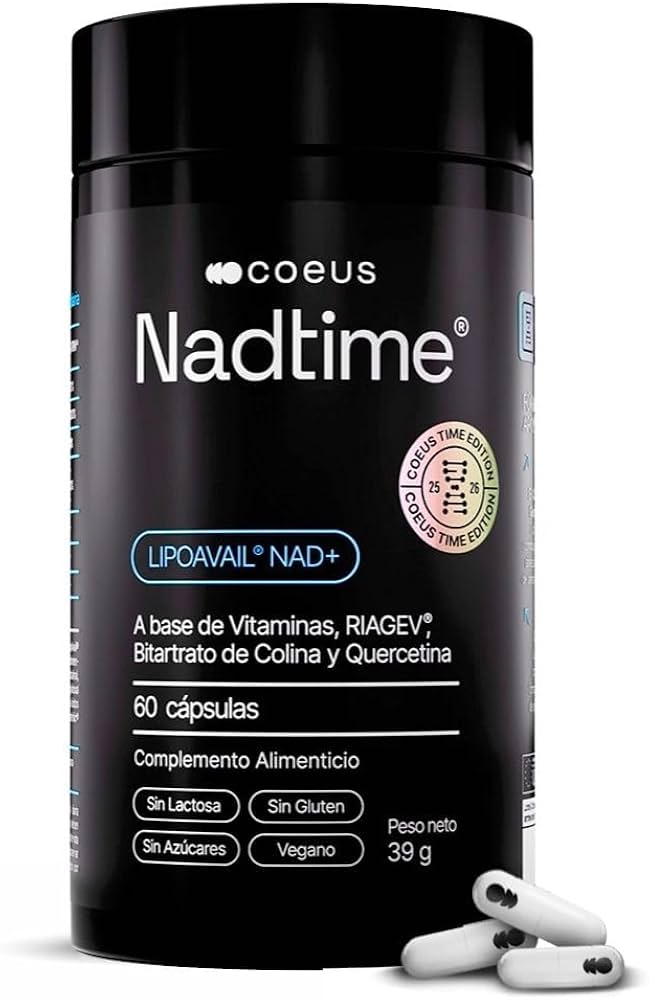
In this context, a supplement called NadTime, developed by Coeus Time, deserves attention not so much for leveraging the NAD+ appeal, but because it proposes a different approach from most products currently dominating the market.
The scientific question has been the same for years. NAD+ is an essential molecule for cellular life, but taking it orally does not automatically guarantee increased intracellular levels.
Various researchers argue that a large portion of ingested NAD+ may be degraded in the digestive tract before being reused by cells, which is why research in recent years has focused mainly on its precursors, especially NMN and NR. These compounds leverage the body's natural synthesis pathways to increase NAD+ availability, although the magnitude of that increase and its clinical translation remain under study.
It is precisely for this reason that formulations attempting to address the issue from a broader perspective are beginning to appear.
A strategy based on multiple metabolic pathways
While many supplements bet on a single molecule, NadTime combines several components with complementary functions.
On one hand, it incorporates liposomal NAD+ (LipoAvail®), a technology designed to protect the molecule during its passage through the digestive system and improve its bioavailability. Although the use of liposomal systems is promising, more independent studies are still needed to demonstrate the extent to which this strategy consistently increases intracellular NAD+ levels compared to other formulations.
Alongside NAD+, it includes RiaGev®, a patented combination of nicotinamide and D-ribose developed to support endogenous NAD+ synthesis. Unlike approaches based exclusively on NMN or NR, this formulation aims to stimulate one of the body's natural production pathways. Some preliminary studies show increases in certain biomarkers related to NAD+ metabolism, although robust clinical evidence is still lacking to establish benefits on functional or aging parameters.
The formula is completed with 100 mg of choline bitartrate, vitamins B6, B12, and folate in their biologically active forms —P-5-P, methylcobalamin, and Quatrefolic®—, avoiding synthetic versions that require several metabolic conversions before being used by the body. This choice is especially interesting in people with certain genetic variants that affect folate metabolism.
The importance of reducing NAD+ consumption
Another difference from many conventional formulations is the inclusion of quercetin.
The goal is not to directly increase NAD+, but rather to try to limit part of its degradation. With age, the activity of enzymes such as CD38, responsible for consuming increasing amounts of NAD+, rises. Quercetin has shown in experimental studies the ability to partially modulate this activity, although clinical evidence in humans remains limited and does not yet allow definitive conclusions to be drawn.

In the words of Diego Suárez, Founder and President of Coeus Retroaging, “NadTime's approach is not just about providing more “fuel,” but also about trying to reduce some of the accelerated consumption associated with aging“.
The longevity market has oversimplified an extraordinarily complex biological system. Expressions like “recharge NAD+,” “rejuvenate cells,” or “activate longevity” frequently appear in advertising, but they do not faithfully reflect the current state of scientific knowledge.
Increasing NAD+ levels is a biomarker of interest, but it does not yet equate to demonstrating clinical improvement in parameters such as lifespan, cognitive performance, or prevention of age-related diseases. Trials conducted to date offer promising results in some contexts, although most have a small number of participants and relatively short follow-up periods.
Are we entering a second generation of NAD+ supplements?
The development of multimodal formulations reflects an evolution in scientific knowledge. Instead of relying exclusively on a single precursor, these strategies attempt to intervene simultaneously on different mechanisms: increasing NAD+ synthesis, protecting the molecule during absorption, providing essential cofactors, and limiting part of its degradation.
It is still too early to say that this approach is clearly superior to traditional formulations based on NMN or NR. That answer will only come with independent comparative studies and larger clinical trials. However, it represents a logical evolution in a field that continues to advance rapidly.
For the consumer, the main takeaway is simple: when two products claim to “boost NAD+,” they are likely using completely different mechanisms. Understanding those differences is far more useful than getting carried away by the name of the molecule on the label.
Differences between NadTime and most NAD+ supplements
| Feature | NadTime | Many conventional supplements |
| Strategy | Combines multiple metabolic pathways | A single molecule |
| Main ingredient | Liposomal NAD+ + RiaGev® | NMN, NR, or NAD+ |
| Active cofactors | Yes (active B6, B12, and folate) | Not always |
| Modulation of NAD+ consumption | Includes quercetin | Usually not |
| Scientific evidence | Promising, recently launched | Varies by compound |
The true value of NadTime does not lie in promising more than its competitors, but in trying to address one of the main limitations that has accompanied NAD+ since the beginning of this research: how to effectively increase its cellular availability. Whether this multimodal strategy will ultimately demonstrate clinical advantages over NMN or NR is a question that science still needs to answer. Meanwhile, it represents one of the most sophisticated proposals to have emerged in a market where, all too often, marketing has advanced faster than evidence.