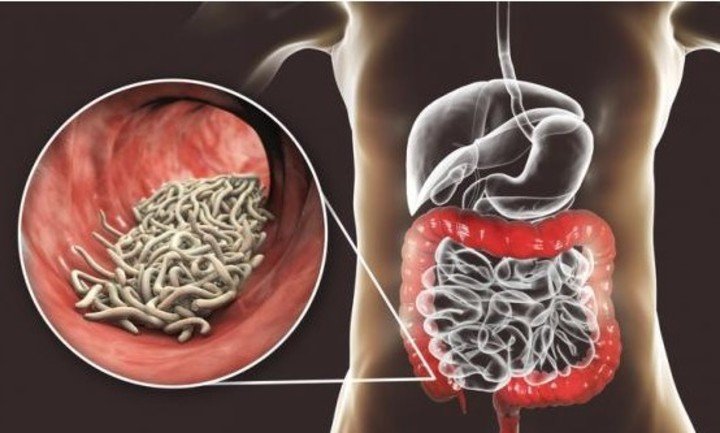
So-called “parasite cleanses” have gained popularity on social media, associated with symptoms such as bloating, fatigue or digestive problems. Medicine, however, raises a prior question: is there really an infection to treat?
If the gut isn't working properly, bloating, gas, fatigue or changes in bowel habits appear, there may be a parasite behind it. An antiparasitic cure might then seem like a simple solution to “cleanse” the body.
The problem is that these symptoms are very common and can have many causes. A parasitic infection is a possibility, but it cannot be diagnosed simply based on how a person feels.
The Spanish Society of Infectious Diseases and Clinical Microbiology (SEIMC) recommends guiding the diagnosis based on symptoms, medical history and possible routes of exposure. Having traveled, consuming certain foods or water, living with an infected person or having specific circumstances can increase suspicion. Without that data, taking an antiparasitic blindly provides little information and can delay the search for the true cause of the problem.
Having a parasite doesn't always mean being sick
Here an important distinction appears. Finding a microorganism in the gut doesn't necessarily mean it's responsible for all the symptoms.
An interesting example is Blastocystis, a gut microorganism that for a long time has been considered simply a parasite. An international study published in Cell in 2024, with nearly 57,000 people from 32 countries, found that its presence was associated with a higher-quality diet and some more favorable metabolic indicators.
The finding may be surprising, but it doesn't mean that Blastocystis is beneficial or that it should be sought out or consumed. The study demonstrates an association, not that the microorganism is the cause of better health.
The gut microbiota is far more complex than some of today's “gut cleanses” suggest. There are microorganisms that can be harmful under certain circumstances and others whose function we are still trying to understand.
What about natural antiparasitic cures?
Various plant combinations promising to eliminate parasites circulate on the internet. One of the best known is the so-called Hulda Clark cure, based mainly on black walnut, wormwood and clove.
Just because a plant has certain properties in a laboratory doesn't mean a mixture of plants will eliminate an infection in a person. To prove that, clinical trials in humans are needed.
In the case of this cure, there is no solid clinical evidence to recommend it as a general treatment against parasitic infections.
Furthermore, “natural” doesn't automatically equal safe. Wormwood, for example, contains thujone, a substance that can be toxic in certain amounts. Concentrated extracts can also interact with medications or show significant differences in their composition.
The most useful question before taking any product of this type is simple: has this product been shown to work in people and for this specific infection?
The danger of turning an antiparasitic into a cancer treatment
The phenomenon becomes even more concerning when some antiparasitics start being promoted as cancer treatments or as tools to prolong life.
Ivermectin and mebendazole are medications used against certain parasitic infections. Both have sparked interest in oncology research due to results obtained in cells and animals. That may justify continued research, but it doesn't allow claiming they cure cancer.
The case of fenbendazole is even clearer. It is a veterinary medication used against parasites in animals. In recent years it has gained popularity on the internet among people seeking alternative cancer treatments.
There is no clinical evidence to recommend it for treating cancer in humans. Additionally, a case has been published of a patient who suffered severe liver injury after using fenbendazole on her own.
The Spanish Agency for Medicines and Health Products (AEMPS) clearly distinguishes veterinary medications from those intended for people. Just because a product is effective against certain parasites in an animal doesn't mean it is safe or effective in humans.
Here it's worth remembering a basic rule of medical research: a result obtained in a cell or in an animal is the beginning of research, not the end of clinical research.
What if parasites have some positive effect on immunity?
This is probably one of the most interesting questions and also one of those most easily prone to exaggerated interpretations.
Some parasites can modify the immune system's response. Researchers study these mechanisms because they could help develop new treatments for certain inflammatory diseases.
From this arises a hypothesis known as the “old friends” hypothesis: the contact our ancestors had with a wide variety of microorganisms and parasites could have influenced the evolution of the immune system.
The hypothesis is interesting, but it doesn't mean that deliberately infecting yourself is healthy.
Trials conducted with certain intestinal worms have not demonstrated sufficient benefits to turn this strategy into a recommended treatment for inflammatory bowel diseases. There is also no evidence that infecting yourself with parasites helps you live longer.
Parasites exist and some do need treatment
Questioning indiscriminate antiparasitic cures doesn't mean that parasitic infections are a myth or that they lack importance.
There are parasitic infections that are perfectly recognized by medicine and that require treatment.
Anisakis is a good example in Spain. Eating raw or undercooked fish or cephalopods can cause anisakiasis. Prevention involves proper handling and cooking or, in certain preparations, freezing the fish beforehand.
Pinworms are common especially among children and produce a very characteristic symptom: itching around the anus, which usually intensifies at night. In these cases, there are specific tests and treatments targeting the parasite.
Giardiasis can also cause digestive problems and is especially relevant in people who have been exposed to contaminated water or food.
These are very different situations from one another and, precisely for that reason, it makes no sense to talk about a single “antiparasitic cure” that works for everything.
Before doing a parasite cleanse, four questions
The first is probably the most important: What makes me think I have a parasite?
Then it's worth asking whether there is an exposure that justifies it: a trip, certain foods, unsafe water, contact with an infected person, or another specific circumstance.
The third question is what test can confirm the suspicion. Depending on the parasite, it may be necessary to analyze stool, perform a specific test, or use another diagnostic method.
And the fourth: Is the treatment I have been recommended indicated for that parasite and is it intended for people?
If there is no clear answer to these questions, perhaps the next step is not to buy an antiparasitic cure, but rather consult with a healthcare professional.
Medicine has effective treatments for many parasitic infections. The key is to use them when there is an indication and to choose the right treatment for the organism that is actually causing the infection.
The popularity of intestinal cleanses also reflects something deeper: the desire to find a simple explanation for symptoms that have sometimes been with us for a long time. In digestive health, however, an appealing explanation is not always the correct one.
Deworming as a routine does not form part of a general prevention strategy for a healthy person. When there is a real suspicion, diagnosis allows us to move from uncertainty to a specific treatment.