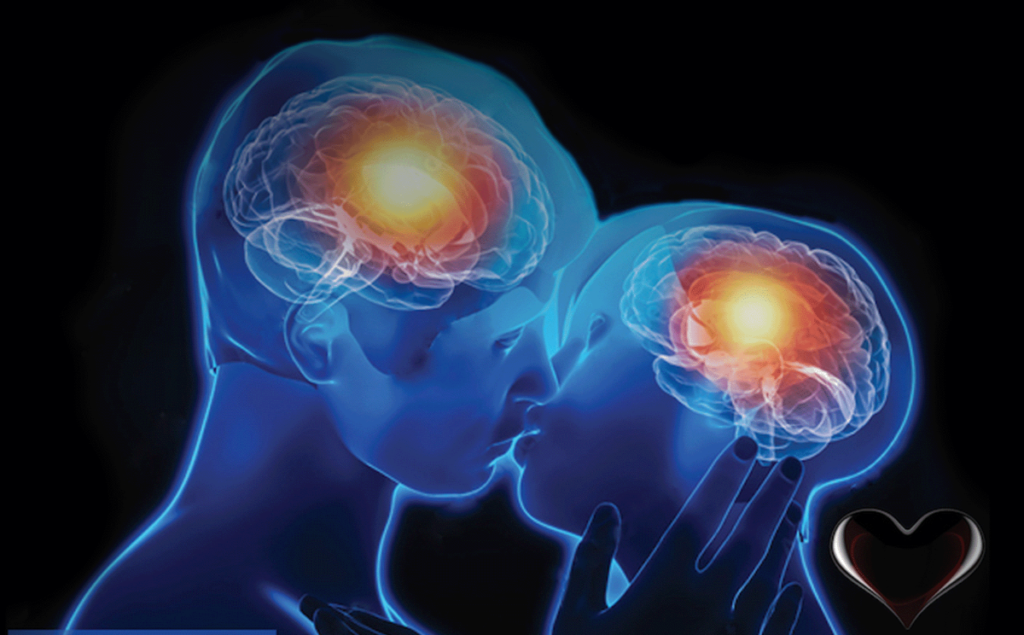
Wanting, pleasure and reward are three different processes. Dopamine drives motivation, while other neural mechanisms are involved in the pleasurable experience. Understanding this difference allows us to better understand addictions, compulsive habits and our relationship with immediate gratification.
Why do experiences that we await with enormous enthusiasm and that, once achieved, produce less satisfaction than we imagined? We buy something we have been wanting for weeks, we open the fridge looking for something we particularly fancy or we repeatedly check our phone hoping to find something new. Anticipation can be intense, even though the actual enjoyment barely lasts a few minutes.
This difference between what we want and what we actually enjoy has a neurobiological explanation. The brain has partially differentiated systems for generating motivation, experiencing pleasure and learning which stimuli deserve our attention. All three work in a coordinated way, although they do not always maintain the same balance.
One of the researchers who has contributed most to understanding these mechanisms is Kent Berridge, professor of Psychology and Neuroscience at the University of Michigan, together with the neuroscientist Morten Kringelbach, from the University of Oxford. Their research has made it possible to question one of the most widespread ideas about how the brain works: that dopamine is, quite simply, the chemical substance of pleasure.
Wanting is not the same as enjoying
Research distinguishes three fundamental components of the reward system: wanting, liking y learning. Although they are related, each one fulfils a different function.
The wanting represents desire and motivation to obtain something. It is the mechanism that drives us to seek a reward, move towards it and devote efforts to obtaining it. It can be activated by a signal that anticipates a pleasant experience: the smell of food, the image of a product, a notification on the mobile phone or the proximity of an activity that interests us.
The liking corresponds to the hedonic impact, that is, to the pleasure we experience when we truly enjoy that reward. It is related to the sensory and emotional satisfaction produced by eating something we like, listening to music, maintaining affectionate contact or contemplating a landscape.
The third component, learning, is learning. The brain records the associations between certain stimuli, the actions we perform and their consequences. Thanks to this mechanism, we remember which experiences have been satisfactory and which are worth repeating or avoiding.
All three processes intervene in our daily behaviour, although not necessarily with the same intensity. We can feel a very high desire without afterwards experiencing a proportional pleasure. We can also enjoy an experience without developing a particularly intense motivation to repeat it.
This separation is fundamental to understanding why some behaviours are maintained even when the satisfaction they provide decreases.
Dopamine: the engine of motivation, not a simple happiness molecule
Dopamine usually takes a leading role in conversations about wellness, habits and brain health. It is associated with happiness, motivation, productivity and immediate rewards. However, this interpretation considerably simplifies its function.
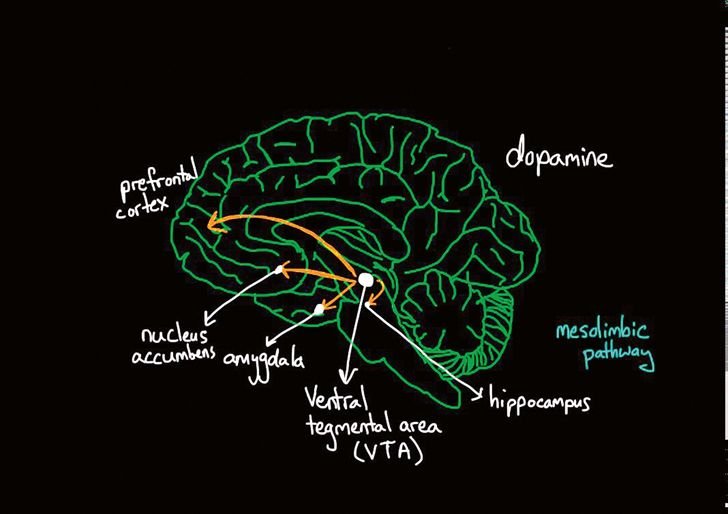
Dopamine plays a prominent role in the mechanisms of motivation, learning and attributing relevance to stimuli. In particular, it contributes to what Berridge and Robinson call incentive salience: the process by which a reward or the signals that announce it acquire the capacity to attract our attention and generate desire.
The mesolimbic dopaminergic system connects different brain regions, including the ventral tegmental area (VTA) and the nucleus accumbens. This network is involved in reward seeking, anticipation and the learning associated with them.
The distinction has important consequences. Dopaminergic stimulation can increase motivation to pursue a reward without necessarily increasing the pleasure produced by consuming it. In other words, we can want something more without enjoying it more.
This is one of the keys to understanding certain compulsive behaviours. The person may continue seeking a substance, an activity or a stimulus even though the satisfaction obtained is increasingly lower. Desire persists, while enjoyment loses intensity.
Dopamine does not function in isolation either, nor does it respond exclusively to pleasant experiences. It participates in broader processes of learning and adaptation, including the response to unexpected events and the updating of expectations.
If dopamine is especially involved in motivation, what mechanisms allow us to experience pleasure?
Research on the so-called hedonic hotspots or hedonic hotspots has identified small brain areas capable of intensifying pleasurable responses when they receive certain neurochemical signals.
Two of the most studied regions are the nucleus accumbens, especially its medial zone, and the ventral pallidum. Mechanisms related to endogenous opioids and endocannabinoids, which can modulate the intensity of pleasure, are involved in these circuits.
The nucleus accumbens participates in the integration of motivational and hedonic signals. The ventral pallidum, for its part, plays a relevant role in the pleasurable experience and in the response to rewards.
Other structures are also involved:
- Orbitofrontal cortex: participates in the subjective valuation of rewards and in the evaluation of their attractiveness.
- Insula: integrates bodily, sensory and emotional information, contributing to the subjective experience.
- Amygdala: is involved in the emotional relevance of stimuli, both positive and negative.
- Ventral tegmental area: contains dopaminergic neurons involved in motivation and reward learning.
It is important to distinguish between the regions involved in processing a reward and those that directly generate its pleasurable component. Not all brain activity associated with a pleasant experience constitutes, in itself, a pleasure-generating mechanism.
The evidence for hedonic hotspots comes primarily from animal experiments, through localized neurochemical manipulations and observation of behavioral responses. Human neuroimaging studies make it possible to identify networks associated with pleasure, although they do not by themselves demonstrate that a specific region is responsible for producing it.
Another of the interesting observations from this line of research is the existence of functional gradients within the nucleus accumbens.
In certain animal experiments, stimulation of different areas of this structure has produced responses of a different nature. Some anterior regions favor positive reactions to pleasant stimuli, while other posterior areas can reduce those responses and even favor rejection reactions.
This model has been described as a kind of affective keyboard, in which different areas contribute to modulating desire, pleasure and defensive responses.
The environment also influences the balance of these responses. The experience of a reward depends on its nature, but also on the individual's physiological and emotional state and on the circumstances in which it occurs.
The same stimulus can acquire different meaning depending on the context. Food, for example, can be especially attractive when we are hungry, while it loses interest after sufficient intake. Stress, satiety and other physiological and environmental factors modify the response of the reward system.
The separation between desire and pleasure has special relevance in the study of addictions.
The incentive-sensitization theory, developed by Berridge and Terry Robinson, proposes that certain stimuli associated with substance use can acquire a disproportionate capacity to activate desire. Over time, reward-related cues can trigger an intense motivational response, even when the experience of consumption is no longer as pleasurable.
This mechanism helps explain why a person can experience craving —an intense and persistent desire— even when they recognize that the substance produces negative consequences or that they no longer enjoy it as before.
The same distinction makes it possible to study other behaviors related to repetitive reward-seeking. Compulsive eating, gambling and certain digital behaviors can involve alterations in the mechanisms of motivation, learning and behavioral control. However, they should not be automatically equated with an addiction: each behavior requires a specific evaluation and has its own mechanisms.
In digital environments we find an everyday example of how anticipatory cues work. A notification, a message or the possibility of receiving something new can activate seeking before a real reward exists. The behavior of repeatedly checking the device can be maintained by the expectation of finding something interesting, even though many of those checks do not provide satisfaction.
Research also shows that very different experiences can activate partially shared brain networks. Enjoying a meal, listening to music, experiencing affective closeness or contemplating a work of art involve overlapping circuits, although each experience also incorporates its own sensory and emotional mechanisms.
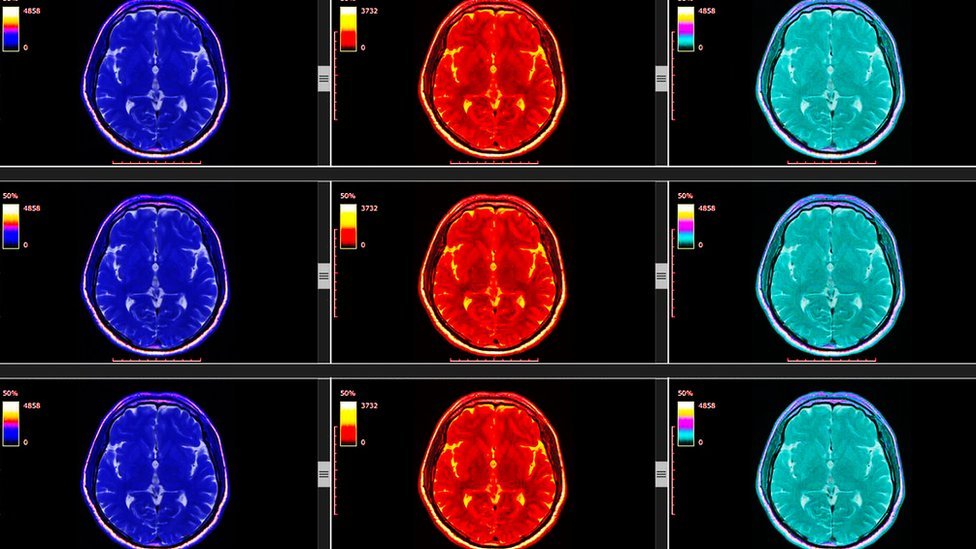
This overlap helps us understand that human pleasure does not respond to a single stimulus or a single brain region. It is the result of coordinated activity among systems of perception, memory, emotion, motivation and valuation.
The orbitofrontal cortex, for example, participates in the subjective valuation of experiences. This helps explain why pleasure does not depend exclusively on the physical properties of a stimulus, but also on our expectations, memories and circumstances.
Understanding the difference between desire and pleasure offers an interesting perspective for reviewing some everyday habits. A life organized around the constant pursuit of stimuli does not guarantee greater satisfaction. The intensity of anticipation and the frequency with which we pursue rewards are not reliable indicators of how much we actually enjoy.
From a wellness point of view, it is useful to observe which activities provide sustained satisfaction and which mainly generate a need for repetition. It is also worth identifying the stimuli that trigger automatic behaviors, especially when they interfere with rest, eating, personal relationships or the ability to concentrate.
This does not mean we should distrust dopamine, avoid rewards or pursue a supposed absence of stimuli. Motivation is necessary to learn, explore, relate to others and achieve goals. The problem appears when seeking mechanisms dominate behavior and leave little room for satisfaction.
Research on pleasure also has clinical implications. Anhedonia, understood as a reduction in the capacity to experience pleasure, constitutes a relevant symptom in various psychiatric disorders, especially in depression. Its study requires differentiating between difficulty feeling pleasure and loss of motivation to seek gratifying experiences. They are related phenomena, but not identical, and may need different approaches.
In short, neuroscience raises a distinction that deserves attention: wanting intensely does not mean enjoying intensely. The brain can drive a persistent pursuit of rewards without the satisfaction obtained increasing in the same proportion.
We are training our brain to constantly desire without developing an equivalent capacity to enjoy.
Kent C. Berridge and Morten L. Kringelbach. Pleasure Systems in the Brain. Neuron, 2015. A foundational review of the brain's pleasure systems, hedonic circuits, and the difference between wanting and liking. Consult the study on PubMed.
Kent C. Berridge and Terry E. Robinson. Liking, Wanting, and the Incentive-Sensitization Theory of Addiction. American Psychologist, 2016. A key study for understanding the separation between motivation and pleasure in addiction. Consult the scientific publication.
Valerie Karl. Neural underpinnings of atypical wanting and liking. Nature Reviews Psychology, 2025. A recent review of alterations in the mechanisms of wanting and liking. Consult the review.