Athletes live four to five years longer than sedentary people.
The image isn't limited to Olympic elites or high-performance professionals. It also includes someone who runs for half an hour before dawn at home, someone who does strength training between meetings, or someone who has decided to get active again after years of inactivity. In the field of sports medicine, the concept of an athlete encompasses anyone who incorporates intentional movement. That nuance directly broadens the scope of the benefits.
The fact that changes the conversation: fitness
Physical inactivity ranks fourth among global causes of death. The magnitude of this statistic surpasses widely cited factors such as being overweight or having high cholesterol. Even so, social and healthcare attention has prioritized other, more visible risks, while sedentary lifestyles maintain a sustained and silent impact.
The key indicator for understanding this phenomenon is the MET (metabolic equivalent of task)). Each 1 MET increase in cardiorespiratory fitness is associated with a 13% reduction in total mortality and a 15% reduction in cardiovascular mortality.. The practical goal is 600 MET-minutes per week, an achievable figure with 150 minutes of walking or 75 minutes of running per week.
MET values by activity
Physical activity | MET
Low-intensity activities | < 3
Sleep | 0.9
Watch TV | 1.0
Office work, typing | 1.8
Walking, 2.7 km/h | 2.3
Walking, 4 km/h | 2.9
Moderate intensity activities | 3 to 6
Stationary cycling, 50 watts | 3.0
Walking, 4.8 km/h | 3.3
Light to moderate home exercise | 3.5
Walking, 5.5 km/h | 3.6
Cycling, <16 km/h, recreational | 4.0
Stationary cycling, 100 watts | 5.5
High-intensity activities | > 6
General jogging | 7.0
Intense calisthenics (push-ups, pull-ups, jumps) | 8.0
Running in place | 8.0
Skipping rope | 10.0
Physical fitness also influences prognosis in critical situations. A study of over 2,000 patients who had suffered a heart attack showed significantly higher survival rates in those with better pre-existing fitness. Physical fitness thus acts as a biological resilience factor.
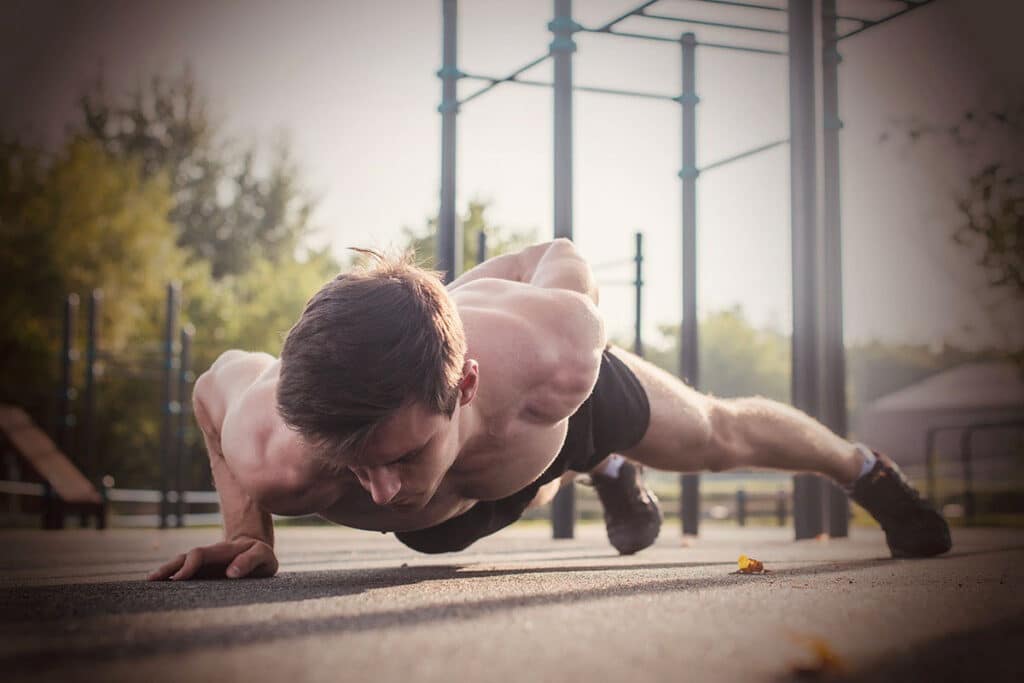
Strength and balance: the H:Q ratio
The balance between hamstrings and quadriceps represents one of the least visible and most relevant metrics in injury prevention. The optimal ratio places the strength of the hamstrings at around 65% of that of the quadriceps.
This adjustment directly translates to improved knee stability and a reduced risk of injuries such as muscle tears or anterior cruciate ligament (ACL) ruptures. Recreational sports and sedentary lifestyles tend to create imbalances in this relationship, making specific strength training a crucial tool, especially in endurance sports.
The nervous system as the axis of performance
Stress and recovery are part of the same physiological equation. The central nervous system acts as a load-bearing structure, influencing adaptation to training and recovery capacity.
Continuous recording of the load —through a training log— allows for the identification of individual patterns that escape standard technological measurement. Factors such as mental stress or lack of sleep can delay tissue repair by up to 60%, directly affecting performance and increasing the risk of overtraining.
Early indicators of maladjustment include unexpected drops in performance, sleep disturbances, a feeling of heaviness in the limbs, or mood changes. Variability in workload and alternating between exertion and recovery form the basis of effective adaptation.
Nutrition: energy availability
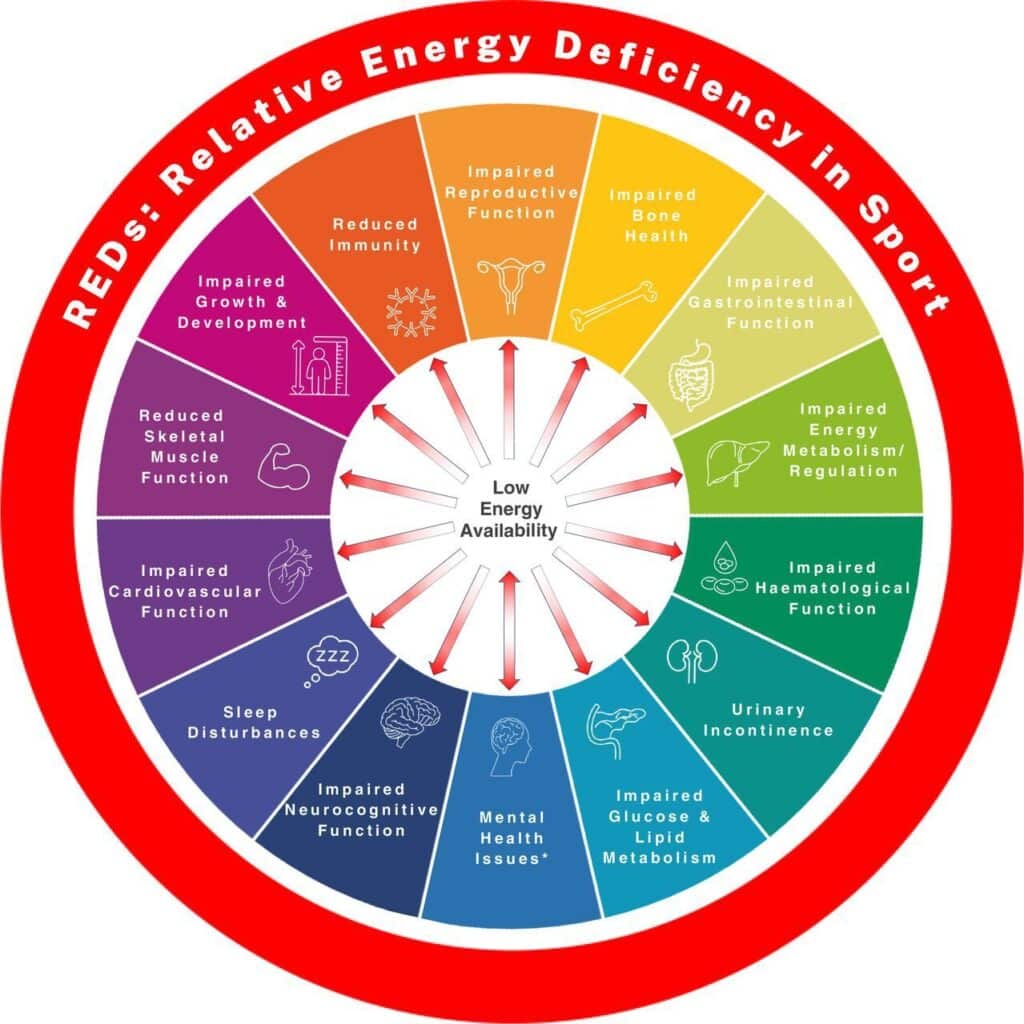
Energy Availability (EA) measures the energy available for vital functions after discounting the expenditure of exercise. The optimal threshold is 45 kcal per kilogram of fat-free mass per day.
Values below 30 kcal/kg trigger a relative deficiency that impacts the hormonal system, bone density, and recovery. This imbalance frequently occurs in active individuals with high training loads and controlled intake, making it an underestimated factor in athletic performance.
The RED-S (Relative Energy Deficiency in Sport) concept extends this approach to men and women, integrating variables such as persistent fatigue, increased risk of fractures, and immunological alterations.
The body responds to signals
Performance physiology is built upon coherent and repeated stimuli over time. From the increase in METs to muscle balance or energy availability, each variable acts as a signal that guides the body's adaptation.
An illustrative example from recent research shows that simply rinsing the mouth with a carbohydrate solution, without calorie intake, activates the brain's reward centers and improves performance during high-intensity efforts. The body responds to the stimulus, even without direct energy input.
Key points
- Fitness acts as a direct predictor of longevity and significantly reduces cardiovascular mortality.
- The nervous system influences recovery and performance as much as physical exertion.
- The balance between muscle groups, especially the H:Q ratio, is crucial in preventing injuries
- Energy availability defines the organism's capacity to adapt.
- Physical fitness influences the evolution of critical health events
Sports medicine focuses on specific metrics that translate the measurable health movement. The difference between a correct and an optimal functional state is built from accurate information, applied consistently and aligned with the body's physiology.