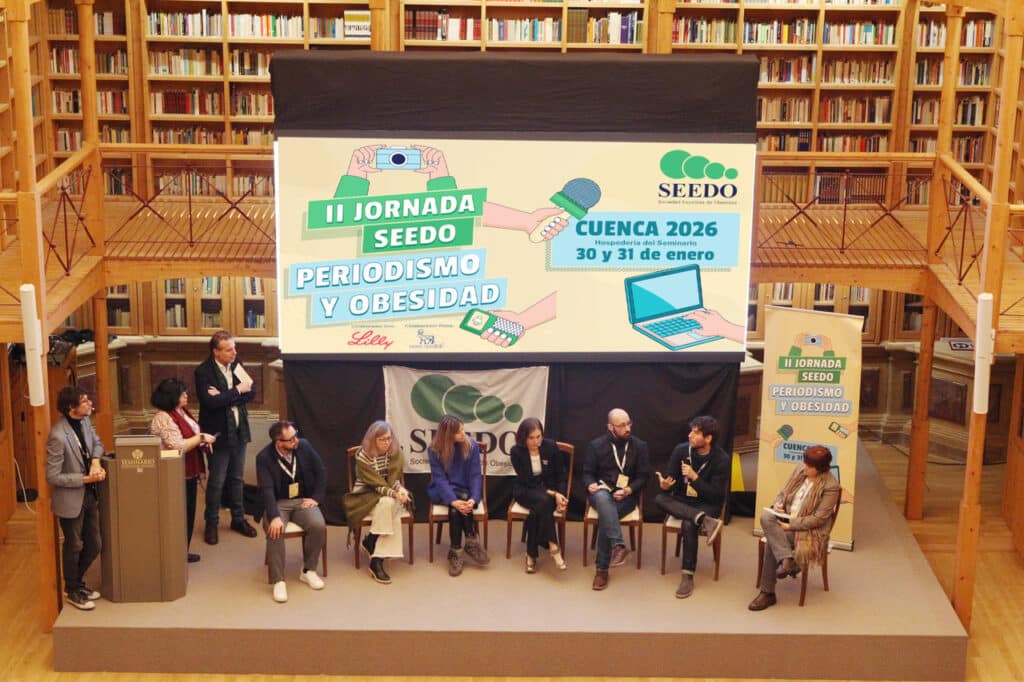
For years, obesity has been treated as a problem of weight, habits or individual responsibility. However, the scientific evidence is clear: obesity is a chronic, complex and multifactorial disease, deeply influenced by the social determinants of health. This is underlined by the Spanish Society for the Study of Obesity (SEEDO), which calls for a change of outlook both in the health system and in social and media discourse.
A disease that does not affect everyone equally
In Spain, more than 56% of the adult population is overweight: 19% obese and 37% overweight. In childhood, the figure reaches 40.6%, placing the country among the most affected in Europe. But these numbers are not evenly distributed.
“Obesity doubles in the most vulnerable environments,” says Dr Diego Bellido, president of SEEDO. Communities with lower incomes such as Andalusia, Extremadura and the Canary Islands have significantly higher rates, as do people with lower levels of education. Unequal access to healthy food, inactive urban environments, less health education and economic constraints make up the so-called "low-income" population. obesogenic environments, where choosing health is not always a real option.
In women, moreover, biological factors - such as the menopause - combine with greater social stigma. In childhood, growing up in a disadvantaged environment multiplies the risk of developing obesity and its complications throughout life.
Recognising obesity in order to treat it
For SEEDO, the first step is unequivocal: recognising obesity as a disease. “Without recognition there is no priority, without priority there are no resources, and without resources there is no solution,” Bellido insists. Obesity not only increases the risk of more than 200 diseases - type 2 diabetes, cancer, cardiovascular pathology - but also generates a direct health cost of almost 2,000 million euros per year, as well as loss of productivity and deterioration in quality of life.
Investing in prevention and treatment is not an expense, it is a investment with social and economic returns. Even moderate weight reductions have a relevant public health impact.
Beyond BMI: understanding the biology of obesity
Science has dismantled the simplism of “eat less and move more”. We now know that obesity is, to a large extent, a biological communication problem between gut, brain, muscle, adipose tissue and microbiota.
“Obesity is not a single disease, but a group of diseases that share the excess or dysfunction of body fat,” explains Dr. Andreea Ciudin, endocrinologist at Vall d'Hebron Hospital and member of the SEEDO Board of Directors. The gut-brain axis acts as a real metabolic “red phone”, regulating hunger, satiety, energy expenditure and even the pleasure associated with movement.
Research has identified protective physiological messengers - such as certain digestive hormones, muscle myokines or signals derived from breastfeeding - that are now inspiring new therapies. “New strategies aim to mimic what a healthy organism does: a balanced gut, active muscle and a diverse microbiota,” summarises Dr Luisa Mª Seoane, a researcher in endocrine pathophysiology.

Diagnosis and treatment: precision, not stigmatisation
Diagnosis is also evolving. In addition to the BMI, SEEDO insists on the importance of the waist-to-height ratio and morphofunctional approach to better assess actual metabolic risk.
In terms of treatment, the message is clear: there are no one-size-fits-all solutions. Personalised nutrition, physical exercise, psychological support and, when indicated, pharmacological treatment, should be integrated in a continuous and multidisciplinary approach, as proposed in the GIRO Guidelines.
Physical exercise occupies a central place. Not only because of its metabolic impact, but also because of its overall effect. “Exercise generates a FIMEES effect: physical, metabolic, emotional and social,” explains David Jiménez, professor of sports science. It's not just about shedding pounds, but about regaining function and health.
The (limited) role of pharmaceuticals and what lies ahead
GLP-1-based drugs have been a revolution, but they are not a definitive solution. “They are the beginning of the solution, not the end,” warns Dr Cristóbal Morales, member of SEEDO. Their use requires medical supervision, lifestyle changes and clear strategies for weight maintenance.
Looking ahead to 2026, the research aims at the so-called 4P drugsMore Powerful, More Accurate, More Popular and More Preventive. At the same time, the focus is shifting to one of the great challenges ahead: prevent weight regain.
Precision medicine is gaining ground. Biomarkers, epigenetics, microbiome and multi-omic analysis will make it possible to design treatments tailored to the biological profile of each person. “The future is to treat obesity like cancer: with personalised therapies based on biology,” says Dr Ana Belén Crujeiras, an expert in epigenomics.
Public policies, media and real prevention
SEEDO calls for public policies that act beyond the health system, incorporating the principle of “health” in urban planning, education, taxation and food. Spain participates in the international MAPPS II project, led by the World Obesity Federation, with the aim of placing obesity at the centre of the political agenda and reducing inequalities.
The media also play a key role. The informative approach can help to reduce stigma or, on the contrary, perpetuate it. Talking about obesity with rigour is a form of prevention.
An opportunity to change the paradigm
Obesity is not a matter of will, but of biology, environment and inequality. Understanding it in this way opens the door to more humane, effective and sustainable approaches. Prevention remains essential, but cannot be limited to individual messages: it must act on living conditions, access to resources and social equity.
As SEEDO reminds us, it's not just about living longer, it's about living healthier years. And for that to happen, obesity must stop being a trial and start being a priority.