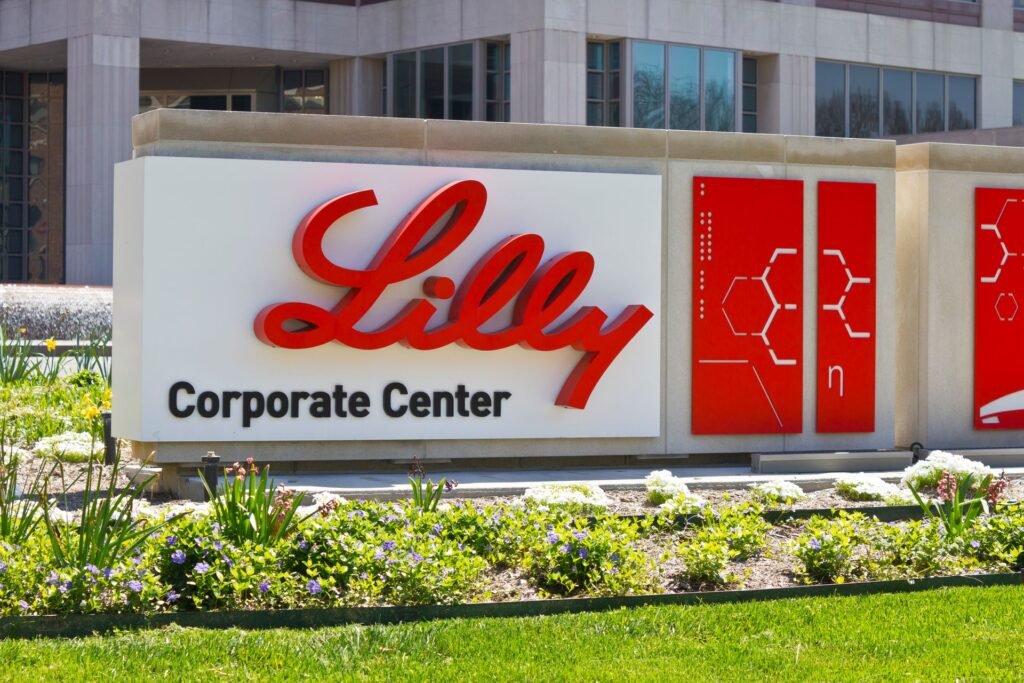
Eli Lilly's bet on AtaiBeckley, valued at up to 3.8 billion dollars, reflects the industry's interest in a new generation of treatments for treatment-resistant depression. The research opens up therapeutic possibilities, but also raises questions about safety, pricing and commercial control of these substances.
Psychiatry is exploring a therapeutic pathway that until recently occupied a marginal space in conventional medicine. Psychedelics, substances capable of modifying perception, cognition and emotional experience, are returning to laboratories and clinical trials with a concrete expectation: to help patients who do not respond sufficiently to available treatments.
In July 2026, Eli Lilly announced the acquisition of AtaiBeckley for a potential value of 3.8 billion dollars, with 2.8 billion upfront and another 1 billion subject to certain milestones. The deal was completed on September 11. One of its main assets is BPL-003, an experimental drug derived from mebufotenin benzoate, related to the psychedelic molecule 5-MeO-DMT, which is being investigated for treatment-resistant depression.
The scale of the operation confirms the interest of major pharmaceutical companies in this field. It also opens a debate about who will control the new treatments, how much they will cost and which patients will be able to access them.
From mushrooms to pharmaceutical laboratories
Psychedelics constitute a heterogeneous family of natural and synthetic substances. Psilocybin is found in certain mushrooms and the body transforms it into psilocin, responsible for a good part of its effects. LSD is a synthetic compound discovered by Albert Hofmann in 1938. Dimethyltryptamine (DMT) appears in certain plants and in traditional preparations such as ayahuasca, while 5-MeO-DMT is a different molecule, which can also be produced through chemical synthesis.
Other substances, such as ketamine and MDMA, are part of the debate on new psychiatric therapies, although they present different pharmacological profiles and not all are classified as psychedelics in the strict sense.

This distinction matters because pharmaceutical development does not necessarily consist of commercializing a natural substance. It may involve a synthesized molecule, a specific formulation or a delivery system designed to control the dose, duration and reproducibility of its effects.
BPL-003 is an example of this process. Its intranasal formulation seeks to facilitate controlled clinical administration. However, corporate investment and the development of a standardized product do not equate to marketing authorization: its safety and efficacy must be demonstrated through clinical trials.
Why a new pathway for treating depression is of interest
Conventional antidepressants have provided important benefits, but a portion of patients do not respond adequately to several successive treatments. Treatment-resistant depression can severely impair quality of life and requires reviewing both the diagnosis and comorbidities and previous therapeutic strategies.
Psychedelics spark interest due to the possibility of producing rapid improvement and, in certain patients, maintaining it after one or several administrations. This approach contrasts with the daily use of many antidepressants for months or years.
Psilocin and other classic psychedelics act mainly on serotonergic receptors, especially 5-HT2A, and can temporarily modify perception, emotional processing and the experience of the self. Research is studying whether these changes, combined in some protocols with psychological support, can facilitate lasting modifications of cognitive and emotional patterns.
Neuroplasticity, that is, the capacity of the nervous system to modify its connections and circuits, occupies a central place in this hypothesis. Some compounds have shown effects related to neuronal plasticity in preclinical studies, although translating those findings into lasting clinical benefits requires more research.
Treatments also do not all pursue the same goal. Some incorporate an intense psychedelic experience and psychological support; others seek to preserve certain biological effects while reducing the duration of the subjective experience. Whether it is possible to separate the therapeutic effects from the psychedelic experience is a question that must still be resolved through clinical evidence.
What we know about its efficacy and risks
The initial results are promising, but they do not allow psychedelics to be considered a general solution for depression nor to affirm that they are superior to available treatments.
A meta-analysis published in 2024, which brought together six randomized trials on psilocybin with 427 participants, found favorable results for the reduction of depressive symptoms compared with comparison conditions. It also identified a higher frequency of certain adverse events, such as headache and dizziness.
Interpretation requires caution: the studies had relatively small sizes, limited follow-ups and different protocols. Furthermore, it is difficult to maintain blinding when participants recognize the psychoactive effects of the substance. Expectations, clinical accompaniment and the setting can influence the results.
In the case of BPL-003, an open-label extension of a phase IIb trial reported in 2025 that, among participants who received a second dose of 12 mg, 63 % met the response criteria and 48 % met the remission criteria at eight weeks. As it is an extension without a comparison group, these figures are preliminary results and not a definitive demonstration of efficacy.
Subsequent trials will need to determine how long the benefit lasts, which patients respond best, what dosing frequency they require, and how the treatment compares with active alternatives.
Safety also demands attention. Intense anxiety, disorientation, perceptual disturbances, and elevations in blood pressure may occur, along with psychological reactions that are difficult to manage. Patient selection, contraindication assessment, and professional supervision are essential components of any clinical protocol.
Are they better than conventional antidepressants?
The main potential advantage lies in the possibility of achieving rapid improvement with few administrations. If the effects are sustained, some patients might need less cumulative exposure to the medication than with a daily regimen. However, this advantage must be demonstrated for each substance and indication.
The comparison with ketamine and esketamine is especially relevant. Intranasal esketamine has European authorization for specific indications related to treatment-resistant depression in adults, under defined prescribing and supervision conditions. Its use constitutes a precedent for psychiatric treatments that require specialized clinical monitoring.
Psychedelics could differentiate themselves through their mechanism of action, the subjective experience they generate, and the duration of their effects. To date, there is insufficient evidence to claim that they are globally more effective, safer, or more cost-effective than esketamine, conventional antidepressants, or psychotherapy.
The medical goal should not be to replace one category of drugs with another, but to expand the options and select the most appropriate intervention for each patient. A person with treatment-resistant depression could benefit from an innovative alternative, while someone who responds well to their current treatment might not gain any advantage by switching.
Eli Lilly and the birth of a new market
The entry of a pharmaceutical company the size of Eli Lilly could accelerate clinical development, manufacturing, regulatory evaluation, and international expansion of these medications. A small biotech company can hardly have the same resources on its own to fund advanced trials and prepare for large-scale commercialization.
The potential market is considerable. A rapid treatment, with few administrations and lasting benefits, could prove attractive to patients, insurers, and healthcare systems. However, the $3.8 billion of the deal represents a maximum value contingent on milestones, not a guaranteed full payment. The valuation incorporates expectations about clinical results, authorizations, and future sales that may still not materialize.

The price of the medication will depend on development and manufacturing costs, intellectual property protection, competition, healthcare financing conditions, and the therapeutic value recognized by evaluators. But the cost of the molecule will not necessarily be the main component of the treatment.
If administration requires several hours of supervision, appropriate facilities, and subsequent follow-up, the total price will also depend on the clinical team and care resources. That is why the economic comparison should consider the full cost of treatment, not only the price of each dose.
Intellectual property adds another dimension. A known natural substance can be difficult to patent in itself, while certain formulations, manufacturing methods, delivery systems or therapeutic uses may meet the requirements for obtaining legal protection. The business can therefore be built around the combination of product, protocol and clinical infrastructure.
Commercial exclusivity can incentivize investment, but it can also limit competition and raise barriers to entry. Regulation, the emergence of alternatives and the negotiating power of healthcare systems will be determining factors.
Access: for the wealthy only, for now
If the first authorized treatments are offered in private centers with prolonged sessions and specialized equipment, initial access could be concentrated among patients with greater purchasing power. The situation could change if the benefits are sustained, protocols are standardized and public systems incorporate these therapies for specific indications.
An expensive medication can generate savings if it reduces relapses, disability and the use of other healthcare resources. It can also be difficult to fund if it requires many hours of care for a limited benefit. Only a complete economic evaluation will make it possible to determine its cost-effectiveness compared with the alternatives.
In Europe and the United States, authorizations, prescribing criteria and funding follow different procedures. In Spain, availability will depend on the corresponding authorization, the conditions of use and eventual incorporation into the healthcare services. The authorization of esketamine does not mean that other psychedelics will automatically obtain the same recognition.
Administrations can exert influence through price negotiation, results evaluation, funding conditioned on clinical benefits and support for independent research. It will also be important to guarantee transparency regarding published data and conflicts of interest.
A new psychiatry needs more than innovation
Psychedelic medicine forces us to reconsider how mental health care is organized. Treatments that combine a fast-acting substance with preparation, supervision and follow-up require clear protocols, trained professionals and rigorous selection criteria.
It is also advisable to avoid the idea that a substance can by itself solve complex emotional problems. Depression has biological, psychological and social components, and its approach must adapt to each patient's circumstances.
Eli Lilly's acquisition of AtaiBeckley places psychedelic research in a new industrial phase. Private capital can help turn experimental findings into evaluable medications that are potentially available on an international scale. The value of this bet, however, will depend on clinical results and their real-world application.
The decisive question will be whether these treatments manage to improve the lives of patients who find no relief with current options and whether they can do so at an affordable cost and under affordable conditions of access.
The next frontier of psychiatry will not depend solely on discovering how these substances act in the brain: it will also require deciding who controls their development, how much it costs to access them and what guarantees allow innovation to reach those who need it.