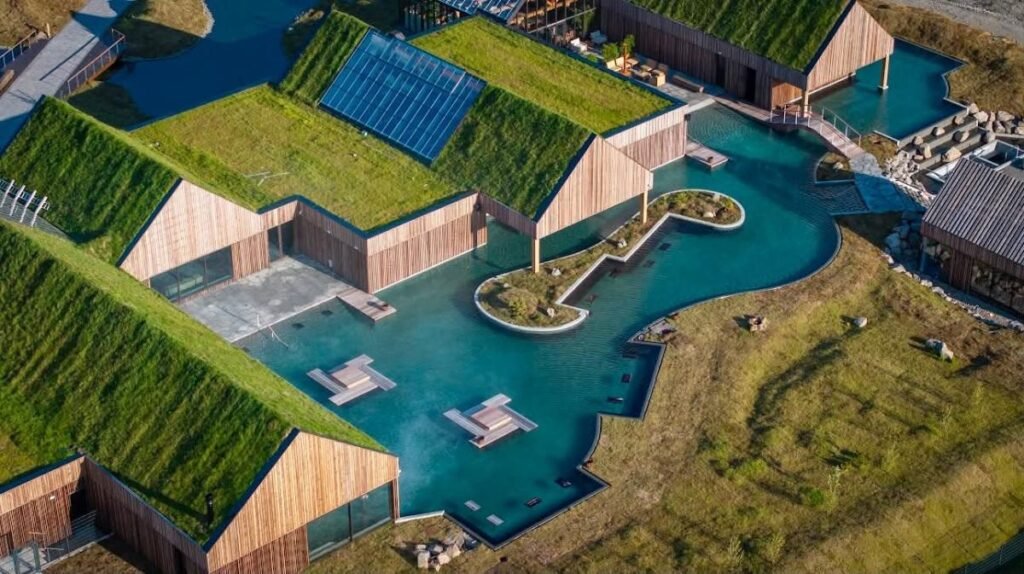
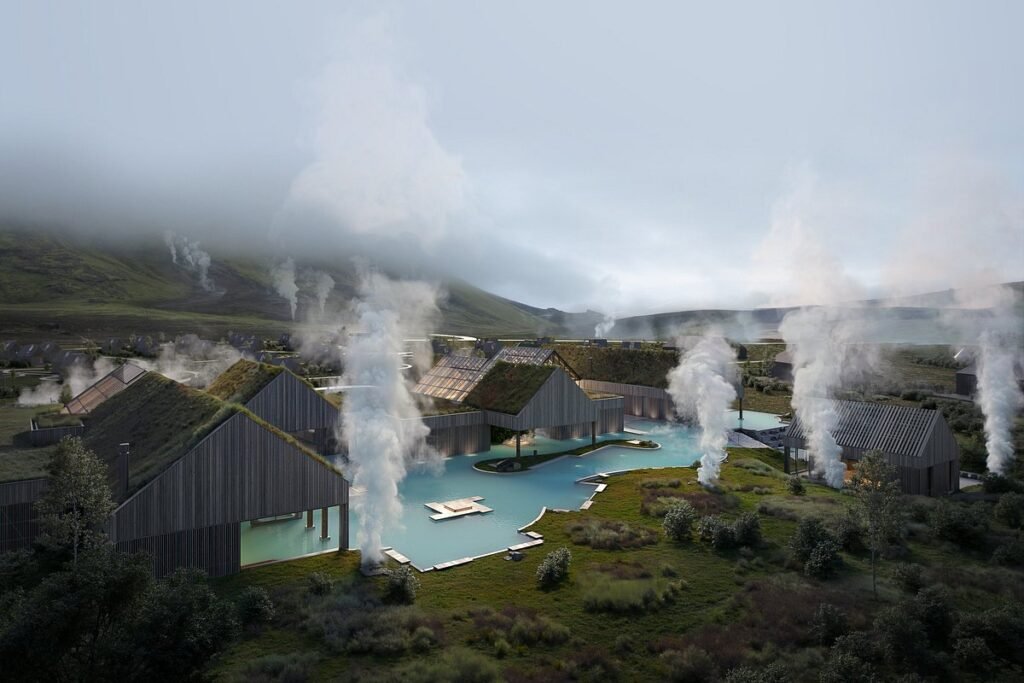
About 40 minutes from Reykjavik, in the town of Hveragerði, the Icelandic geothermal landscape has just gained a new bathing destination that offers a broader experience than the traditional thermal lagoon. Reykjaböð Hot Springs combines a large geothermal pool open to the landscape with a limited-access bathhouse conceived around temperature contrasts, steam, water, snow and rest.
The concept stems from a simple idea: in Iceland, cold is as much a part of the thermal experience as heat. The project has taken that particularity to its ultimate consequences, even incorporating a real snow room that allows visitors to experience thermal contrast in a way that differs from the usual cold-water plunge.
Geothermal energy gives Reykjaböð an advantage that goes beyond the wellness experience: the natural heat of the Icelandic subsoil can supply part of the energy needs of the complex and reduce the costs associated with heating water and spaces. In a sector where maintaining pools, saunas, steam rooms and climate control systems accounts for a significant portion of operating expenses, having a local source of thermal energy represents a competitive and environmental advantage. Although geothermal utilization requires infrastructure, maintenance and electricity consumption, it reduces dependence on other energy sources and links the business's economic efficiency to the natural resource that constitutes its main attraction.
The development has been driven by three partners —Hveraberg, Dionysus and Icelandia— who hold equal shares in the owning company. Hveraberg also contributes its experience in tourism development and owns the nearby Greenhouse Hotel, while Icelandia specializes in tourism and travel operations. The management of Reykjaböð is handled by an independent company in which the same three groups hold stakes.
The project has involved the participation of the international spa and wellness consultancy Katherine Connolly, alongside the studio Reykjavik Architects, interior designer Hálfdán Pedersen and lighting designer Þórður Orri Pétursson.
From geothermal bathing to a sensory journey
Reykjaböð is structured around two different experiences. The first is the large geothermal lagoon, designed to welcome a larger number of visitors and foster a more social experience, open to the Icelandic landscape and climate. The second is the bathhouse, with a smaller capacity and reserved for guests over 18.
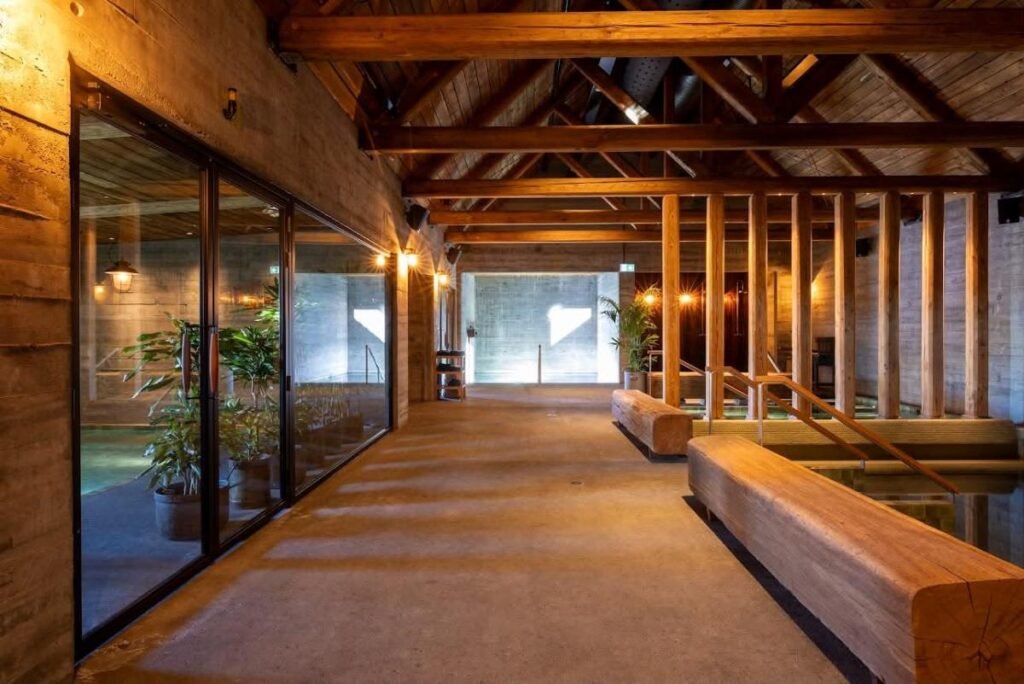
In this second space, visitors find a succession of environments dedicated to heat, cold and rest: infusion sauna, event sauna, steam room, contrast showers, cold pool, Kneipp pool and a relaxation area by the fire.
There is also an herbal pool and a flotation space that uses a head support system allowing visitors to experience a sensation of weightlessness. The sauna and steam facilities have been supplied by Klafs, while the snow room is by TechnoAlpin Indoor.
The circuit is not intended to impose a mandatory route. The project's philosophy allows each visitor to modulate the intensity of the experience and combine heat, cold and rest according to their preferences.
That freedom is especially interesting at a time when thermal contrast culture —sauna, cold immersion and recovery— has gained enormous international popularity. Reykjaböð approaches the concept from a perspective less oriented toward performance and more closely linked to the ritual of bathing and the relationship with the environment.
Snow as part of the ritual
The snow room occupies a unique place within the project. Instead of limiting contact with cold to a water immersion, it introduces real snow after heat, steam or geothermal water experiences.
From a sensory standpoint, the change is immediate. The skin moves from a warm, humid environment to a dry, cold space, while the interior landscape itself takes on a texture reminiscent of the Icelandic outdoors.
The choice also responds to a conceptual question. If the project aims to express Iceland's geothermal identity, the contrast between heat and cold is essential: hot water from volcanic activity, cold air, snow, steam, stone and vast open spaces are all part of the same ecosystem.
It is worth distinguishing this experience from any therapeutic promise. Thermal contrast can produce known physiological responses, such as transient changes in peripheral circulation and in the perception of activation or relaxation, but the benefits currently attributed to extreme cold and heat protocols still require cautious interpretation. Reykjaböð presents them fundamentally as part of a wellness and thermal culture experience.
A spa that looks to the landscape
The architecture and design aim to give the environment an active role. The lagoon is oriented toward the landscape, the sky and the area's weather conditions, while the bathhouse offers a more intimate atmosphere, based on temperature, aromas, sounds and different textures.
This relationship with the territory constitutes one of the project's differentiating elements. The intention of its leaders has been to avoid transplanting an international spa model to Iceland and instead adapt the experience to the elements that define the place.
The result combines highly recognizable references from Nordic bathing culture with contemporary wellness design resources. Geothermal heat, snow, steam, cold water and rest function as different chapters of the same experience.
Reykjaböð has three treatment rooms, including a couples' room intended for massages, although treatments are not the core of the offering.
The offering is completed by a restaurant that works with Icelandic ingredients and a menu of seasonal dishes and drinks. Gastronomy thus becomes part of the time spent at the complex, alongside bathing and the different thermal experiences.
Access to the thermal waters is permitted from the age of 10, while the bathhouse is reserved exclusively for those over 18. The price of a day pass starts at 7,900 Icelandic krónur, around 53 euros at the exchange rate indicated at launch.
A new generation of thermal destinations
Iceland has an extraordinary competitive advantage for the development of thermal tourism: the country's geology turns hot water into a natural element of the landscape. Reykjaböð starts precisely from that heritage, although it expands the experience towards a more sophisticated concept of bathing.
The difference lies in the way the elements are used. Geothermal water, steam, sauna, snow, cold, herbs, flotation, fire and silence appear integrated within a single sensory narrative.
With this, Reykjaböð joins a generation of wellness projects that understand the spa as a spatial and cultural experience, as well as a place to receive treatments. In this case, the identity of the destination does not come from adding facilities indiscriminately, but from working with the resources that already define the territory.
En Hveragerði, el calor que emerge del subsuelo y el frío que domina el paisaje exterior dejan de ser dos condiciones opuestas para formar parte de un mismo ritual. Esa es, probablemente, la idea más potente de Reykjaböð: hacer del contraste térmico una expresión de la propia naturaleza islandesa.