As a professional in the wellness sector and sauna culture, I have had the opportunity to experience extraordinary spas: impeccable architecture, sophisticated design and state-of-the-art technology. However, there is one thing that is all too often repeated, and it is worrying: the sauna experience.
And it's paradoxical, because we live in an age where everything revolves around the longevity, We are also neglecting one of the simplest, most accessible and powerful wellness practices that has been around for centuries. In the meantime, we are neglecting one of the simplest, most accessible and powerful wellness practices that has been around for centuries: sauna and sweat.
The sauna should be the heart of any spa. But the question is unavoidable:
Are we really offering an authentic and quality sauna experience?
Christmas, Father Christmas and advanced wellness intuition
We are in the middle of Christmas week, and perhaps it is a good time to rethink some symbols. If we think about it, Father Christmas - who hails from Lapland in northern Finland - could well have been one of the first wellness entrepreneurs..
If he were travelling with his reindeer around the world today, he would probably hand out sauna vouchers, spa experiences and wellness rituals, more than material toys. And not only out of generosity, but also because I would be doing the best possible territorial marketing of its originsA culture where wellbeing, warmth, ritual and community are part of everyday life.
This is no coincidence. Giving the gift of well-being is, today, one of the strongest global trends.
The sauna is not an accessory, it is culture.
In many Nordic cultures, sauna is neither a luxury nor an additional service. It is a cultural, social and deeply human practice. So when many people say phrases like “I get dizzy”, “you can't breathe” or “it's too oppressive”, the problem is not the sauna itself, but the sauna itself. how its use has been distorted.
These perceptions are born out of poorly designed, incomplete or outright wrong experiences.
Löyly: without steam, sauna has no soul
In too many saunas around the world we find the same mistakes:
- Poorly managed temperatures
- Excessively dry environments
- Unsuitable materials
- Poor ventilation
- And, surprisingly, signs prohibiting the pouring of water on stones.
However, the löyly - the steam generated by pouring water over the stones - is the soul of the sauna..
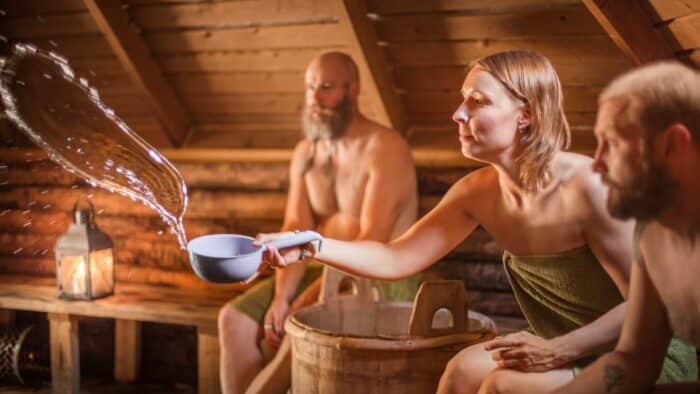
Steam not only makes breathing easier; it transforms a simple hot room into a complete ritual, The programme is more pleasurable, healthier and has a greater physical and mental impact.
In Finland there are approximately 3.3 million saunas, There are hardly any saunas, including electric ones, where water is forbidden. Without löyly, the sauna loses its deeper meaning.
The global sauna renaissance
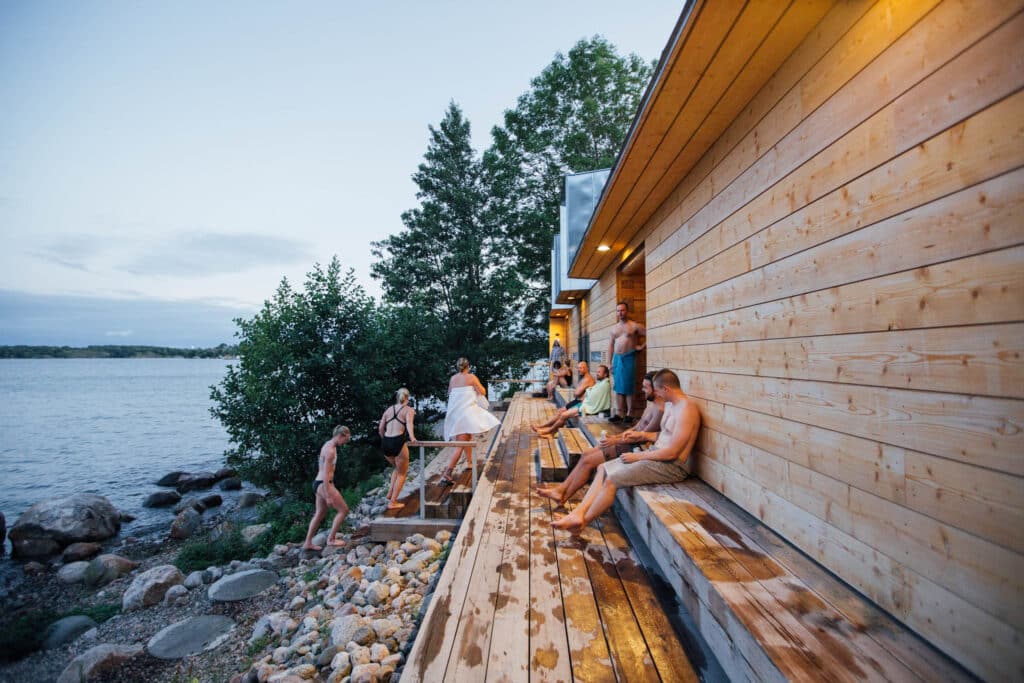
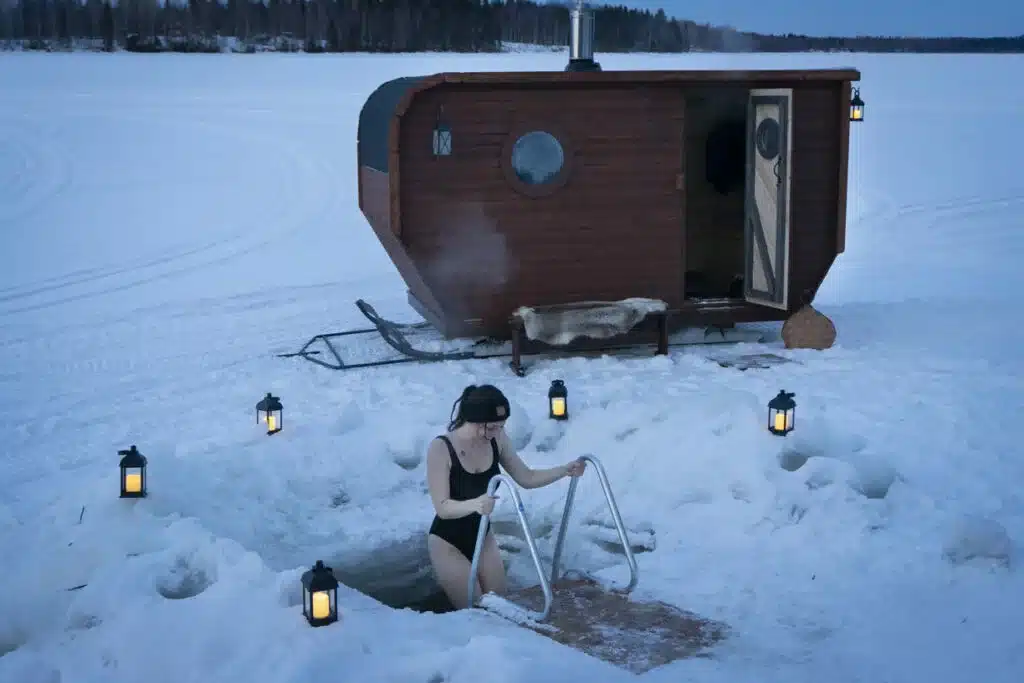
We are currently experiencing a real global sauna movement. The sauna bathing is booming, new concepts are appearing, mobile and open-air saunas are generating loyal communities and waiting lists are becoming more and more common.
In this context, spas - and especially spas with hotel spas- cannot afford to be left behind. The sauna can no longer be treated as an afterthought. It must be a strategic pillar of contemporary wellness.
This means designing spaces that work well, are well constructed and respect the essence of the ritual.
Authenticity: what users are really looking for
There is a misconception in the wellness industry that the customer fears authenticity. The reality is the opposite. It seeks it out, values it and recognises it.
More and more people are demanding real experiences, well-executed traditional rituals and culturally meaningful spaces. So the message for spa designers, operators and owners is clear:
if we are to take advantage of the global sauna trend, let's do it with respect, knowledge and consistency.
The Finnish experience shows that even in saunas with electric cookers, the use of water is an essential part of the design. This is replicable in any country if you work with reliable suppliers, proper installation, adequate ventilation, efficient drainage and cookers specifically designed to generate steam.
Otherwise, millions of users will continue to miss out on the true sauna experience. And as an industry, we have a responsibility to change it.
Social wellness: the next logical step
In parallel, in markets such as United States and United Kingdom, a new development in welfare is emerging with force: the social wellness.
Spaces where warmth, coolness, music, conversation and healthy drinks are integrated into a collective experience. Places that offer a conscious alternative to traditional nightlife and foster community, connection and shared ritual.
In Spain, this trend has not yet arrived with force. In large part, because for decades the concept of the common sauna was culturally associated with sexual promiscuity, especially through the model of the bathhouse, which still exists and generates confusion.
But it is essential to differentiate: the sexualisation of space is one thing, and the sexualisation of space is quite another. collective, ritual and conscious well-being.
Enjoying the heat and the cold in a group, accompanied by music, thermal contrasts and healthy drinks, is not a passing fad. It is a natural evolution of well-being.
Perhaps this is the real Christmas message: less objects and more experiences, less excess and more ritual, less haste and more shared warmth.
Because sauna is not just about heat. It is culture, it is community and, when done well, it is one of the most powerful gifts of well-being there is.