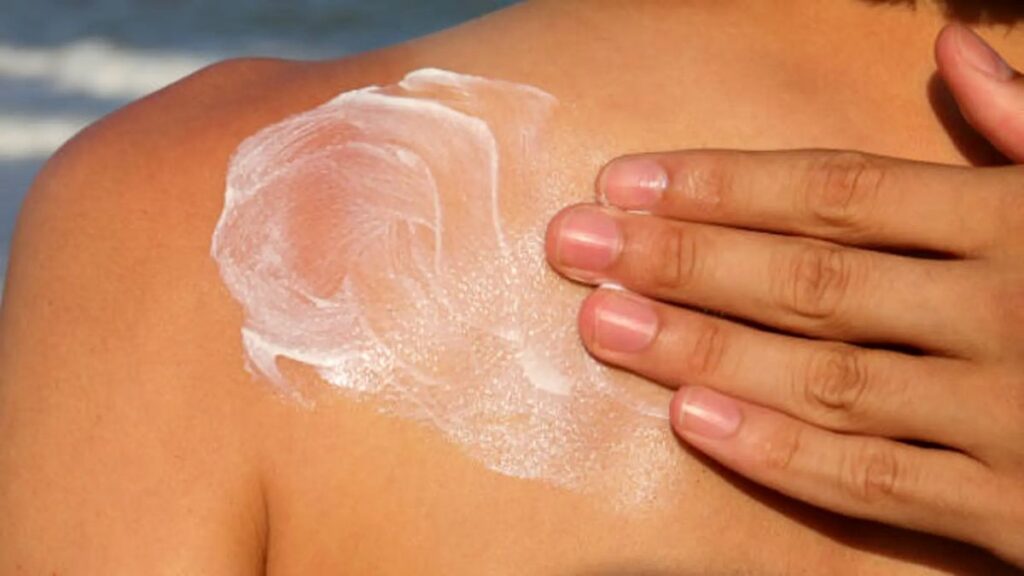
Few issues in health and wellness have generated as polarised a conversation as the use of sunscreens. At one extreme, influential voices question its safety and advocate “natural” sun exposure as an essential part of health. At the other, clinical dermatology insists on consistent application as a key strategy to prevent skin cancer, backed by a cosmetics industry that is constantly launching new formulas.
In between, science proposes something less radical and much more interesting: understanding the sun, skin and protection from an integrative perspective.
Ultraviolet (UV) radiation remains the main environmental factor associated with skin cancer. The evidence accumulated over decades is solid: sunburn, especially at an early age, significantly increases the risk of melanoma and other skin tumours.
But to reduce the sun to an enemy would be a simplistic mistake. Controlled sun exposure is involved in key processes such as vitamin D synthesis, circadian rhythm regulation and certain immune mechanisms.
The key is not to avoid the sun, but rather to modulate the exhibition. Short daily periods, short of burns and outside peak radiation hours, are part of a healthy relationship with the environment. The problem arises when exposure is intense, prolonged or cumulative.
The recommendation to use sunscreen at every exposure responds to a global preventive logic, designed to minimise risks for the entire population. However, the most recent evidence allows us to refine this recommendation.
Not all skins respond in the same way. Higher phototypes are less at risk, although they are not exempt. Nor are all exposures equivalent: a short walk in winter is not the same as several hours on the beach in summer.
Sunscreen is therefore, a useful tool in high exposure contexts, not necessarily a universal obligation in all circumstances. Replacing judgement with automation does not improve health, it only displaces responsibility.
One of the reasons for the rejection of sunscreens is their alleged toxicity. Some chemical filters, such as oxybenzone, have been shown in laboratory tests to have systemic absorption and hormonal effects in animal models.
However, under actual conditions of use, the regulators agree that there is no conclusive evidence of harm in humans.. The difference between experimental doses and daily exposure is substantial.
Where a clearer consensus does emerge is in the environmental impact of certain filters, This has prompted the search for more sustainable alternatives.
While innovation is advancing, there are consolidated strategies with a good safety profile, especially relevant for children, sensitive skin or people with skin pathologies.
Mineral filters, such as zinc oxide and titanium dioxide, act as a physical barrier. and have low skin absorption. Textile photoprotection - clothing, hats, sunglasses - offers constant protection without side effects. In addition, simple behavioural measures such as seeking shade or avoiding the central hours of the day are still the most effective.
The most promising breakthrough is not in improving the current filters, but in completely rethink the concept of photoprotection.
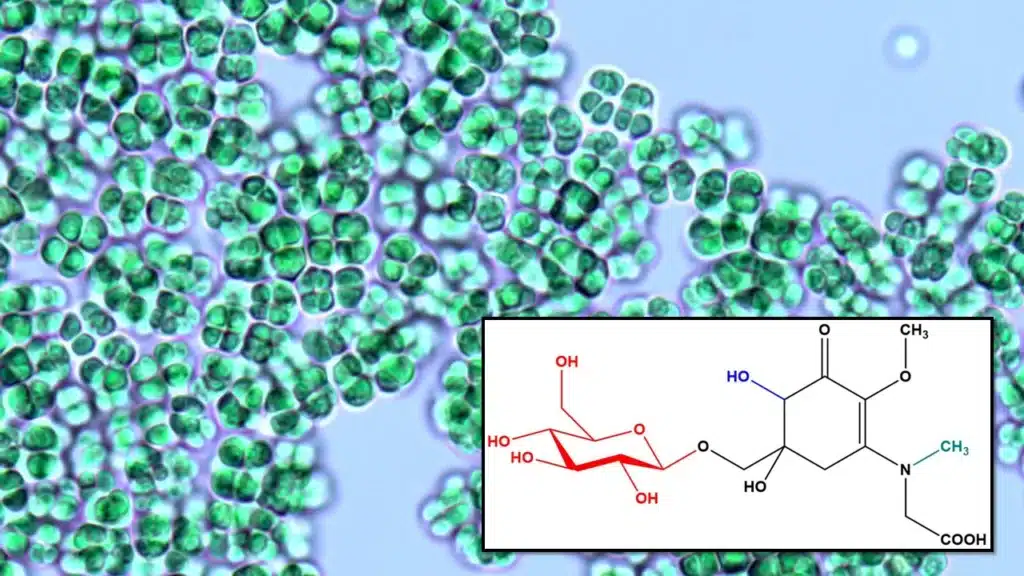
A recent survey has identified a compound with exceptional properties in cyanobacteria from hot springs in Thailand: β-glucose-bound hydroxy mycosporine-sarcosine (GlcHMS326). These bacteria, subjected to extreme conditions of radiation and salinity, have developed a highly efficient defence strategy.
This new compound not only absorbs UV-A and UV-B radiation, but also has a high antioxidant activity. and a unique ability to dissipate energy without generating free radicals, one of the main problems of some synthetic filters.
Its structure, which is the result of multiple simultaneous chemical modifications, makes it an ideal candidate for a new generation of sunscreens: biocompatible, effective and potentially sustainable.
This discovery is not an isolated case. It is part of a broader trend that explores how nature has solved the problem of solar radiation over millions of years.
The so-called MAAs (mycosporine-type amino acids), present in algae, corals and micro-organisms, act as highly efficient natural sunscreens. In addition to this, there are other equally promising lines of research.
Sporopolenin, a biopolymer present in pollen, stands out for its stability and UV absorption capacity. Plant polyphenols, such as flavonoids from green tea or cocoa, The antioxidant protection they provide complements the defence against sun damage. The seaweed extracts combine both properties in increasingly sophisticated formulations.
In parallel, biotechnology explores biomimetic melanin, a strategy that seeks to replicate the human skin's own defence system, offering more adaptive protection.
In the short term, these developments are not a substitute for existing sunscreens.. Their industrial development and regulatory validation will take time. However, they do redefine the framework in which we understand photoprotection.
The future is pointing towards solutions that not only block radiation, but that interact intelligently with the skin's biology, The use of the new technologies will help to minimise the environmental impact and improve the user experience.
The debate on sunscreens is not resolved by choosing between rejection or dependence. It is resolved by raising the level of understanding.
Skin health does not depend on a product, but on a strategy: conscious exposure, adequate protection in risky contexts and support in solutions that are increasingly aligned with biology.
Science is beginning to show that the answer lies not in protecting us from the sun, but in learning from those who already know how to live with it.
(Royalty-free photos, provided for distribution))