I spend my days reading, listening, and talking about longevity, and I've reached a conclusion that should make the entire longevity industry stop and think: after three years of accumulating information, trying supplements, devices, tests, and protocols, those in charge admit that people no longer need more information. They need to know what to do with it..
It's an important conclusion because it points directly to the big problem emerging around preventive medicine. We've developed an extraordinary ability to measure our health, and we're starting to turn that ability into an obligation. Every biomarker opens the door to another test, every deviation from what's considered optimal can justify an intervention, and every intervention can become part of a protocol that, in theory, should stay with us for years.
The paradox is clear: an industry that aims to help us live better could end up making us live too focused on our health.
For decades, we've criticized medicine for arriving too late, when the patient was already sick and symptoms had become intense enough to force a visit to the doctor. Prevention changed that logic and opened a much smarter path: identifying risk factors, detecting certain diseases before they cause serious damage, and acting on what we can actually modify. Although it did so at the cost of the doctor's ability to observe, listen, touch, smell, and suspect.
The problem arises when prevention starts to blur into constant surveillance.
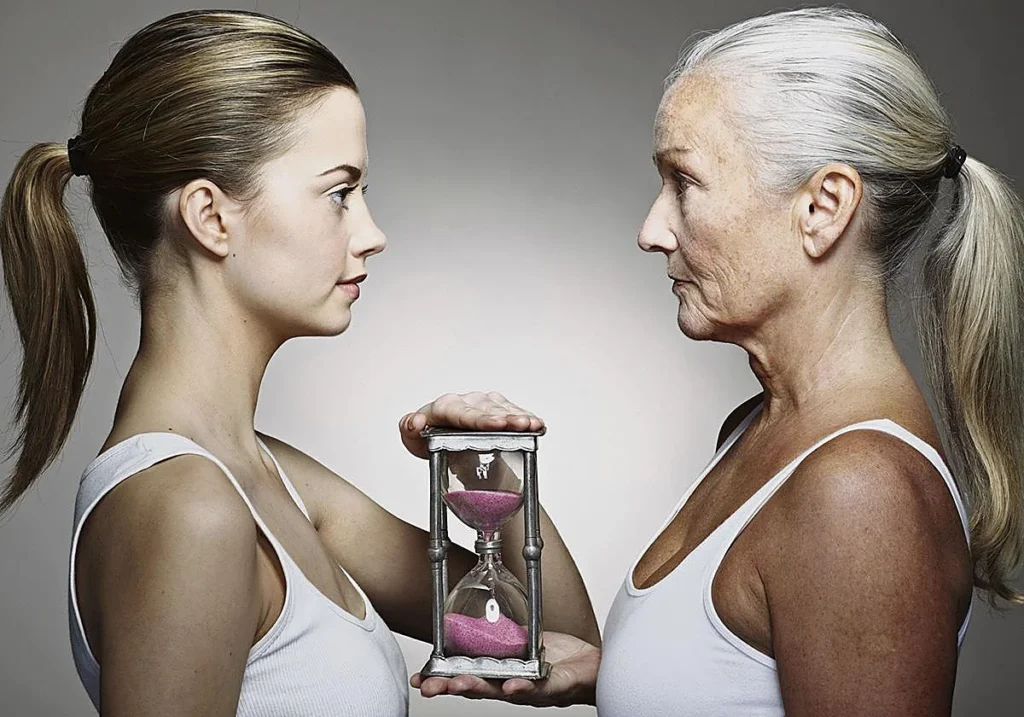
A person in their fifties, sixties, or seventies may have certain aches and pains, sleep worse than they did at thirty, recover more slowly after exercise, lose muscle mass more easily, or show physiological changes typical of their age. That doesn't automatically make that person a patient. Turning every sign of aging into a deficit that must be corrected could end up creating a new category of patient: the aging patient..
And that patient has a particularly interesting trait for the market: they never fully get cured.
There will always be something to measure, something to improve, something to supplement, something to monitor, or some protocol to add. Medicine can provide extraordinary tools to prevent disease and maintain function, but when the commercial goal becomes indefinitely delaying any sign of aging, treatment no longer has a natural endpoint.
That's where wearables, biological age tests, increasingly extensive biomarker panels, supplements, and certain advanced therapies—including peptides—come in. The fact that an intervention exists, has an interesting biological basis, or is being researched doesn't mean it should automatically become a maintenance routine for healthy people. The gap between research, clinical evidence, and medical practice should remain a particularly protected boundary.
There's also a problem that's less appealing for marketing but far more important for medicine: how many professionals are truly prepared to integrate all this information correctly?
A patient can walk into a consultation with dozens of results, apps, reports, and biomarkers. Interpreting each data point separately isn't the same as understanding that person's health. Medicine is precisely about determining which information matters, which risk is clinically significant, and which intervention makes sense. Accumulating data without enough ability to integrate it can generate more anxiety than health.
The result could be an even greater paradox. Preventive medicine was born so people would get sick less and need fewer treatments. The new longevity culture risks producing healthy people who spend a growing part of their lives busy not getting sick.

How much are we willing to sacrifice to achieve that?
Because there's a point beyond which preserving health can start to consume the very life we were trying to preserve.
The centenarians we admire today as examples of longevity didn't live obsessed with their biological age, their heart rate variability, their recovery score or a schedule of supplements and therapies. Many reached extraordinary ages without building a permanent monitoring system around their bodies. That doesn't prove we should give up modern medicine, nor that taking medication or using technology reduces longevity. It proves something much simpler: a long life doesn't have to look like a medical protocol.
The medicine of the future can and should help us detect earlier, intervene better, and maintain our functional capacity for longer, but it should also let us forget about medicine for as many days as possible.
That could be the true measure of success. Reaching seventy with good muscle, cardiovascular capacity, independence, cognitive function, and an active social life—and not needing to think every morning about the variables that might be getting worse.
Accepting that sometimes we'll have to see a doctor, accepting that we might get sick, accepting that the body changes with age, accepting even that some of those things can't be fixed.
In exchange for keeping something that no longevity protocol should take from us: the feeling that we're living our lives, not constantly managing our survival.
Between the medicine that waits until we're sick to act and the longevity that wants to intervene on us even before disease exists, there's a much more sensible territory.
It's the territory of prevention with judgment: detecting what is worth detecting, treating what is worth treating, using technology when it adds value, and leaving alone what is part of the human condition.
The aspiration not to age belongs to the realm of desire. Medicine has another responsibility: helping us reach an age as healthy as possible that we will still have to learn to accept.
The true achievement of longevity should be feeling reasonably well and in harmony with others, not in a constant race competing over who has better muscle, skin, strength, memory, and appearance.
We will have to start asking ourselves how much of our lives we are willing to turn into the price of trying.