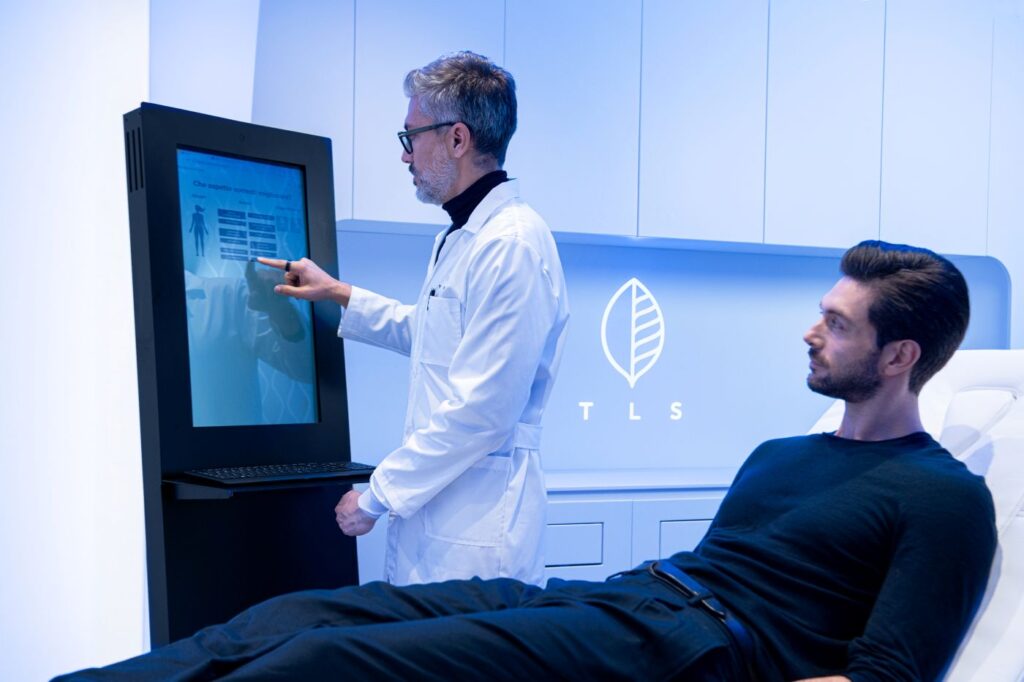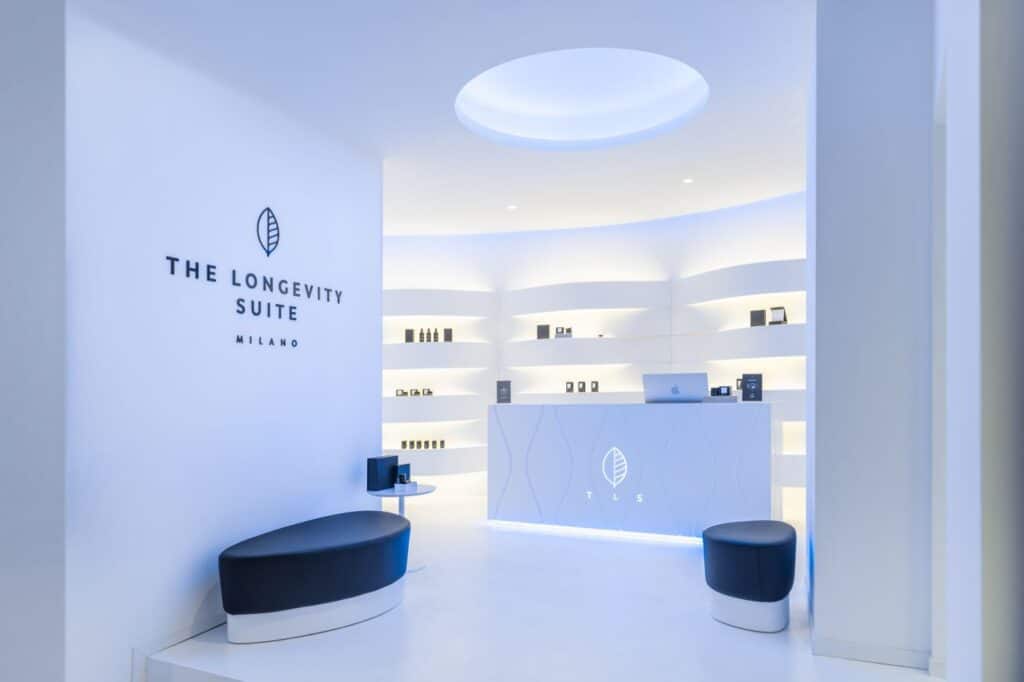
Talking about longevity today implies moving into an ambiguous terrain, where science, aspiration, marketing and desire coexist. The Longevity Suite operates precisely in this hybrid space, attempting to resolve one of the great paradoxes of contemporary medicine: how to get healthy people actively involved in taking care of their future health.
When asked whether his model aspires to democratise longevity in the style of what Zara did with fashion, the Dr. Massimo Gualerzi, The founder and medical director of the group answers without oversimplification. Longevity, at least for now, remains a luxury good. Not so much because of the complexity of the therapies, but because of the expertise that surrounds them.
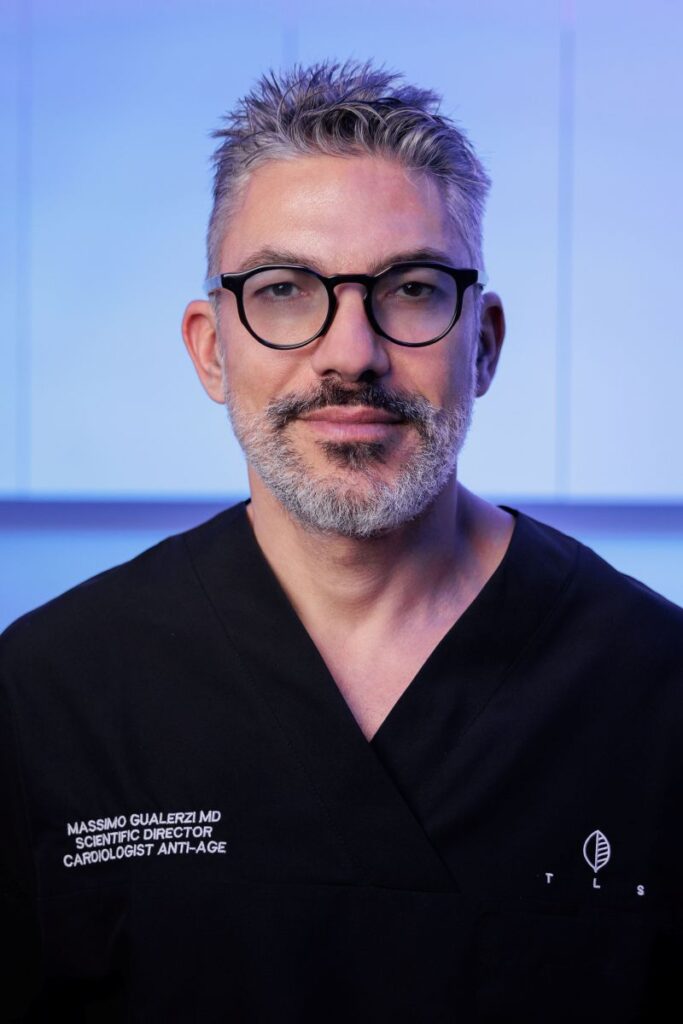
Traditional medicine is designed to intervene when something goes wrong.. No one voluntarily goes to the doctor when they feel well. Longevity, on the other hand, requires attracting functional people, active, active, without a specific pathology, who decide to invest today to avoid problems tomorrow. And for that, Gualerzi explains, science is not enough: you need an experience that is attractive, desirable and pleasurable.
This is why the concept of longevity has been initially linked to the world of luxury. Well-kept spaces, personalised attention, a sense of well-being. Not as a final destination, but as a transitional phase. Gualerzi compares it to the evolution of spas: for years they were the exclusive preserve of five-star hotels; today they are part of even modest establishments. Longevity, he argues, will follow a similar path. It starts in luxury, but is not destined to stay there.
In this context of a growing - and increasingly saturated - market, The Longevity Suite seeks to differentiate itself by occupying a little-explored intermediate territory. On the one hand, there is a proliferation of biohacking, coaching or wellness spaces with no real medical structure; on the other, there are extremely medicalised clinics that are unattractive to those who do not feel ill. Gualerzi's model attempts to integrate both worlds.The protocols are guided by medical science, within an experiential environment that does not generate the emotional rejection associated with the traditional clinic.
All centres operate under real and continuous medical supervision. The doctor prescribes, validates protocols, monitors progress and coordinates the rest of the team: nutritionists, movement specialists, therapists. However, language itself makes a differenceWe are not talking here about patients, but about clients. Not because health is trivialised, but because the profile is different. These are people seeking to optimise energy, aesthetics, performance, prevention and quality of life., not treat a specific disease.
Access to the model is not limited to a closed membership. There is, yes, an annual membership that includes ongoing medical concierge, advanced diagnostics, biomarker testing several times a year, and therapies spread over twelve months. But it is also possible to access shorter, two- or three-month protocols designed after an initial medical evaluation. This allows the system to be more flexible and less exclusionary, combining treatments in the centre with guidelines that the client implements in his or her daily life.
Business ethics is a point that Gualerzi addresses bluntly. In an industry where the line between real care and overselling is blurred, his stance is clear: not what the customer wants, but what the doctor deems appropriate to his needs.. All products, supplements, therapies and programmes are geared towards improving health. The role of the team is not to push consumption, but to guide. Pleasure - a massage, a sensory experience - has its place, but it is never a substitute for clinical judgement.
The frequency of use reflects this logic of continuity. Many clients come once or twice a week, even without membership, for treatments such as cryotherapy, IV therapy, ozone therapy, magnetic fields or photobiomodulation. These are not one-off interventions or promises of rapid transformation, but rather sustained processes over time. The protocols are structured around broad goals - improving sleep, reducing fat, increasing energy, boosting the immune system, managing stress, optimising aesthetics - and are customised within defined medical frameworks.
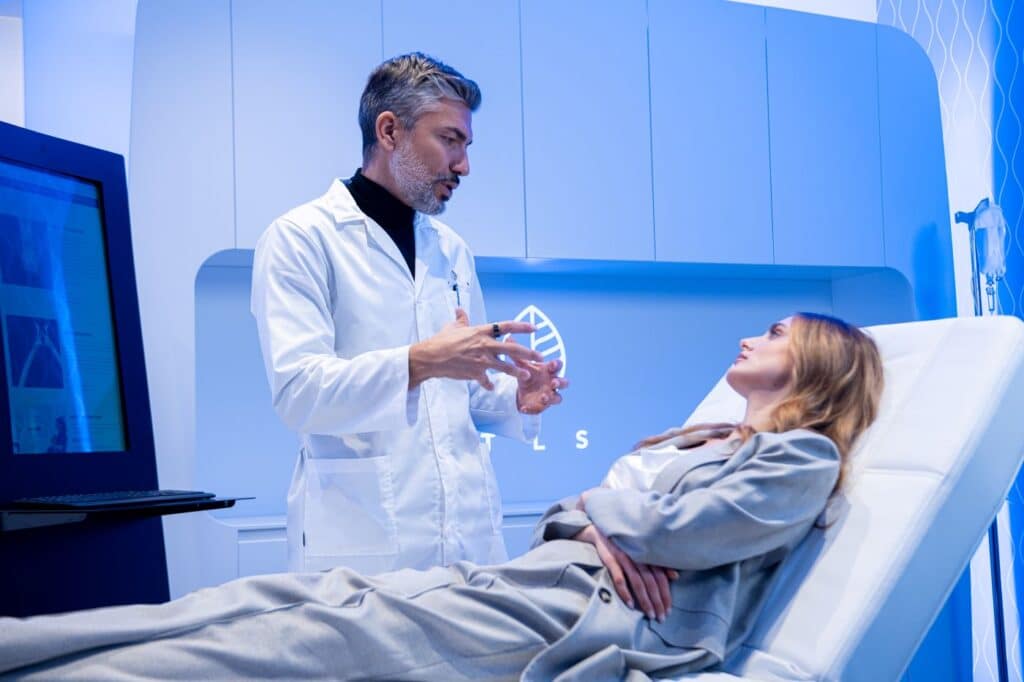
Although the protocols and formulations are proprietary, Gualerzi insists that the difference is not in the molecules. Glutathione, vitamin C or ozone are not unique inventions. What is important is to know to whom to administer each intervention, at what time and for what purpose. Clinical personalisation, rather than the novelty of the compound, is the real value.
In financial terms, the range is wide. There are clients who invest a few hundred euros a year and others who invest well over ten thousand euros, depending on the degree of involvement, frequency of visits and type of programmes. The combination of face-to-face and home-based treatments allows the model to be adapted to different profiles without losing medical coherence.
The growth of The Longevity Suite is also supported by a structured expansion system. Centres range from mini-clinics of 250 square metres to comprehensive complexes of several thousand, with clinic, spa, gym and functional catering. The initial investment for a small format is around 250,000-300,000 euros. The model includes training, technology, protocols, products and ongoing support, always under common medical standards.
The Longevity Suite's proposal does not promise immortality or miracle solutions. What it proposes is something more complex - and perhaps more uncomfortable: making prevention a desirable habit, medicine into an experience and longevity into a daily practice, not an afterthought.
Whether longevity will eventually become an accessible entitlement or remain tied to economic privilege will largely depend on how models like this one evolve. For now, The Longevity Suite represents a clear snapshot of the transition: a middle ground between the clinic of the past and the health of the future.