According to the journalist and Fitness and Wellbeing expert, at The Independent, Emilie Lavinia, As we head into a new year, the noise around wellness is more deafening than ever. While there has always been a certain pressure to “reinvent” oneself in January, it has never been as intense as it is now, and the rise of wellness and personal development has a lot to do with it.
We report on his article in Spanish reflecting his vision for 2026.
Although viral New Year's trends on TikTok - such as the personal rebrand The 75 Hard challenge may seem absurd or even irritating, but they are a reflection of an industry that is now valued in the world of today's society as a whole. trillions of dollars, The sector intersects with health, beauty, food, fashion and even politics.
I have been reporting on health, fitness and wellness for a decade, and during this time I have observed a number of very specific shifts in consumer behaviour, scientific research and technology. Wellness trends are constantly emerging and, while some may seem frivolous, they are often indicators of what is happening in a much broader ecosystem. Like the hem index In fashion, wellness trends can tell us a lot about the world around us and how our health can be affected, if we know how to interpret them.
I've spoken to hundreds of experts about what to expect from the wellness industry in 2026, and if you thought it couldn't get any weirder, brace yourself: this year promises to be intense. Here are my predictions and the key things you need to know, backed by expert voices.
Social welfare spaces
As Soho House makes further inroads into wellness and new private health-focused clubs emerge in major cities, the social welfare is set to be one of the major players in 2026. Last year saw a significant shift from individual fitness to collective fitness. The fitness revolution RUN CLUBS was consolidated in 2025 and, according to Strava, the number of running clubs in the UK tripled in the first half of the year compared to the same period in 2024. This is in addition to the sauna raves, The group ice baths and Pilates parties.
A study by Nuffield Health found that almost a third of Brits say that exercise helps them create and maintain social connections, and that more than half are more likely to stick to a training programme when it is social. For many, fitness is now synonymous with community, with 25 % of respondents saying it is the easiest way to meet like-minded people. Some even talk about fitness events as the new dating apps, although I'm not entirely convinced.
The boom is such that the London Marathon 2026 broke records with more than 1.1 million applications, and running trips have become a trend. Added to this is the Hyrox phenomenon, a social fitness competition which attracted 550,000 participants worldwide by 2025.
While social wellness is generally positive and well-intentioned, my advice for 2026 is to be wary of big brands that charge to create a sense of community that you could be generating yourself. Local clubs, fitness groups and spontaneous gatherings are born to meet a real need, to combat loneliness and improve physical and mental health. It may be more worthwhile to join one - or create your own - than to pay to run around a big brand's shop.
“Luxury retreats”
As a natural extension of social wellness, the wellness retreats will experience an explosion in 2026. Retreats will be offered by everyone, not just those you might expect. Sportswear brands, beauty brands, gyms and fitness clubs will join the trend with immersive experiences abroad, following the example of spaces like Third Space.
The term “luxury retreat” will be used rather loosely, with creative interpretations of both “luxury” and “retreat”. Still, there will be a wide range of experiences combining travel, wellbeing and community. My recommendation: support independent facilitators and authentic proposals.
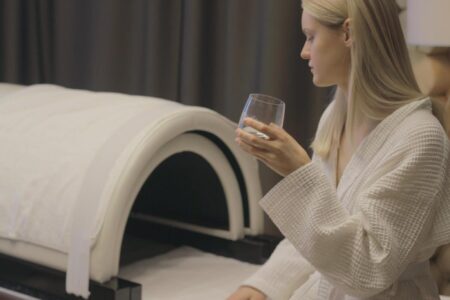
Wellness tourism will enter a new dimension, with hotels offering retreat-like experiences, specialised sleep, recovery and biohacking programmes, and large-scale technology spas that go far beyond the hot tub and sauna.
The oral microbiome
If 2025 was the year of gut health, 2026 will be the year of oral health. The mouth-brain and mouth-pain connection will gain prominence, and the research is fascinating. We will become more aware of our oral health, which could translate into better overall health. But beware of the wellness washing.
Last year I recommended changing toothpaste after reading studies linking ingredients such as triclosan to negative effects on the gut microbiome. In addition, experts such as Tim Spector have warned about the presence of microplastics in everyday products, including some toothpastes, where they still appear as “polyethylene” or “microbeads”.
“The inside of the mouth is the gateway to the body,” explains Dr Shravan Chawla, a cosmetic and restorative dentist. “A healthy oral microbiome regulates pH and produces nitrates and nitric oxide, which are essential for maintaining blood pressure.
Chawla warns that antibacterial and alcohol-based mouthwashes do not distinguish between good and bad bacteria, killing everything indiscriminately. In 2026, we will pay more attention to what we buy, but products with exaggerated promises will also emerge. Check ingredients, be wary of “natural” marketing and don't assume that expensive is always better.
The non-toxic boom
Concern about the toxicity of our modern lifestyle has grown exponentially. Studies on PFASs, microplastics and endocrine disruptors have flooded the web, fuelling the rise of the low-tox.
In 2026 we will see an explosion of non-toxic products: natural fibres in sportswear, glass or metal cookware, plant-based cosmetics and organic food. Some will be excellent, but others will use terms like “natural” or “toxin-free” as mere marketing claims.
It is worth remembering that “synthetic” does not mean “toxic”. Many modern formulations remove problematic components from nature, making them safer for human skin.
Taking care of oneself and the planet is a good thing; alarming, misinforming or endangering health is not.
Biological age as a status symbol
In 2026, the biological age will become a new social currency. Biomarkers such as grip strength or bone density will provide bragging rights. According to longevity expert Sophie Shotter, it will no longer be just for extreme biohackers.
Shotter reminds us that “the best biohacks are free”: strength training, a gut-friendly diet and good rest can reduce cellular ageing without expensive treatments.
However, medical aesthetics and skin biohacking will reach futuristic levels, with peptides, exosomes and regenerative therapies promising to reverse cellular ageing. The key will be to understand the science and demand regulation and ethics.
Mastering the nervous system
Healing will be synonymous with regulating the nervous system. In 2026 we will learn what it is, how it works and how to treat stress, anxiety and burnout. Somatic practices, breathing, fascial release and vagus nerve stimulation will gain prominence.
“Somatic therapy uses the body as a portal for healing,” explains Soulla Demetriou. “Trauma and personal history live not only in the mind, but also in the body.
Brain hacking and neuromodulation
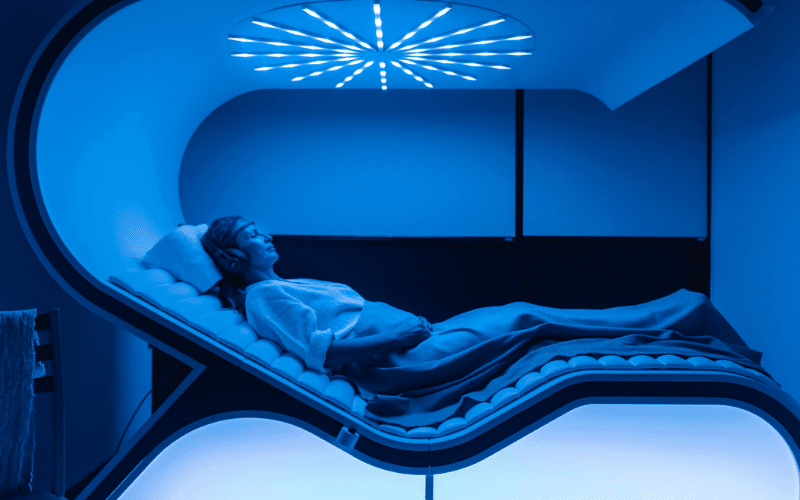
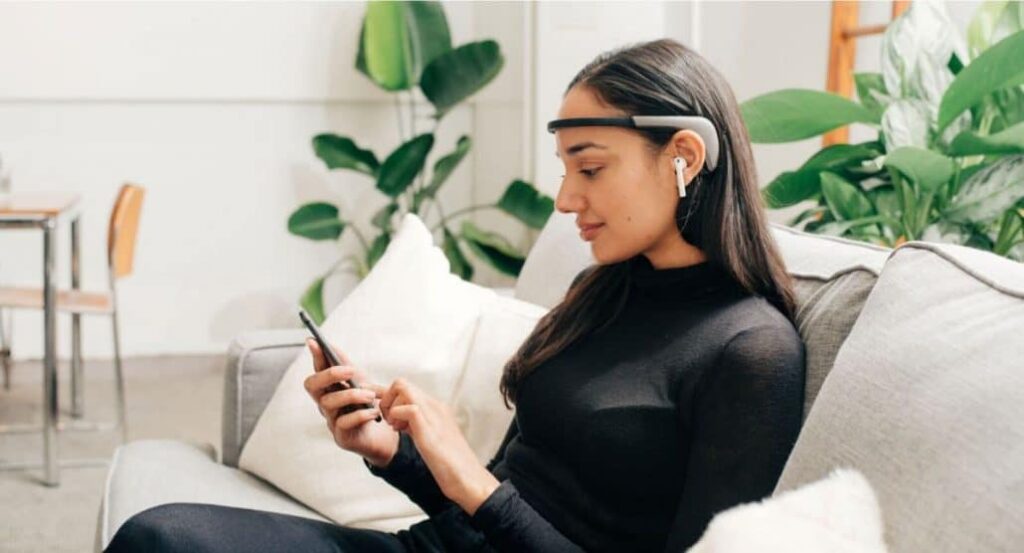
The brain hacking will be trendy. Neuromodulation devices, mental training, visualisation and meditation will become popular. Luxury clinics will incorporate advanced neurological tests not to diagnose disease, but to optimise performance. But beware of excessive marketing and untrained influencers.
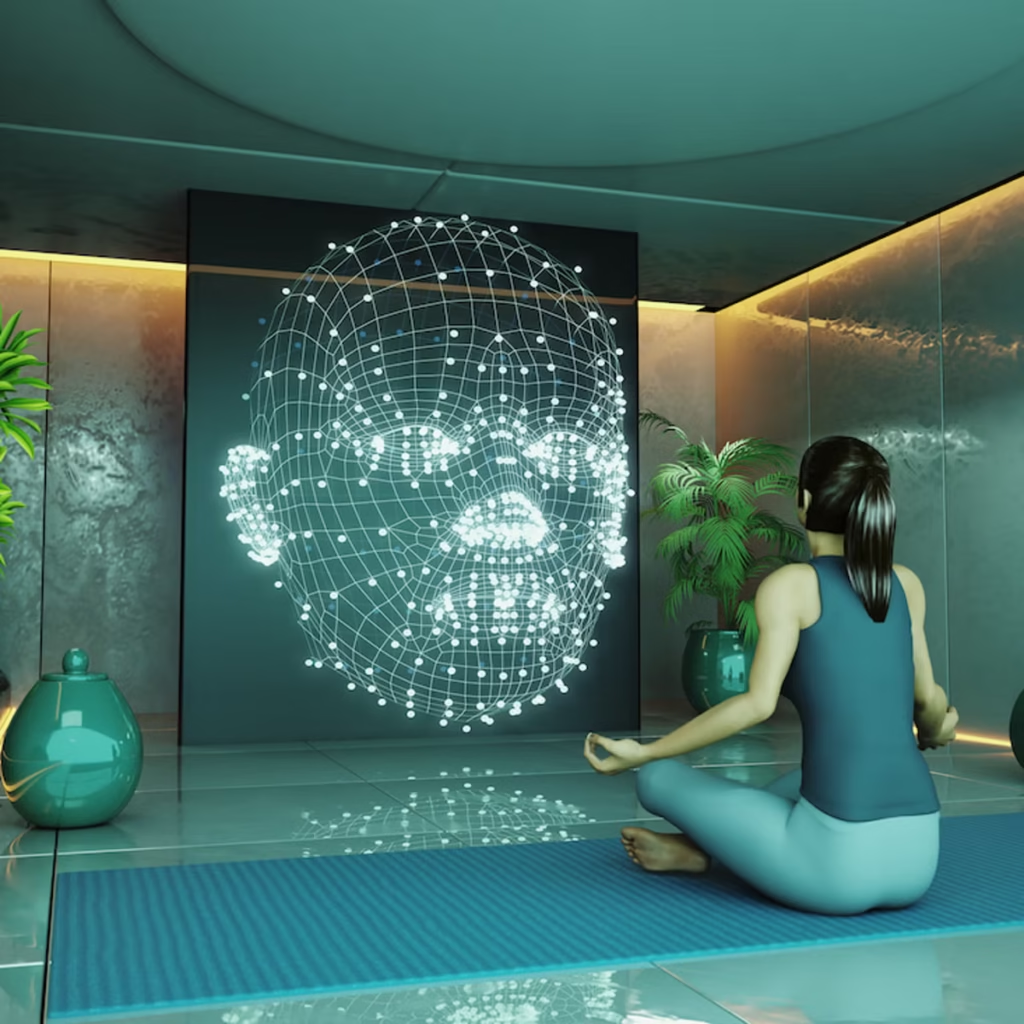
Preventive diagnosis with AI
Preventive medicine will continue to advance thanks to artificial intelligence. Full body scans, rapid MRI scans and at-home tests will become increasingly common, although they will remain a luxury for many.
AI will be a useful tool, but it will not replace human intuition and clinical judgement.
Excessive habit stacking
Stacking habits, supplements and workouts will be normalised. Yoga classes with live music, heat, red light and multiple stimuli will be commonplace. It can be helpful, but not mandatory. Wellness does not have to be extreme.
Back to analogue, the new luxury
The digital detox will reach all-time highs. Basic phones, handwriting, nature walks and screen-free experiences will become the new status.
“More than half of our guests cite digital exhaustion as their main reason for disconnecting,” explains Hector Hughes, co-founder of Unplugged.
In 2026, disconnecting from the mobile phone will not be an eccentricity, but a necessity.
You can read the full original post at this link link.