In our third article on the trends of 2026, we share the vision of Destination Deluxe. As wellbeing becomes more precise, emotional and experiential, 2026 marks its most transformative year to date.
The wellness trends in 2026 are more immersive, emotionally attuned and intellectually sophisticated than ever before.. In a world of rapid cultural and technological change, we are witnessing a turning point: generic retirement is left behind in favour of more nuanced experiences, steeped in neuroscience, focused on longevity and deeply connected to cultural identity. The picture is evolving into something more complex, intentional and - why not say it - insightful, reflecting a global desire for wellbeing that is both deeply personal and truly transformative.
These are the trends that are shaping the world of wellness in 2026, explained with clarity, depth and that editorial pulse that makes all the difference.
1. Saunas become social sanctuaries
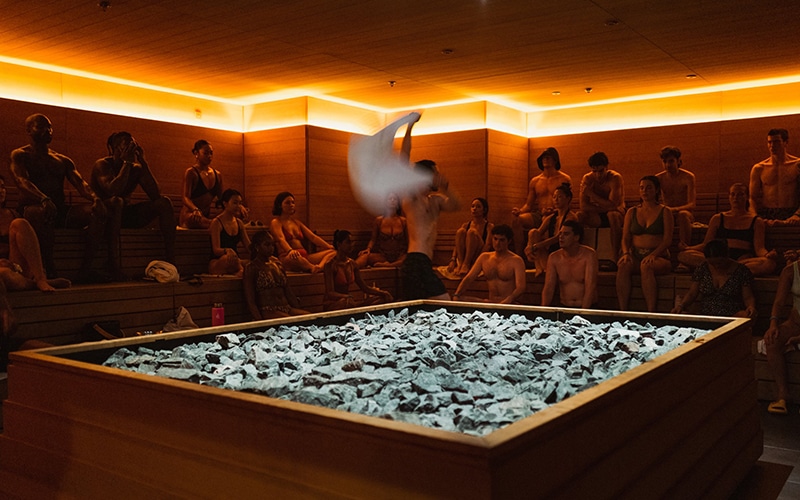
In 2025, we are witnessing the rise of community saunas and a renewed appreciation of the therapeutic benefits of heat. In 2026, this movement evolves: saunas are no longer silent, solitary spaces, but are transformed into social and experiential scenarios.
Originating in Scandinavia, and subsequently driven in cities such as Berlin, London and New York, the trend incorporates immersive experiences such as sauna raves, Heatwave o Melt Sessions, where heat therapy is fused with carefully curated music and conscious socialising.. Attendees enjoy multi-sensory thermal rituals, guided storytelling sessions, aromatic steam tours and community gatherings where DJs replace traditional nightlife.
Brands such as SweatFest, Othership y Steamery have popularised this culture, turning saunas into warm spaces of human encounter where wellness is mixed with creativity, culture and authentic connection.
Why it will be key in 2026
People are looking for ways to socialise that are restorative, not exhausting. Social saunas offer a healthy alternative to conventional nightlife or passive digital interaction, while maintaining the physiological and mental benefits of heat therapy and thermal contrasts. As resorts, wellness clubs and urban baths adopt this format, social saunas will establish themselves as a pillar of community wellness.
2. The rise of immersive family wellness
More and more families are opting to experience wellness together, rather than sending just the adults on retreats. Zulal pioneered this approach a few years ago, and now more resorts are adopting similar models, transforming wellness into an integral part of the family experience. holistic family experience.
Programmes are designed for all ages: emotional literacy for children, resilience coaching for teenagers and mobility optimisation for parents. The focus is on shared learning, creating long-term healthy habits and strengthening family bonds through purposeful experiences.
Why it will be key in 2026
Mental and emotional stress affects all ages, including children and adolescents. Families are looking for tools to nurture their emotional health and create deep connections through travel. Wellness brands offering structured family programmes will become the preferred choice of health-conscious households.
3. Intelligent emotional wellbeing: AI, neuroscience and biometrics redefine mental health.
Wellness is entering a new era where emotional and cognitive health can be measured as accurately as physical biomarkers. Resorts and clinics are using emotional technology, artificial intelligence and neuroscience to analyse heart rate variability (HRV), cortisol patterns, facial micro-expressions, sleep cycles, attention levels and cognitive load.
These data allow the design of personalised programmes combining somatic therapy, neurofeedback, cognitive training, nervous system regulation, sleep optimisation and behavioural coaching.
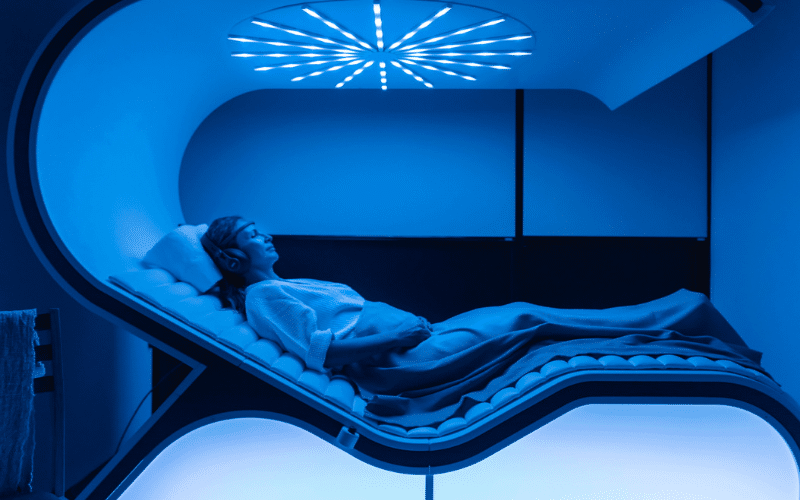
Some spaces incorporate advanced tools such as REBALANCE Impulse® from Revivo, a futuristic neuro-relaxation capsule that uses chromotherapy, binaural sound, breathing patterns and neuromeditation to induce specific brainwaves and activate the deep parasympathetic system. Even the room can be adapted in real time: lighting, sound, treatments and nutrition are automatically adjusted to the emotional and neurological profile of the guest.
The approach changes radically: it no longer asks “how do you feel?”, but “this is what your body and brain are showing us”.
Why it will be key in 2026
Travellers want measurable results, especially in mental clarity, focus, resilience and emotional stability. The rise of burnout and cognitive overload demands precise solutions, not generic recommendations. Emotionally intelligent wellness offers insight, data and empowerment, and will become an expected standard in retreats and clinics.
4. Longevity is becoming the new status symbol.
Longevity is fast replacing the detox culture as the central focus of wellness. The focus is shifting from one-off cleanses to the long-term biological optimisation. Hosts are no longer looking for simple “resets”, but for therapies that act on cellular repair, mitochondrial function, peptide balance, metabolic efficiency and circadian alignment.
Destinations such as Rakxa and LifeCo offer biological age testing, personalised supplementation protocols, NAD+ infusions, VO₂ max testing and recovery technologies inspired by elite sports science.
Why it will be key in 2026
Consumers are more informed and demand real results. They want to feel biologically younger and maintain physical and cognitive performance for decades. Longevity is moving from niche to contemporary luxury marker.
5. Ultra-nature: the return to wilderness
Nature-based wellness moves away from “engineered” landscapes and embraces environments raw and unfiltered. Meditation platforms on cliffs, lodges in absolute silence, dives in icy fjords or open-air therapies that integrate wind, light and natural sound.
Why it will be key in 2026
Digital fatigue and urban overstimulation generate a physiological need for contact with authentic nature. Ultra-nature is not a fad: it is a need of the nervous system.
6. Cultural Wellness 2.0
Travellers seek authentic cultural experiences, not commercialised rituals. Resorts collaborate with traditional healers, indigenous elders and local practitioners to offer ancestral ceremonies and therapies linked to the land.
Why it will be key in 2026
Authentic wellbeing creates emotional resonance, preserves cultures and supports local communities. It will be a decisive factor in the choice of destinations.
7. Urban micro-wellness conquers the city
Urban clinics and micro-wellness studios offer express biometric testing, neuro-performance pods, guided breathwork and 24-48 hour recalibrations without leaving the city.
Why it will be key in 2026
Time is limited. Well-being should be integrated into daily life, not an occasional luxury.
8. Skincare wellness and skin longevity
Skin care is consolidated as a pillar of health and longevity. We work on the skin barrier, the microbiome, inflammation and circadian rhythms, with hormonal diagnostics and biomarkers.
Why it will be key in 2026
The skin is understood as a reflection of systemic well-being. Aesthetics becomes preventive medicine.
9. New generation therapeutic equipment
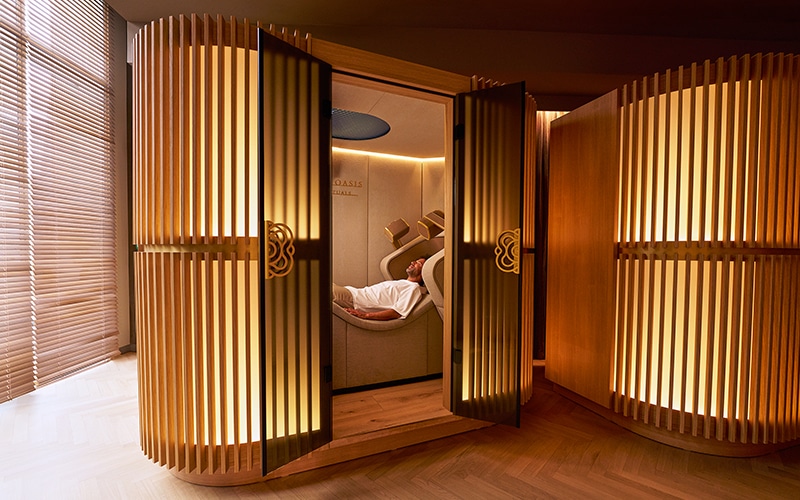
Wellness machines are evolving towards multimodal smart ecosystems which integrate PEMF, cryotherapy, infrared, vibration and neuroacoustic stimulation, adjusting in real time to biometric data.
Why it will be key in 2026
The technology enables consistent, measurable and scalable results. It will be a standard in modern wellness.
10. Fitness travel evolves towards performance tourism
Fitness travel is no longer recreational, but focuses instead on the performanceRunning camps, strength and mobility residences, endurance programmes with clear metrics and advanced recovery.
Why it will be key in 2026
People want to return from their travels stronger, more capable and with an identity linked to health and performance. Performance tourism will be one of the key categories of global wellness.