For years, the conversation about anti-aging cosmetics has focused on a relatively well-known list of active ingredients: retinoids, peptides, antioxidants, hyaluronic acid, growth factors, or substances capable of stimulating collagen synthesis. Skin research is now shifting part of that attention toward less visible processes related to oxidative stress, mitochondrial function, cellular senescence, and the repair mechanisms that determine how a tissue truly ages.
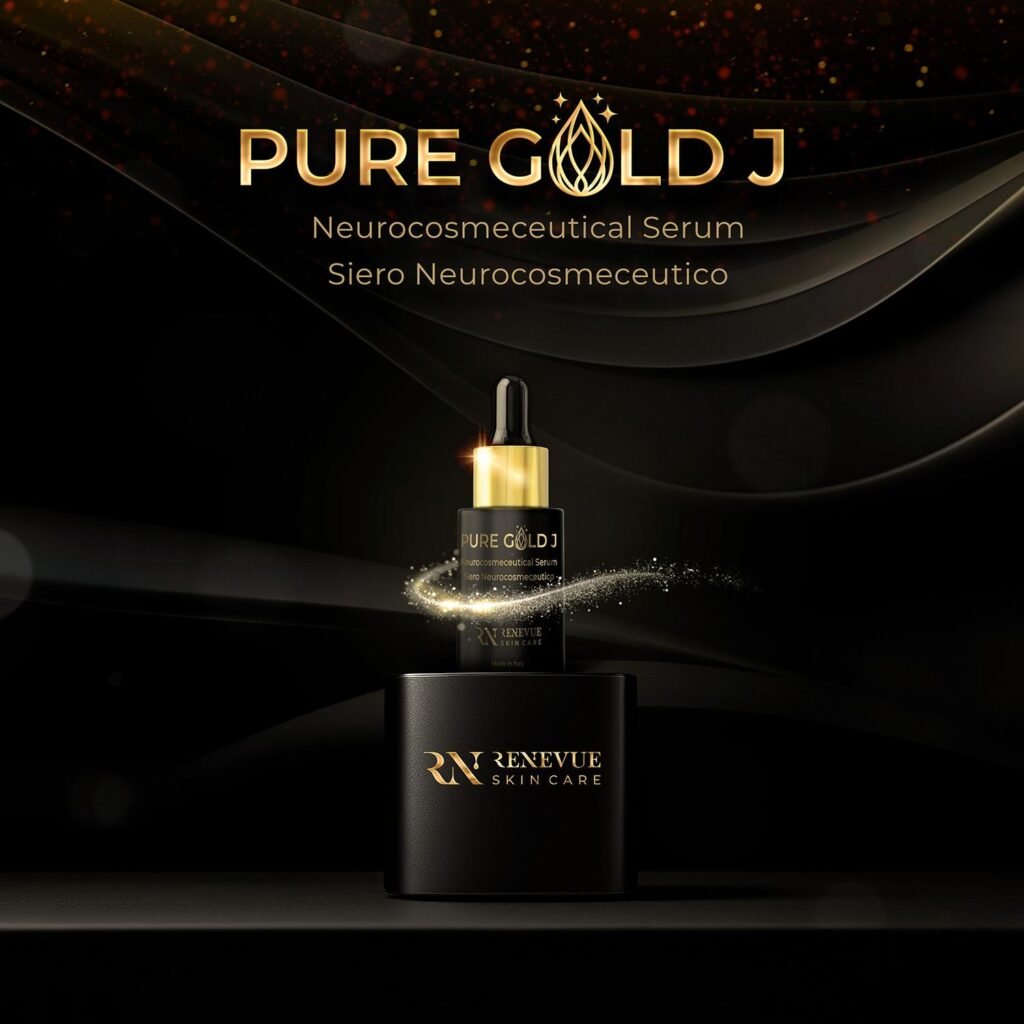
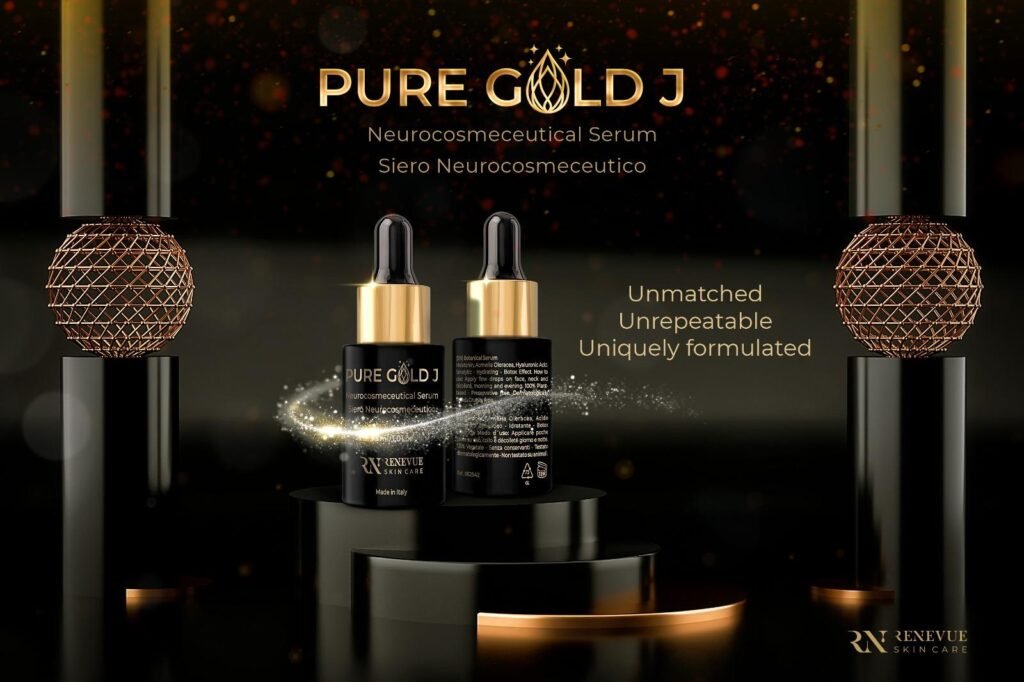
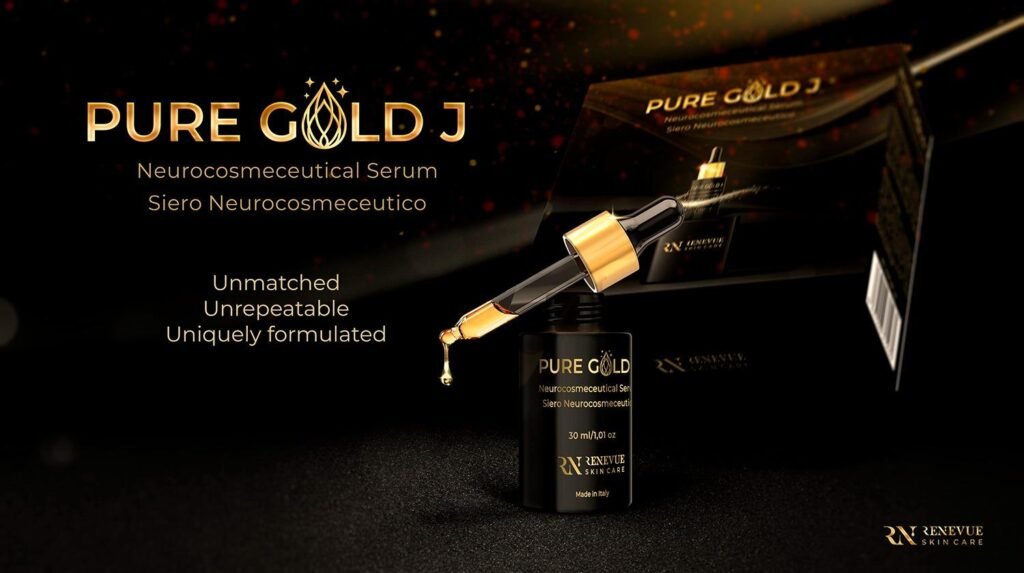
In this context an unusual combination emerges: melatonin and a metabolite of melatonin itself identified as ion m/z 174.1, which its developers have named BIONACA. The ingredient is part of PURE GOLD J, a cosmeceutical serum developed in Italy whose formulation also includes hyaluronic acid, extract of Acmella oleracea, glycerin, and plant-derived glycols.
The proposition is interesting for a reason that goes beyond the «anti-aging» label: it aims to intervene in some of the biological processes associated with skin aging, rather than merely improving its appearance temporarily.
The serum has been sold directly to consumers for about two years, and during this time, the experience accumulated by the brand points to a particularly favorable response. The before-and-after images accompanying the product show, in some cases, very striking changes in texture, radiance, hydration, and overall skin appearance, while the satisfaction reported by users has reportedly exceeded initial expectations. A particularly significant consequence of this experience is that many women have chosen to radically simplify their routines, replacing daily multi-product protocols with a single serum that, according to their experience, covers the skin's essential needs and improves its function without the need to layer different active ingredients.
Melatonin is usually associated with sleep and circadian rhythm regulation. In reality, its relationship with the skin is far more complex. The scientific work used as the basis for the development of BIONACA notes that melatonin receptors exist in different types of skin cells, including keratinocytes, melanocytes, and fibroblasts. It also describes the skin's ability to synthesize and locally metabolize melatonin.
This aspect becomes relevant when skin aging is viewed from the perspective of oxidative stress. Ultraviolet exposure generates reactive oxygen species and can cause mitochondrial and DNA damage. Melatonin and its metabolites participate in antioxidant systems capable of protecting against these processes. The study refers to this set of mechanisms as the skin's «Melatoninergic Anti-oxidative System.».
The idea is especially appealing in skin longevity because oxidation is not simply a cosmetic issue. The accumulated deterioration of cellular structures affects the ability of tissues to maintain their function and regeneration. In other words, aged skin is not just skin with more wrinkles: it is also tissue under greater cellular stress with a reduced capacity to maintain its balance.
The leap from melatonin to BIONACA
The product does not use only melatonin, but rather the so-called melatonin metabolite ion m/z 174.1. According to the study published in 2022 by Francesco Di Salvo, Silvia Perrella Segre, and Sergio Capurro, this compound is obtained through an ionization and fragmentation process of melatonin using far-infrared radiation and low-energy electrons generated by Quantum Dots integrated into a patented silver alloy. The metabolite was subsequently identified via LC-MS/MS.
The scientific approach starts from a relevant observation: the antioxidant effects attributed to melatonin do not depend exclusively on the original molecule, but also on the metabolites it generates, which can participate in antioxidant cascades.
BIONACA attempts to take that logic one step further by topically using one of these melatonin-derived products. The study published by its developers proposes that the m/z 174.1 ion could act as an active biomolecule against certain signs of skin aging. The authors link its activity to antioxidant capacity and the preservation of mitochondrial function.
Here, an important caution is warranted. We are looking at results and mechanisms described in experimental research, not at proof that a cream or serum can clinically rejuvenate the skin or reverse its biological age in humans. The difference between biological activity observed in the lab and clinical efficacy is fundamental, especially when using such strong terms as «reversing aging.».
The mitochondrion enters the equation
The connection to mitochondria is likely one of the most interesting aspects of this line of research.
Mitochondria are essential for cellular energy production, and their deterioration is closely linked to aging. The study cited in the work recalls experimental research in which mitochondrial dysfunction caused wrinkled skin in animal models and in which restoring mitochondrial function was associated with a reduction in wrinkles.
This does not mean that applying a cosmetic can «rejuvenate mitochondria» in a proven way in a person. It does help explain why research on melatonin and its metabolites is gaining interest in the longevity field: the molecule is linked to antioxidant and mitochondrial protection mechanisms that go far beyond its well-known circadian function.
1 September, 2026.
PURE GOLD J combines the m/z 174.1 metabolite with hyaluronic acid, extract of Acmella oleracea In that context BIONACA sits precisely at that intersection between cosmetics, cell biology, and neurocosmetics. PURE GOLD J combines the metabolite m/z 174.1 with hyaluronic acid, extract of«, and a base of plant-based ingredients. The.
Acmella.
provides spilanthol, along with α-amyrin and β-amyrin, ingredients that the formulation presents for their "botox-mimetic" effect.
, related to the reduction of muscle contraction and mechanical deformation of the skin.
Hyaluronic acid serves a much more familiar function: contributing to hydration and the maintenance of the skin's physical properties. The difference is that the overall concept of the formula does not try to rely on a single mechanism. Its developers define it as epigenetic, neurocosmetic, botox-mimetic, and senolytic. These are categories that should be interpreted with caution. That an ingredient modulates certain cellular processes under experimental conditions does not automatically equate to demonstrating that the complete product produces in humans a reversal of epigenetic age, a selective elimination of senescent cells, or an effect comparable to that of botulinum toxin.
Next-generation cosmetics are beginning to use a language that comes directly from longevity research: senescence, autophagy, oxidative stress, cellular metabolism, inflammation, mitochondria, and epigenetics.
PURE GOLD J participates in this trend in a particularly ambitious way.
The product documentation claims that water activated by far-infrared radiation would promote cutaneous autophagy and that BIONACA would have effects related to senescence, free radicals, fibroblasts, and collagen preservation.
The part that deserves the most attention, from a strictly scientific perspective, is precisely the hypothesis of using melatonin metabolites as cosmetic tools to reinforce the skin's own antioxidant mechanisms.
The skin is constantly exposed to factors capable of accelerating its deterioration: ultraviolet radiation, pollution, inflammation, oxidative stress, and disruptions to sleep and the circadian rhythm. Research on melatonin shows that the skin has its own mechanisms to produce it, metabolize it, and use its derivatives as part of its antioxidant defense. PURE GOLD J's own documentation also mentions a study in vitro conducted with human mesenchymal cells.
This provides a basis for researching the ingredient, but it still does not allow the serum to be equated with a medical anti-aging treatment, nor to claim that it can reverse the biological age of the skin under clinical conditions.
Innovation doesn't need to be exaggerated to be appealing: the possibility of using a molecule derived from melatonin metabolism to work on oxidative stress, cellular function, and skin protection mechanisms opens up a different path within advanced cosmetics.
If future clinical research confirms that this molecular activity translates into relevant and sustained improvements on human skin, we could be looking at a category of cosmetics much closer to the biology of longevity than to conventional cosmetics.