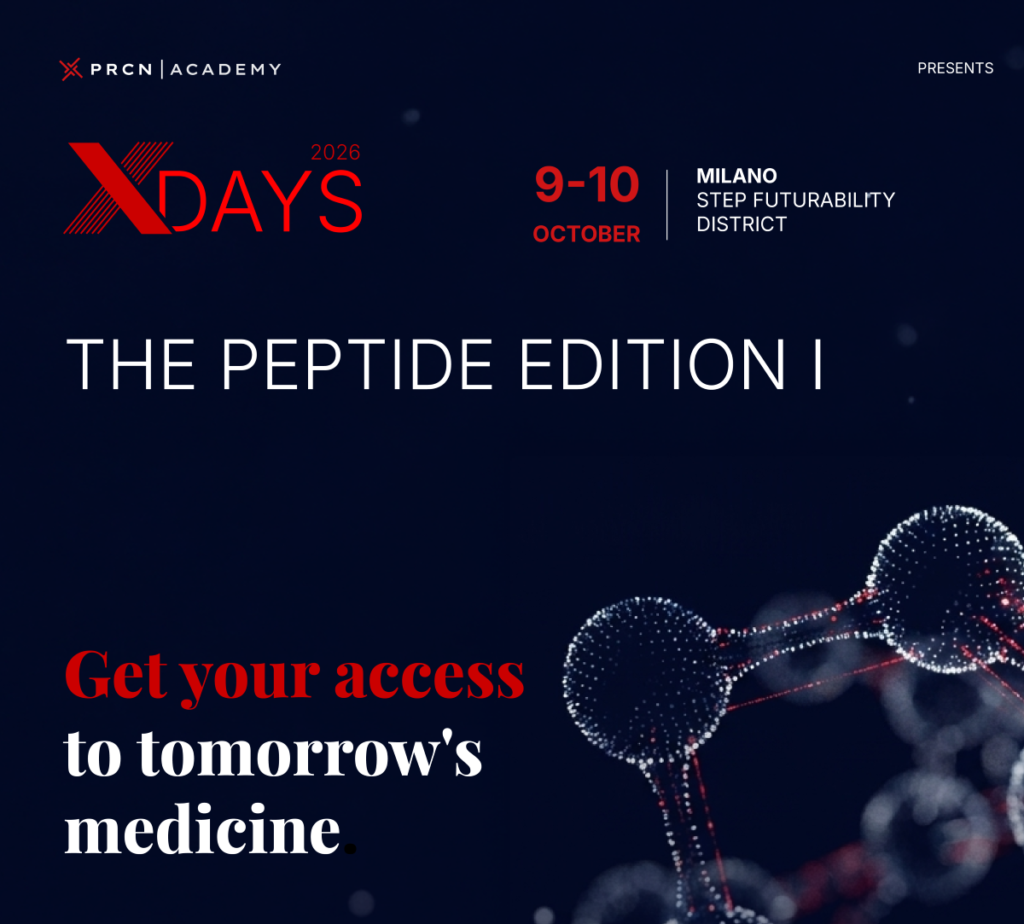
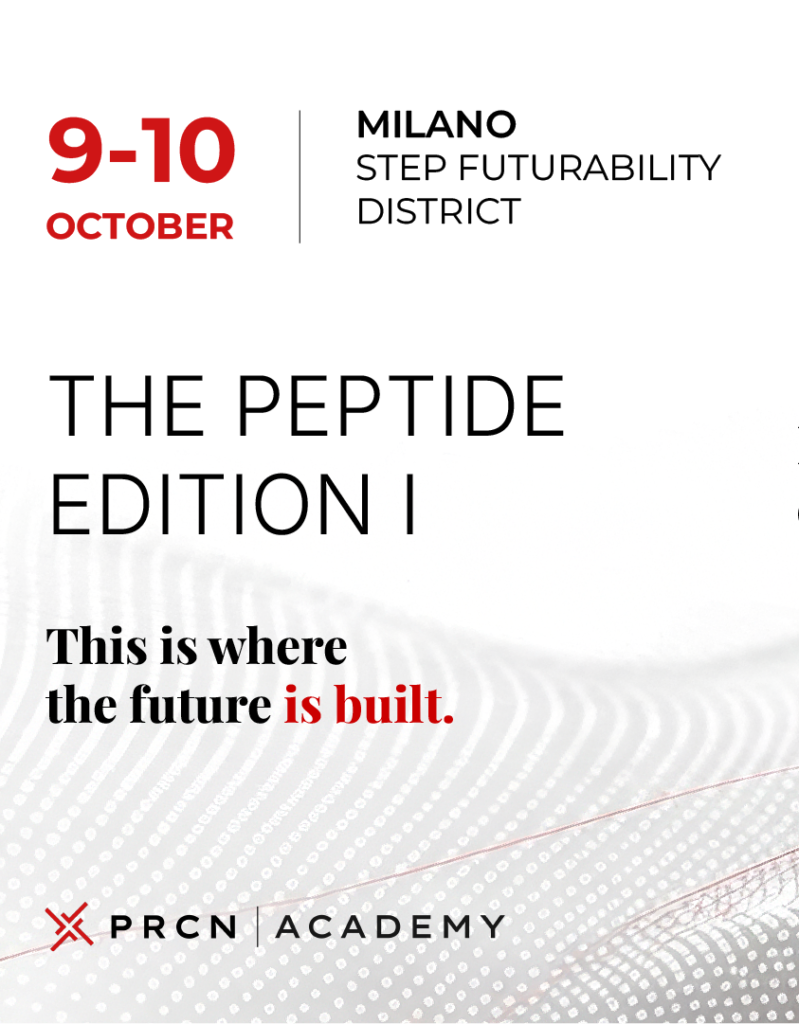
Milan will host X DAYS – The Peptide Edition I on 9 and 10 October, an international meeting by PRCN Academy dedicated entirely to peptide medicine. More than a conference about trending molecules, the programme raises a question that is becoming unavoidable for doctors and health professionals: how to acquire sufficient clinical judgement to distinguish between a therapeutic tool with a solid foundation, an indication that is still experimental, and a market fuelled by expectations that science cannot yet sustain.
Few fields within longevity medicine have generated as much curiosity, investment, clinical conversation and controversy in such a short time as peptides. Public conversation has shifted rapidly from incretins and new metabolic treatments towards molecules related to regeneration, immunity, mitochondrial function, hormonal axes, cognition and tissue recovery. At the same time, the internet has created a parallel market of information, suppliers and protocols in which it is difficult to separate clinical research from commercial promises.
In this context, training takes on an importance that goes far beyond knowing the name of certain molecules. Professionals need to understand mechanisms of action, pharmacology, indications, contraindications, quality, regulation, patient selection, integration with other treatments and, especially, the real level of evidence available for each application.
The organisation of the meeting is handled by PRCN Academy, an educational brand of IUVENTA S.R.L., based in Italy. The structure accompanying X DAYS also includes collaborations and support linked to international organisations in the field of longevity and regenerative medicine; among the endorsements associated with the event are ILSA —International Longevity Science Association— and ISSCA.
The organisation itself PRCN Academy approaches X DAYS from that perspective: practical training, clinical discussion and knowledge based on the literature, with the aim of translating research into clinical practice with greater judgement.
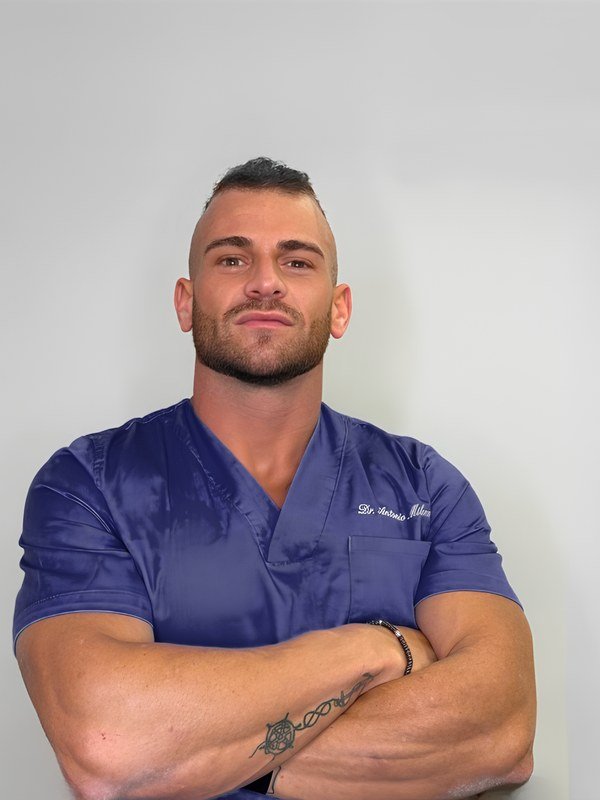
The choice of participants also reflects that intention. The faculty brings together profiles from metabolic medicine, endocrinology, regenerative medicine, aesthetics, functional nutrition, clinical research and longevity medicine. Among them are Antonio Milocco, Massimo Spattini, Aletta Sørensen, Fabrizio Golonia, Enrico Riggi, Ksenia Butova, Christie Prendergast and Maritza Novas, alongside other professionals who complete the programme.


The approach is particularly interesting because of the breadth of the programme. The first day, 9 October, begins with Fundamentals of peptide medicine and clinical reasoning, led by Ksenia Butova, followed by a session on metabolic peptides and incretin medicine with Antonio Milocco. The agenda then introduces one of the least spectacular and, probably, most important issues for the future of this field: regulation, quality and clinical governance. The journey continues with the GH axis and secretagogues, presented by Massimo Spattini, and with regenerative medicine with peptides, led by Christie Prendergast.
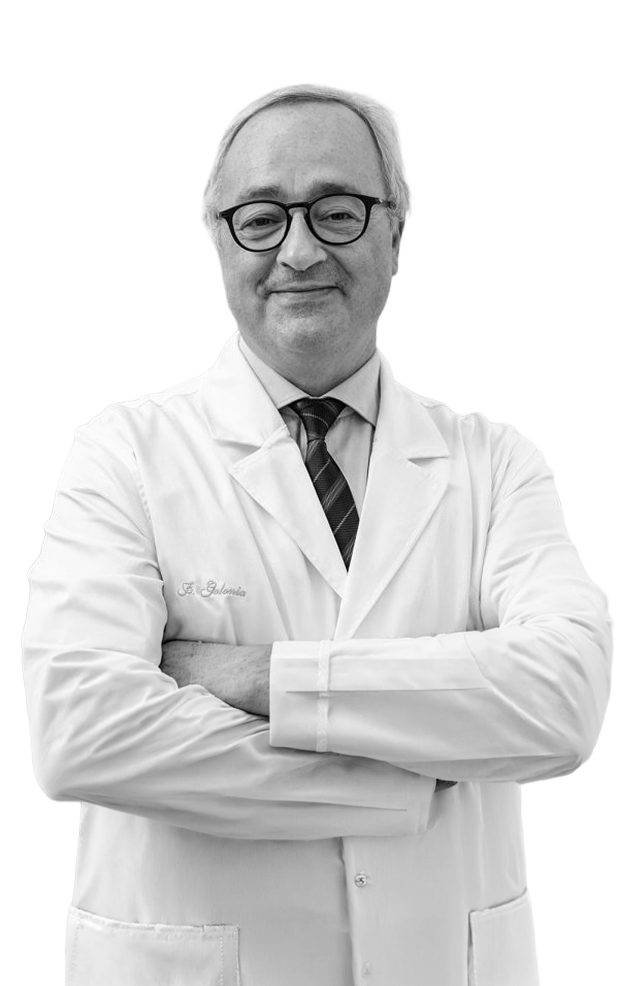
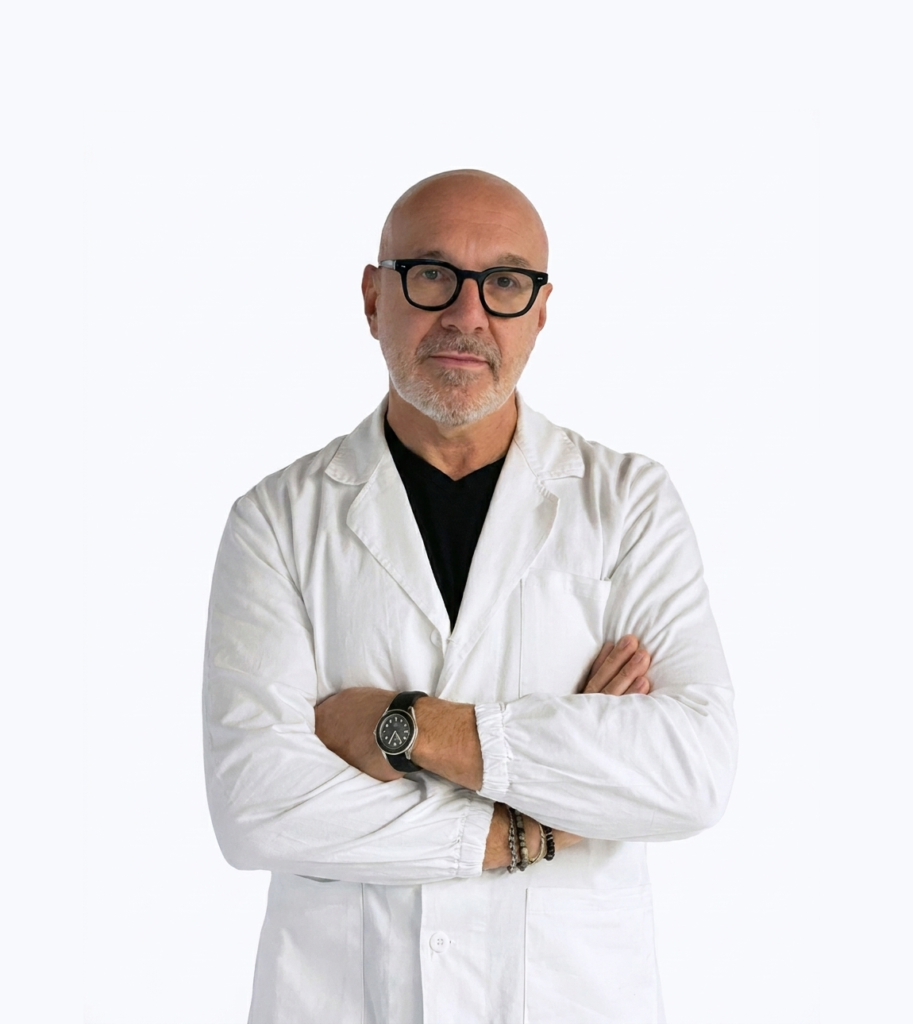
The second day considerably expands the map. Enrico Riggi will address cognitive and neurogenic peptides; Maritza Novas, mitochondrial longevity; and Aletta Sørensen, immune modulation and resilience. The programme also incorporates a topic that rarely occupies a specific space in medical meetings: the marketing of peptides in clinical practice. The day continues with hormonal axes, hormone replacement therapy and its integration with peptides, before moving into the construction of a complete patient journey within what is known as precision longevity.


Peptides are not presented as an isolated category or as a collection of treatments that can be automatically incorporated into a longevity clinic. The programme seeks to place them within a clinical process: reasoning, regulation, biomarkers, hormonal integration, follow-up and the patient journey. The meeting's website adds clinical presentations, protocol design, Q&A, case work and networking with European longevity professionals, as well as a digital resource pack with references, protocols and dosage schedules and a certificate of attendance.
For a sector that is still building its language and standards, bringing different disciplines together around the same table has considerable value. An endocrinologist may interpret a peptide from a different perspective than a regenerative medicine specialist; a precision medicine professional may ask different questions about biomarkers and patient selection; a pharmacist will have another view on quality and formulation. The interest of the meeting lies precisely in bringing those perspectives into contact.
The regulatory question deserves special attention. The speed at which some molecules have moved from scientific literature to conversations between patients has created an uncomfortable situation: the availability of information and products can advance much faster than the health system's capacity to train professionals capable of evaluating them. The result is fertile ground for grey markets, the commercialisation of substances of uncertain quality and the proliferation of protocols presented as personalised medicine without a clinical evaluation proportionate to their promises.
Training before that market reaches full maturity can therefore have a far more significant consequence than simply adding a new tool to a clinic's catalogue. It means having professionals capable of answering the questions patients are already asking: which molecule makes sense, for which patient, with what evidence, under what quality conditions, for how long, with what monitoring, and at what point the responsible answer is not to use it.
It is also significant that X DAYS reserves a space to discuss peptide marketing in clinical practice. It is a sign that the organiser understands that the problem does not end with science. The way a therapy is communicated can alter risk perception, generate expectations that are difficult to manage, and transform an experimental hypothesis into an apparent commercial certainty. In an expanding market, knowing how to communicate the limits of the evidence is part of clinical responsibility.
The venue is not a minor detail either. X DAYS will take place at STEP FuturAbility District, in Milan, a space dedicated to innovation and technological future that the organisation has chosen as the setting for a conversation about the future of clinical practice. The combination of scientific content, professional exchange and an environment conceived around innovation helps explain the identity its organisers want to give the event: less a conventional congress and more a meeting point for a professional community that is entering a territory still under construction.
The networking component thus takes on a meaning of its own. In an area like peptide medicine, meeting other professionals who are researching, using, evaluating or questioning these tools can be as valuable as attending a talk. Knowledge of an emerging sector is not built solely by accumulating publications; it also needs conversation among those facing the same clinical, regulatory and scientific problems.
X DAYS also arrives at a particularly timely moment. Peptide medicine is ceasing to be a conversation reserved for certain circles of research or functional medicine and is entering much broader areas of healthcare. Incretins have changed the metabolic conversation, while other peptide families are sparking interest in regeneration, longevity, immunology, mitochondrial function and neuroscience. The fact that some of these applications have consolidated clinical evidence while others are still at very different stages of research makes specialised knowledge especially necessary.
Therein lies, probably, the true interest of this first Peptide Edition: arrives when the market already exists, even though specific training is still building its own standards.
For professionals working in longevity, preventive medicine, functional medicine, regenerative medicine, aesthetics or clinic management, dedicating two days to understanding this evolution can mean something more than anticipating a trend. It can mean learning to work with it before parallel markets, social media or product sellers set the language and expectations of patients.
Italy has a long tradition of medical innovation, research, aesthetic medicine, wellness and health culture. That an event of this nature should be born in Milan is consistent with that trajectory. X DAYS also has an organisational structure that has brought together international professionals and built a programme sufficiently cross-disciplinary to address peptides from the perspectives of science, clinical practice, regulation and professional practice. The combination is especially relevant in a field that needs less indiscriminate enthusiasm and more knowledge.
For anyone who wants to understand where longevity medicine may be heading, X DAYS offers an unusual opportunity: to enter a conversation that is still open, to listen to professionals who are working on it from different disciplines and to acquire tools to interpret a market that will likely carry growing weight in the coming years.
For those who understand longevity as a medical discipline that demands knowledge before enthusiasm, it may be one of those events worth arriving at before the market has decided for itself what talking about peptides really means.
X DAYS – The Peptide Edition I will be held on October 9 and 10, 2026 at STEP FuturAbility District, Milan. The standard registration currently published by PRCN Academy is 1,099 euros plus VAT, with places deliberately limited according to the organization.
Info and registration at PRCN Academy – X DAYS The Peptide Edition I.