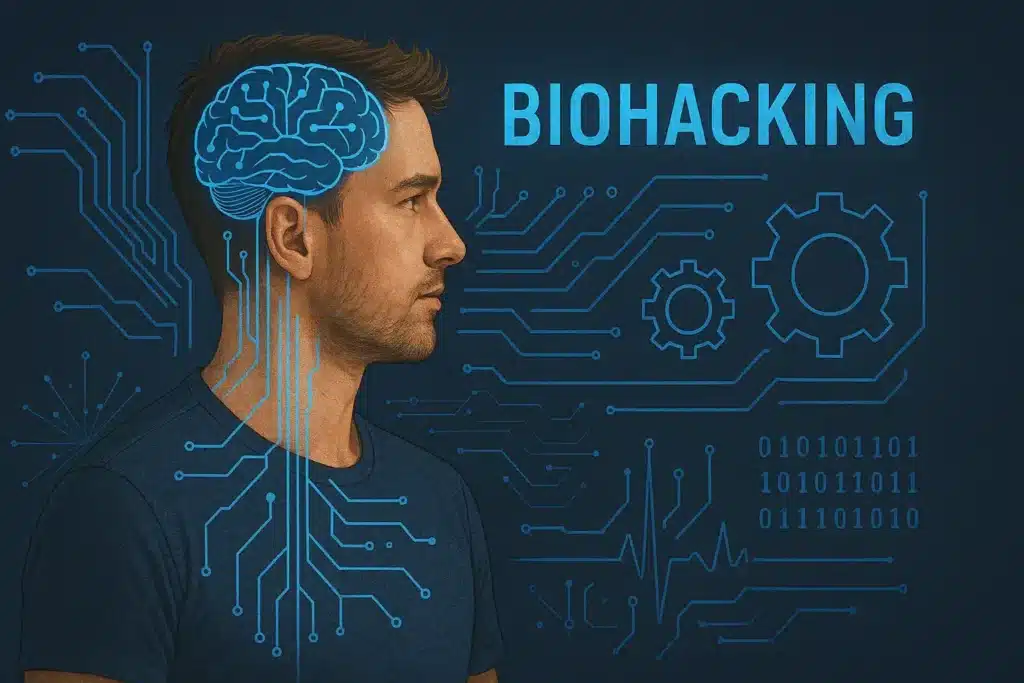
For years, the promise of personalised medicine has been clear: treatments tailored to the unique biology of each individual. However, when you walk through the doors of many biohacking, wellness or advanced aesthetics centres, the reality seems different: three technologies, three almost identical discourses and the same recipe for very different profiles. Even economically, but we will leave the economic cost for another article.
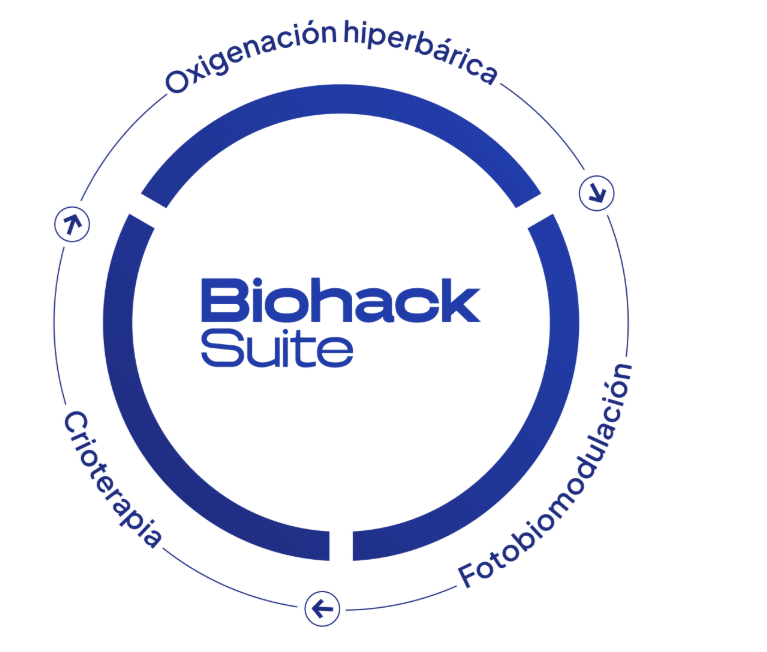
Hyperbaric chamber. Intermittent hypoxia. Photobiomodulation.
Three tools with different - even opposite - physiological mechanisms, yet prescribed with surprising uniformity: how is it possible that therapies that expose the body to more oxygen or, conversely, less, promise exactly the same benefits?
The answer is not just in biology. It is in the business model.
Everyone “needs the same”.”
The business case is impeccable because it starts from an unquestionable truth: almost everyone today is tired, stressed, inflamed and energy-deficient.
- We sleep worse
- We recover worse
- We performed worse
- We age worse
And yet, beneath this common appearance, there is a much more complex reality: no two organisms are alike in their level of wear and tear. Two apparently healthy people can present:
- radically different mitochondrial capacities
- very different levels of subclinical inflammation
- nervous systems in opposite states (hyperactivation vs. exhaustion)
- completely unequal stress tolerances
That is to say: the symptom is shared, but the underlying physiology is not..
The blind spot: cellular function
This is where the biohacking discourse begins to show cracks. Most of these therapies act on what we might call “cellular function”:
- energy production
- redox signalling
- stress response
- mitochondrial efficiency
The problem is that that function is not easy to measure in actual clinical practice. A standard blood test can be “perfect” and still the patient may have:
- chronic functional fatigue
- mild mitochondrial dysfunction
- low-grade inflammation
- dysregulation of the autonomic nervous system
All of this is invisible within the classical parameters. An uncomfortable question then arises: sf you cannot accurately measure dysfunction, how do you decide which stimulus to apply?
Will a committed body respond in the same way?
Biohacking therapies are based on an implicit assumption: the organism will respond adaptively to the stimulus. But that assumption is only sound in one context: when the system has sufficient adaptive capacity. What happens if you don't have it?
- If the cell is already stressed
- If the mitochondrion is dysfunctional
- If the nervous system is saturated
Adding more stimulus - even if it is “controlled” - does not necessarily optimise. It may simply forcing a response that is not sustainable. In that case, the result may be misleading:
- initial improvement (acute activation)
- feeling of energy
- perceived clarity
...followed by:
- accumulated fatigue
- reduced adaptive capacity
- stimulus dependency
The illusion of clinical control
Another key contradiction arises here. Many centres claim to personalise treatment by:
- initial assessments
- questionnaires
- basic measurements
But in the absence of real tools to assess deep cell function, such “diagnosis” has clear limits. It serves to:
- rule out obvious contraindications
- classify the client
- justify the intervention
But it hardly allows the essential question to be answered: Does this organism need stimulation... or does it first need to recover its capacity to respond?
Stimulate without understanding
The core of the problem is: you are trying to optimise systems that are not fully understood in each individual. And that introduces a major conceptual risk.
Because it is not the same thing:
- stimulating a healthy system → positive adaptation
- stimulating a compromised system → compensation or overloading
Without knowing the real state of the system, intervention becomes a gamble.

Energy, but at what cost?
The sense of improvement that many patients report is not necessarily false. But neither does it guarantee that it is sustainable.
The body has an enormous capacity to respond to short-term stimuli. Even when it is fatigued. The relevant question is not whether it responds, but: how long it can sustain that response without deteriorating further.
The paradox of biohacking
Biohacking is presented as the ultimate expression of biological customisation. But in its most commercial version, it operates under a reverse logic:
- same incentives
- same doses
- same protocols
- for profoundly different organisms
And this is where the real paradox appears: The more complex the individual biology, the more simplified the intervention becomes.
The missing criterion
Perhaps the question is not which technology is better. But whether it makes sense to apply any technology without first understanding it:
- the actual level of wear and tear on the body
- its adaptability
- its scope for recovery
Because without that knowledge, even the most sophisticated intervention can become much more basic: one more stimulus in a system that is already saturated. And in this context, optimisation ceases to be medicine and becomes trial and error with scientific aesthetics.