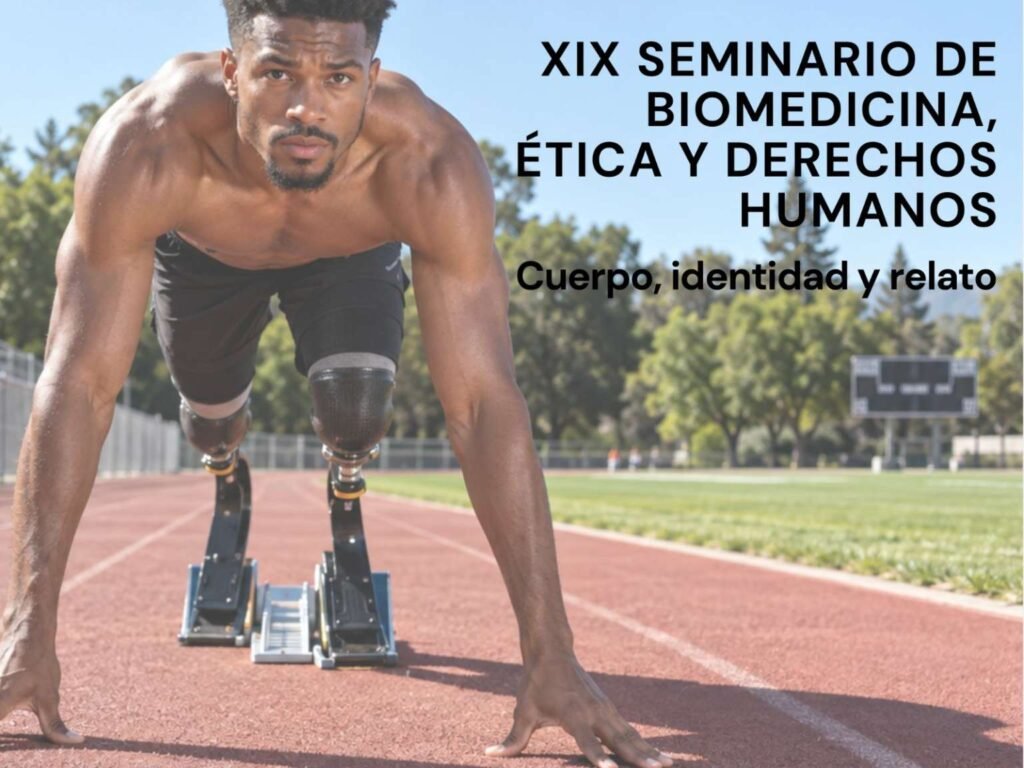
To what extent should we transform our body in pursuit of perfect performance or longevity? In a world where the boundary between health, technology and wellness is increasingly blurred, inevitable questions arise: will we end up competing against athletes enhanced by artificial intelligence or genetics? Where does the recommendation of a healthy lifestyle end and where does social pressure begin?
To answer these and other questions, specialists from science, health and the humanities will meet on 22 and 23 October in the XIX Seminar on Biomedicine, Ethics and Human Rights, in Madrid. Under the motto «Body, identity and narrative», the meeting will address fundamental dilemmas about how to reconcile scientific progress with individual wellness, equity and human dignity.
A journey from sports performance to integral health
At first glance, debating technological enhancement in sport, the pressure to fit into healthy lifestyle patterns or end-of-life decisions may seem like distant topics. However, they all share a common meeting point: our relationship with our own body and the freedom to decide about it.
During the first day, the presentations and debates will delve into key topics for modern health and wellness:
- The limits of human enhancement: Doping, technology and the future of inclusion and equal opportunities in sport.
- Mental health and nutrition: Eating disorders and how the obsession with health can become a source of pressure.
- Support and dignity: Care and feeding decisions at the end of life.
On the second day, attention will shift towards narrative bioethics, exploring how cinema, theatre and comics help us empathise with ethical conflicts and the decisions that transform our lives.
Ethics as a practical tool for daily life
«Ethics is not a mere theory or a reflection on what is possible. It must be a response, the best response, to the real problems we face», points out Benjamín Herreros, co-scientific coordinator of the meeting, director of the Instituto de Ética Clínica Francisco Vallés-UEM and of the Master's Degree in Clinical Bioethics UIMP-FOM.
Organised with the collaboration of the ASISA Foundationthe European University of Madrid and the Ortega-Marañón Foundation, among other leading institutions, this seminar is consolidated as the longest-running and most influential meeting in its field at national and international level.
Practical event information
- Dates: Thursday 22 and Friday 23 October 2026.
- Thursday 22: Universidad Europea de Madrid (Villaviciosa de Odón Campus).
- Friday 23: Ortega-Marañón Foundation (Calle Fortuny, 53, Madrid).
- Programme and registration: You can consult the full agenda and register through the official event page.