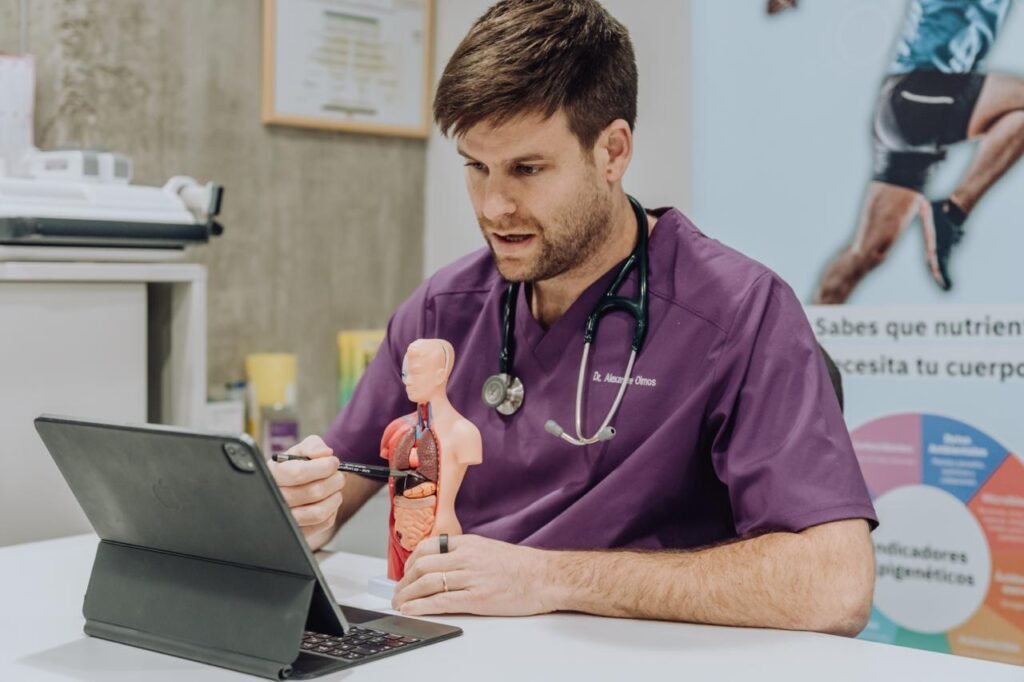
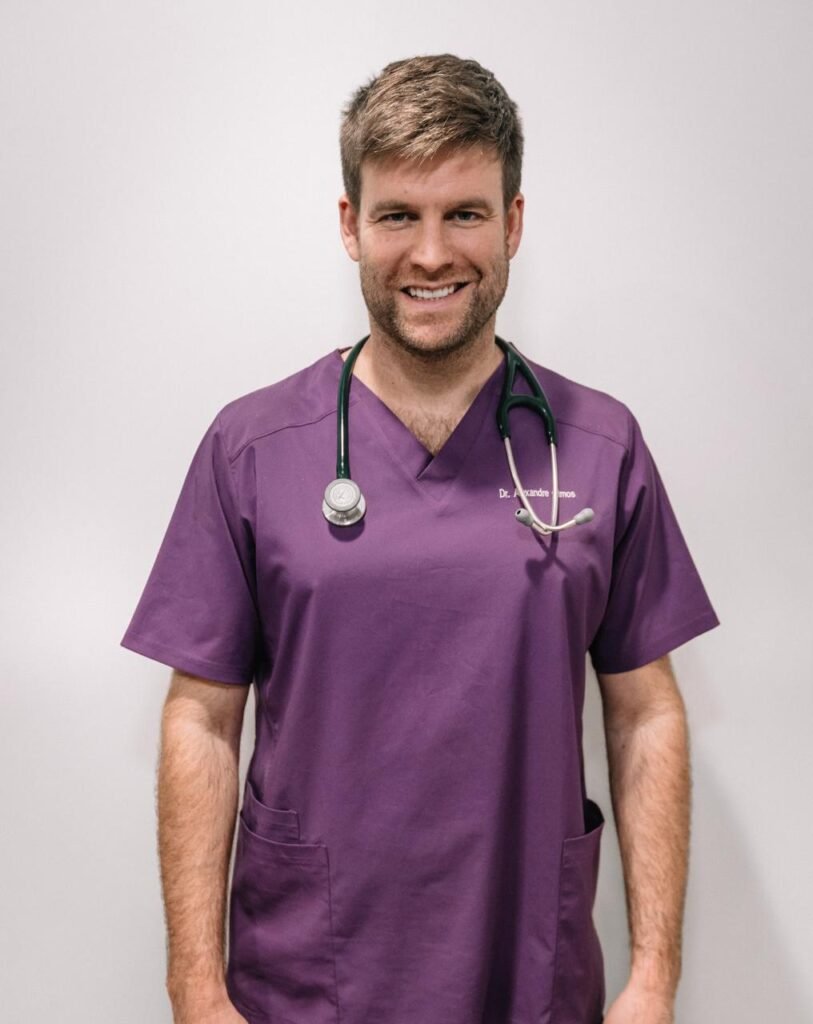
In a healthcare landscape dominated by treating disease once it has already manifested, preventive medicine, epigenetics, and performance optimization are emerging as a fundamental paradigm shift. To delve deeper into this approach, we spoke with Dr. Alexandre Olmos Torres, a specialist in Internal Medicine trained at the Hospital Universitario Son Espases in Mallorca, with a Master's in Aesthetic and Anti-Aging Medicine and Sports Medicine, and training in ultrasound, who after years of hospital practice decided to pivot his career toward prevention, epigenetics, and longevity.
A radical shift: from hospital Internal Medicine to active prevention
Nadia Tresoro: To begin and give our readers some context, where do you currently practice medicine, and how was that transition from public healthcare to preventive medicine?
Dr. Alexandre Olmos: I was born in Castellón de la Plana and moved to Mallorca to complete my Internal Medicine residency at the Hospital Universitario Son Espases over five years. In parallel, I complemented my training with a Master's in Sports Medicine and ultrasound, venturing into private medicine focused on prevention and performance. The evolution was so positive that I ended up requesting a leave of absence after securing a permanent position at the hospital. I currently see patients in Mallorca and work online coordinating comprehensive health programs.
N.T.: How do you structure these remote health programs so that the patient doesn't have to continually travel to the clinic?
Dr. Alexandre Olmos: We have strategic collaborations with laboratories. For example, I integrated with the Holo health platform. Through this type of alliance, we manage to optimize and reduce costs, facilitating access to advanced laboratory testing (collaborating with networks like Echeverne nationwide). The patient goes to the nearest center or receives the microbiota, saliva, or stool kits directly at home so that a courier picks them up and sends them for analysis.
N.T.: If a patient has private health insurance, can they get these advanced tests through their policy?
Dr. Alexandre Olmos: We provide the invoice so the patient can try to manage reimbursement with their insurer. However, the reality is that the vast majority of conventional policies refuse to cover specific determinations, except for extraordinarily comprehensive high-end insurance plans. Traditional companies are constantly reluctant to cover microbiota tests, SIBO tests, or silent inflammation markers.
N.T.: Regarding microbiota, genetics, and epigenetics studies, which laboratories do you work with?
Dr. Alexandre Olmos: We work with ADN Institute, a Catalan laboratory with excellent infrastructure. With them, we perform microbiota analysis, as well as genetic, epigenetic, nutrigenetic, exome, and methylation profile studies. I don't like depending on a single laboratory for everything, but their work in this field is of a very high level. We collect blood, saliva, and stool samples depending on the patient's needs.
Listening to the body's signals before it gets sick
N.T.: In your channels and educational interventions, you place great emphasis on empowering the patient with autonomy. Why is it so hard for us to understand our own health status?
Dr. Alexandre Olmos: We are accustomed to two dangerous inertias: a traditional medicine focused solely on diagnosing diseases once they have already shown themselves, and the normalization of symptoms or pathological habits. As an internist, I constantly asked myself what was happening to those patients in whom we didn't diagnose any specific structural disease but who felt unwell. Too often everything is attributed to “stress” as something merely emotional, forgetting that stress generates a deep pathophysiological cascade in the body.
You have to know how to interpret the patient's picture before the pathology appears. Chronic low-grade inflammation is the previous phase. The body warns through fatigue, insomnia, hair loss, skin conditions, or digestive problems. If we don't listen to that silent inflammation, the disease eventually makes its debut. Our goal is to get ahead of it through precision testing, microbiota, and genetic profiles, addressing the case with nutrition, habit changes, targeted supplementation, and coaching.
N.T.: What are the fundamental pillars you apply to extinguish that silent chronic inflammation?
Dr. Alexandre Olmos: The process is progressive to avoid abrupt or traumatic changes, usually in three-month programs:
- Real, adapted nutrition: We correct the excess of ultra-processed foods, the dynamics of continuous five-meal eating, late dinners, or eating in a hurry in front of screens. We design a healthy diet adapted to the individual profile (addressing SIBO or candidiasis is not the same as a picture derived from stress).
- Stress management and emotional aspects: We break the stigma of mental health by incorporating coaching to become aware of emotional and biochemical triggers.
- Structured physical exercise: We prioritize strength training combined with aerobic exercise, adapting it progressively.
- Strategic supplementation: Only what is necessary and based on test results.
- Environment and rhythms: We regulate circadian rhythms and reduce exposure to endocrine disruptors.
It takes about 40 days to consolidate a habit. Once the patient internalizes the lifestyle and balances their markers, they don't require perpetual supplementation.
The challenge of chronic inflammation and methylation markers
N.T.: As someone dedicated to the wellness sector who exercises, watches their diet, and manages stress, I observe that there is often a silent inflammation accumulated over years that is hard to reverse with basic habits alone. Is lifestyle really enough in all cases?
Dr. Alexandre Olmos: There are two decisive factors here. First, many people believe they are doing things right when in reality there are undetected interferences. On one hand, there is the subconscious emotional sphere: unresolved traumas or situations that manifest in lab work as depleted cortisol levels, low intracellular magnesium, or altered hormonal axes, even though the patient claims to have moved past them. On the other hand, one's perception of their own diet sometimes differs from reality (as happens with omega fatty acid profiles).
Second, there are genetic and biochemical conditioning factors. A clear example is an altered or deficient methylation profile.
N.T.: Specifically regarding the inability or deficiency in the methylation pathway, how is it addressed through supplementation?
Dr. Alexandre Olmos: It depends on the affected pathway. If there is a blockage in the homocysteine route that causes its accumulation in the blood, B-group vitamins in their methylated form are essential. If the alteration affects the neurotransmitter pathway, providing a specific form of magnesium becomes crucial. That is why a prior epigenetic/genetic study is indispensable to indicate the exact supplement.
Advanced therapies: Ozone Therapy, Inusferesis and Serum Therapy
N.T.: When do you recommend resorting to intravenous or advanced therapies such as ozone therapy, inusferesis, or serum therapies?
Dr. Alexandre Olmos: At the online level, we do not apply these treatments. In fact, we are developing a new in-person clinic project in Mallorca focused 100% on longevity and integrative medicine, separating it from the purely sports-related side. In this space we will have ozone therapy, advanced serum therapy, and inusferesis (a procedure for which I trained and obtained specialized certification in Switzerland).
However, we must be realistic about two factors:
- Therapeutic hierarchy: First, the foundation of lifestyle must be solidified. If the foundation is not corrected, advanced therapy loses effectiveness. Most patients improve by optimizing the foundation; those who do not are part of a minority with complex predispositions who will indeed require these more profound interventions.
- Economic investment: These are treatments that vary according to technological complexity. Serum therapies or ozone therapy fall within ranges of a few hundred euros per session, while procedures such as advanced therapeutic apheresis involve a greater investment due to the filtration technology used. We also design premium, comprehensive medical programs of deep intervention that include complete logistics, accommodation, stress tests with hypoxia, body MRIs, and advanced intravenous therapies for a very specific patient profile.
N.T.: For the general public, what is the entry-level investment to undertake a health program with you?
Dr. Alexandre Olmos: Our most accessible and financeable program for a three-month medical accompaniment. It includes a complete high-precision analytical panel, microbiota study, nutritional intervention, medical assessment, and close, continuous follow-up via WhatsApp to make real-time adjustments. Once the quarter is completed, patients gain access to a special discount regimen for their check-ups or follow-up consultations.
Prevention analytics vs. routine analytics
N.T.: What differentiates a conventional analytics panel from a precision analytics panel in preventive medicine?
Dr. Alexandre Olmos: Public healthcare or occupational health check analytics measure about 50 basic parameters and an electrocardiogram, which is insufficient for active prevention. In our practice, we analyze markers of inflammation and deep metabolism:
- Inflammatory and methylation profile: High-sensitivity C-reactive protein (hs-CRP) and homocysteine.
- Intracellular nutrients and immunity: Intraerythrocyte magnesium, vitamin D3, coenzyme Q10, and glutathione reductase.
- Metabolic health: Fasting insulin and HOMA index.
- Advanced lipid profile: Omega fatty acids, Apolipoprotein B (ApoB), Lipoprotein(a), and LDL subfractions.
- Other markers: Interleukin 6 (IL-6), methylmalonic acid, heavy metals, and immunoglobulins.
These are high-precision analytical panels, which is why the medical task consists of meticulously selecting what to measure each year according to the person's real needs.
Education, photobiomodulation, and the future of peptides
N.T.: To conclude our talk, where do the main shortcomings of the current system lie so that real prevention is within everyone's reach?
Dr. Alexandre Olmos: It all comes down to education. If from childhood we were taught the importance of healthy habits, and if in medical school prevention and the pathophysiology of lifestyle were promoted with the same intensity as pharmacology, the landscape would change drastically. Today, a leaflet of generic recommendations is often handed out without going deeper. A doctor must understand that if a patient with digestive complaints tests normal, it doesn't mean they are “crazy” or have a primary somatic condition, but rather that they may have intestinal dysbiosis or an alteration of the gut-brain axis that requires nutritional intervention or coaching. It's a shame that solid preventive interventions are sometimes labeled as “witchcraft” or “lack of evidence.”.
N.T.: Among emerging optimization technologies, what is your vision on photobiomodulation, sauna, and halotherapy?
Dr. Alexandre Olmos: Red light (photobiomodulation) as an anti-inflammatory agent seems extraordinarily interesting to me. Similarly, sauna offers overwhelming cardiovascular benefits. In the new clinic, we will incorporate chambers that combine photobiomodulation with halotherapy (sea salt), which offers an excellent impact at the pulmonary level and in the regulation of the immune system. These are tools that should be part of optimization habits.
N.T.: Finally, a highly debated topic today: peptides and GLP-1 analogs. What is your professional stance?
Dr. Alexandre Olmos: We must clearly differentiate two areas. On one hand, officially approved drugs such as tirzepatide and semaglutide, which when well indicated are powerful tools. On the other hand, the wide range of peptides that are marketed without regulation or approval in Spain. In the United States, there is greater experience and accumulated evidence in humans in areas where here we are still in a “gray zone.” Using peptides not legalized in Spain entails an undesirable legal risk in the event of any complication. It is a field with enormous potential that will gradually be regulated over time, but we must always act within the regulatory framework and under maximum medical safety.