Longevity has become one of the most competitive - and most profitable - territories in contemporary medicine. However, under this apparently universal word coexist two radically different ways of understanding what it means to live longer and better. While the West has constructed a model based on constant optimisation of the organism, Asia - through traditions such as the Traditional Chinese Medicine and Ayurveda- still holds a much quieter, less spectacular and probably more uncomfortable idea: longevity is not induced, it is cultivated.
This difference is not theoretical. It manifests itself in clinical practice, in treatments, in the relationship with the body and, above all, in the dependence - or independence - that each system generates.
In Europe, the rise of longevity clinics has redefined the concept of health. It is no longer just about avoiding illness, but about continuously improving biological performance. A number of centres and clinics have sophisticated this idea to the point of becoming a measurable and replicable experience: sessions of cryotherapy, hyperbaric oxygenation, intravenous serum therapy, photobiomodulation. Interventions designed to produce an immediate, perceptible, almost tangible effect.
The result is usually as expected. Higher energy, less inflammation, greater mental clarity. But this effect has one essential characteristic: it is not stable. As the days go by, the organism tends to return to its starting point, which introduces a dynamic of repetition. Not necessarily because of chemical dependency, but because of something more subtle: a functional dependence on external stimuli.
Well-being ceases to be a property of the biological system and begins to behave as an induced condition. Instead of strengthening the body's ability to self-regulate, its response is optimised under intervention. In the short term, the model works accurately. In the long term, the question remains open: whether this continuous optimisation actually prolongs life or whether, on the contrary, it progressively displaces physiological autonomy.
This logic is not unique to a particular clinic. It is part of a global trend in which longevity has become a service, with protocols that are repeated with slight variations in different cities, countries and brands. Medicine becomes modular; the body, adjustable.

However, when looking at the Asian picture, the structure changes.
Centres such as RAKxa Integrative Wellness show the extent to which Asia has integrated modern medicine without abandoning its traditional conceptual framework. Their programmes combine advanced clinical analysis with acupuncture, energy therapies and internal regulation strategies. There is no rejection of technology, but neither is there subordination to it.
This integration has deep roots. Institutions such as the China Academy of Chinese Medical Sciences, research reference in traditional medicine research, or the National Institute of Ayurveda in Jaipur, have spent decades developing models where longevity is not approached as an intervention on the body, but rather as a a process of sustained equilibrium. Even the Indian institutional framework, articulated through the Ministry of AYUSH, reinforces this integrative vision between tradition and contemporary science.
What differentiates these systems is not so much the type of treatment as the logic that articulates them. In Traditional Chinese Medicine, health is understood as a dynamic balance between internal and external forces, where concepts such as Qi or the Yin-Yang relationship describe functional processes rather than anatomical structures. The intervention does not aim to continuously stimulate the organism, but to restore its capacity for self-regulation.
Ayurveda, on the other hand, introduces an even more radical idea to Western thought: the disease does not appear suddenly, but as a consequence of a progressive imbalance between the doshas., The longevity of the body, metabolism and vital rhythms. Longevity, in this context, is not about adding years, but about avoiding sustained deterioration.
This translates into completely different strategies. In contrast to ad hoc, technified intervention, Asian systems prioritise the repetition of habitsPersonalised nutrition, strict circadian rhythms, digestive regulation, emotional management. They do not seek to generate peaks of well-being, but to avoid falls.
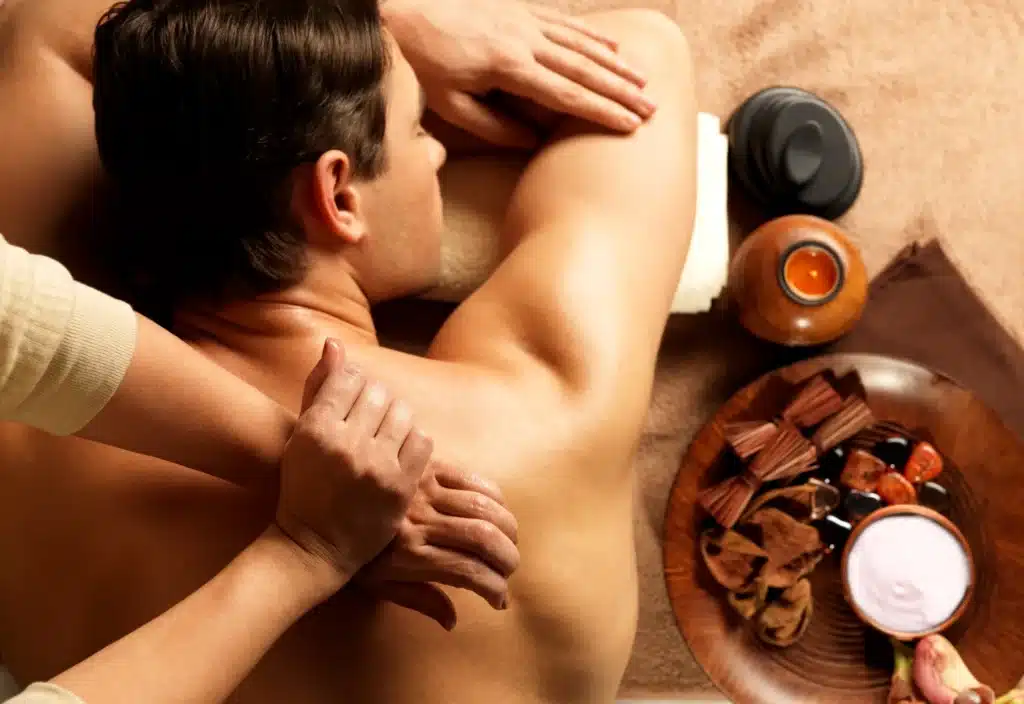
Even in the area of supplementation, the difference is clear. While the West tends to isolate compounds and correct specific deficits - magnesium, omega-3, NAD+, vitamins - the traditional systems use complex combinations of plants, adapted to the overall pattern of the individual. The question is not what is missing, but what internal relationship needs to be adjusted.
This does not mean that one model is inherently superior. Both have clear limitations. Western medicine offers diagnostic accuracy, quantifiable evidence and the capacity for rapid intervention. Traditional medicines provide context, personalisation and a broader understanding of physiological balance, although many of their practices still lack robust scientific validation in Western terms.
The crucial difference appears in the type of relationship each model establishes with the body.
The biohacker approach tends to externalise wellbeing.the organism functions better under stimulus. The traditional approach requires internalisation: the organism must learn to sustain its equilibrium. In one case, continuity depends on intervention; on the other, on discipline.
Perhaps this is why the most profound contrast is not clinical, but philosophical. The West has redefined longevity as an experience that can be optimised. The East continues to treat it as a consequence of living in balance for long enough.
At that point, the question ceases to be which therapies work best and becomes another, much more uncomfortable one: whether we are extending life or simply enhancing the feeling of being alive.
The future will probably belong to neither extreme. The trend is towards hybrid models where technology enables measuring and adjusting, while traditional practices teach sustaining. Indeed, this process is already underway, both in European clinics incorporating circadian regulation and mindfulness and in Asian centres integrating biomarkers, genetics and advanced medical monitoring. Even in this convergence scenario, the difference in origin will continue to lead the way.
There is an idea that separates the two worlds and that no technology has yet managed to solve: the human body is not designed to remain constantly at its best, but rather to adapt.
And between optimising this adaptation or replacing it with continuous intervention is probably the true meaning of longevity.
(Royalty-free photos, provided for distribution))