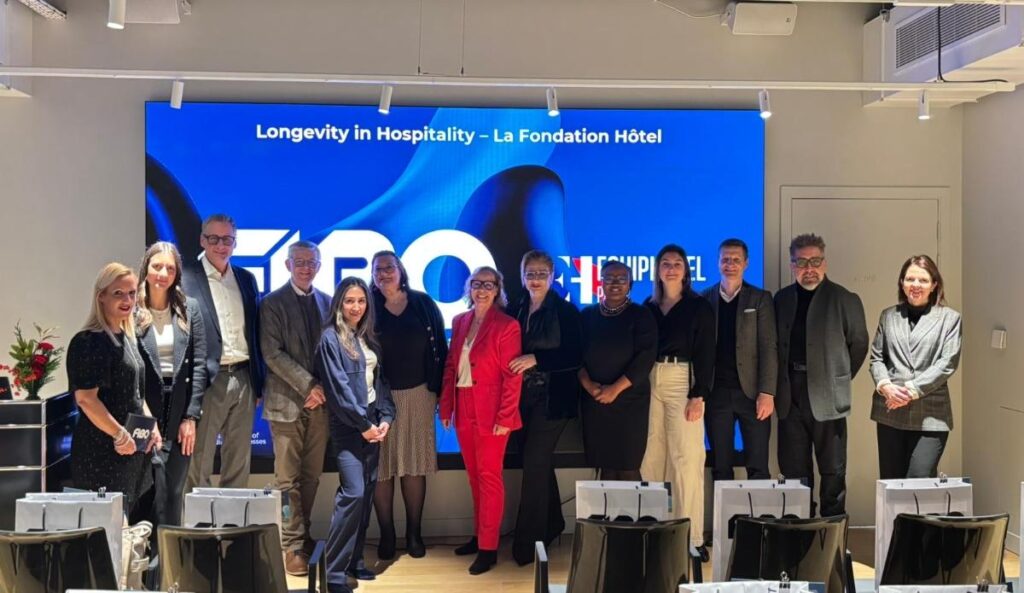
Longevity has become one of the main strategic axes of the wellness and hotel sector. With the aim of analysing its real impact on the design, investment and operation of establishments, FIBO and its parent company RX recently organised a high-level seminar under the title Longevity in Hospitality.
The meeting took place in The Foundation, a new generation wellness hotel in Paris, specifically designed to integrate wellness, work and social life. The space features a climbing wall, gym, swimming pool, spa and modern coworking and training areas, making it a tangible example of the new hotel paradigm oriented towards long-term health.
Held in December, the event was hosted by Anke Brendt, project manager of FIBO, and Michael Köhler, RX Germany, and was presented by the international consultants Andrew Gibson y Franz Linser, two benchmarks in wellness and hospitality strategy.
What longevity in a hotel really means
Andrew Gibson opened the day by stressing that implementing longevity in hotels is a complex process, but that it must start from the essentials: clean air, good sleeping conditions, access to green spaces and the accompaniment of qualified experts..
His definition of longevity is based on three fundamental pillars:
- Community
- Agility
- Nutrition
“The best wellness or longevity retreats have waiting lists of up to 12 months, because people book and rebook. That's community,” Gibson said.
With regard to the agility, He explained that it can no longer be limited to the traditional concept of fitness: “It's not just about cardio and strength. It also includes cognition, reaction time and functional abilities.
The nutrition, It includes the restoration of the body: recharging, refreshing, relaxing and recovering. All these concepts are part of nutrition.
Gibson added an unusual key element to this debate: “Nourishment is also about curiosity. Hotels should be designed to inspire, spark interest and nourish the brain through education and experience.
Designing longevity from the start, not as an add-on
One of the strongest messages from the meeting was the need to integrating wellness and longevity from the conceptual phase of a project, and not as a last-minute add-on.
Gibson explained that he is often approached to advise on hotel developments when the infrastructure is already in place, which prevents him from integrating key aspects such as movement into the architecture or bedrooms designed to promote a truly restful night's sleep.
“You have to start from the concept. Otherwise, you are trying to apply the pillars of wellness to a hotel that already exists, and that is not optimal”.
Hospitality as the basis of any longevity strategy
Franz Linser reinforced this idea by reminding us that the essence of hospitality - empathy, good food, quality rest and socialisation - can and should be at the core of any longevity strategy.
He explained that a one-week stay can be completely transformed if the guest has access to medical experts, psychiatrists, physiotherapists or mental and physical health specialists, The new technologies are a real added value compared to everyday life.
How longevity is implemented will depend on the resources of each operator:
- Some will invest large sums in advanced medical equipment.
- Others will opt for a more holistic approach, prioritising nature, deep rest and biological rhythms.
During the meeting, Linser shared a reflection he heard in the Global Wellness Summit:
“Many people are not really sick, but poorly rested and overworked”.
This generates a false perception of hyperproductivity, when in reality there is a inability to recover and relax, as well as low resilience to stress.
Ambition, standards and return on investment
Linser also stressed that it is no longer sufficient to meet minimum standards: “Below 30 % of humidity in a room, it is not possible to sleep well”.
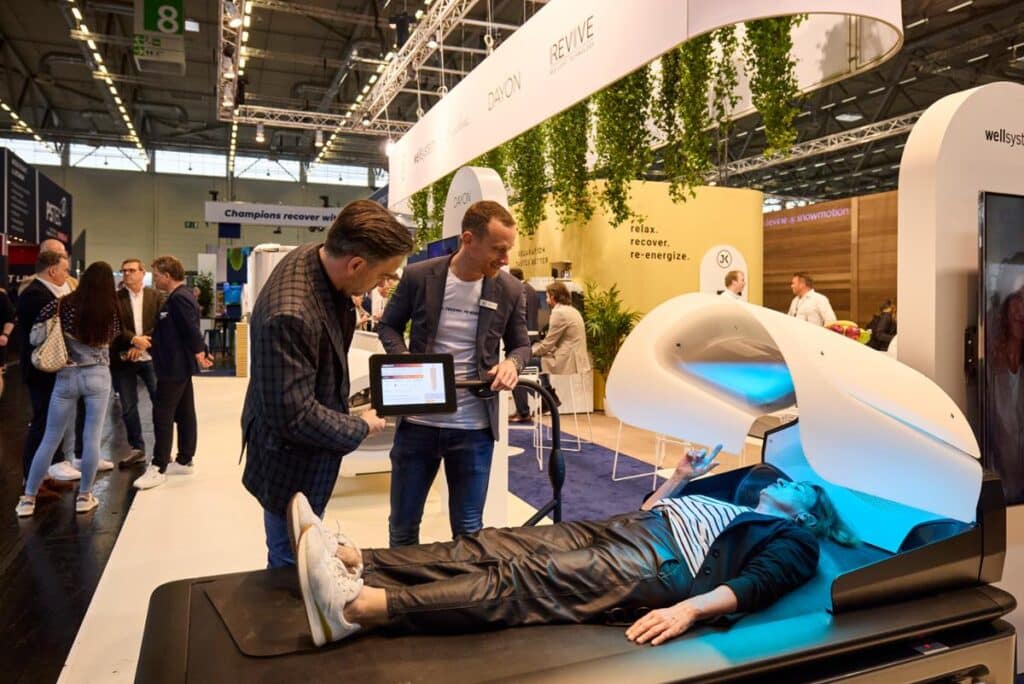
Andrew Gibson added that investment in longevity technologies - such as hyperbaric chambers or other medical interventions - should be carefully evaluated in terms of length of stay and risk of obsolescence.
“If guests only stay for one day, they are unlikely to use these services. If they stay for a week, the equation changes completely”.
As an example, he cited his work in Sensei Resort (Hawaii), where the longevity proposal is more based on personalised programmes and expert accompaniment than in large volumes of equipment, which is highly valued by customers with high purchasing power.
Architecture, business models and real opportunities
The event was also attended by Alexandre Pierat, from Suprem Architectures, who presented luxury projects in wellness and longevity under the approach of “From wellness to longevity: rethinking the role of architecture”.”.
For its part, Régis Boudon, SVP Creative Development at BBSpa, He analysed whether spa longevity is a real opportunity or a fad. He recommended carefully assessing the costs, especially those related to specialised medical staff, which increase both operating expenses and payback time.
Boudon identified a “sweet spot” for hotels:
- Investment: 250.000 - 700.000 €
- Ideal surface: 350 m²
- Break-even point: 12-18 months
As a practical example, he presented a four-star hotel in the south of France which, after investing 380.000 €, launched a four-day metabolic health programme with a price tag of 1,650 per person, with excellent results.
The wellness customer - more profitable and more loyal
The day concluded with a round table discussion moderated by Emily Whigham (FIBO), with the participation of Andrew Gibson, Marion Gérent (managing director of La Fondation) and the Dr. Katharina Sepp, of the Alpinresort Sacher.
Gibson noted that guests who use spas:
- spend more on catering,
- stay for a longer period of time,
- and are more profitable for the hotel.
The consensus was clear: the current priority is the healthspan, to live longer with quality, autonomy and without limitations.
“We don't want to be a hospital,” Dr. Sepp explained. “Too many medical tests can make you feel sick when you're not. We want to give people the opportunity to do positive things for their health.”.
Longevity is not a passing fad, but rather a natural evolution of wellness and hospitality. To be viable and profitable, it requires strategic vision, intelligent design, consistent investment and, above all, a deep understanding of the real needs of the contemporary guest.
The final message was clear: longevity is a great opportunity for the sector, provided it is approached with planning, ambition and common sense..