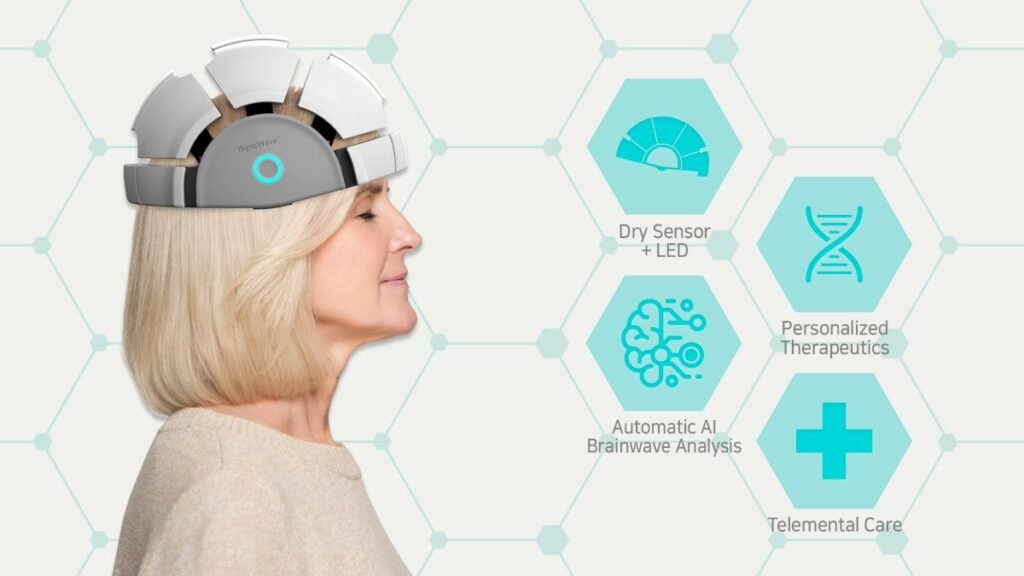
A new platform developed in South Korea integrates a 19-channel EEG, QEEG analysis, heart rate variability measurement, and transcranial photobiomodulation with infrared light into a single device. The proposal offers something particularly interesting for preventive medicine and clinical wellness: measuring brain activity, personalizing the intervention, and measuring again to verify what has changed.
The brain is one of the great remaining frontiers of preventive medicine. We know how to measure blood pressure, glucose, body composition, cardiorespiratory capacity, and certain blood biomarkers with relative ease. Obtaining a functional snapshot of brain activity is considerably more complex.
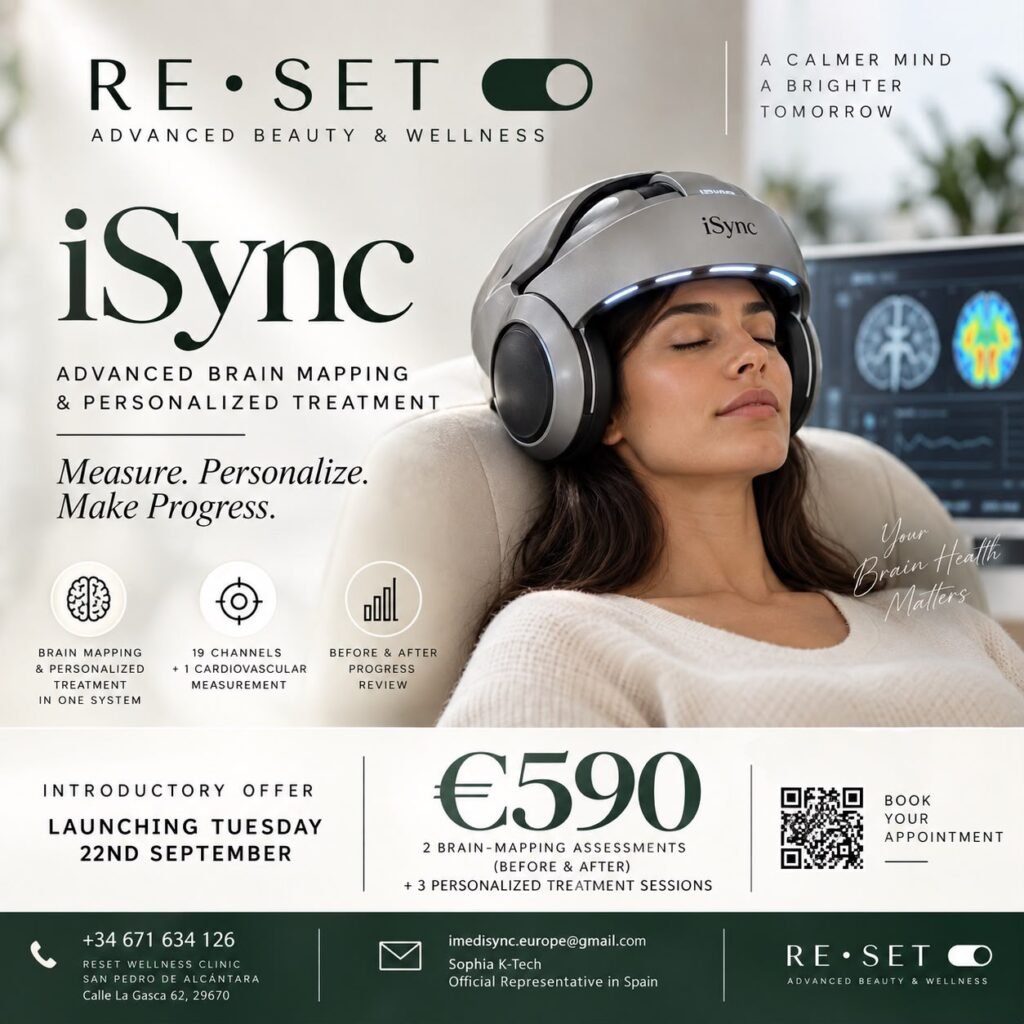
This is where iSyncMe comes in, a technology developed by the South Korean company iMediSync that is now arriving in Spain. The system uses a wireless headset with dry electrodes to record 19 channels of electroencephalography (EEG), incorporates heart rate variability measurement via PPG, and adds 850-nanometer infrared light emitters for transcranial photobiomodulation, known as tPBM.
The proposal follows a simple logic: measure, analyze, intervene, and measure again.
The manufacturer has also developed iSyncBrain, an analysis platform that processes EEG signals and generates quantitative maps of brain activity. The goal is to compare results against normative databases and use them as a complementary tool for individual assessment.
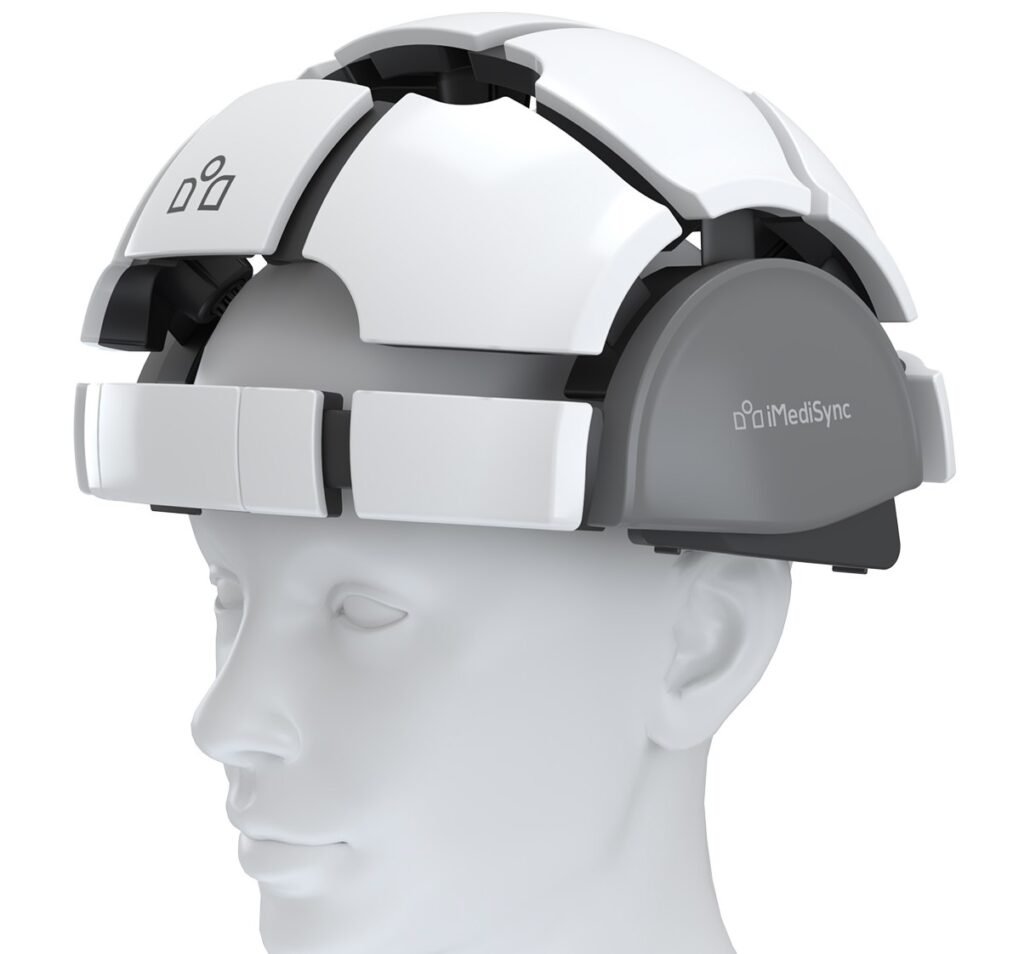
A QEEG is not an MRI, it does not allow you to “see” the brain anatomically, and it does not read thoughts. It records electrical brain activity from the scalp and applies mathematical analysis to those patterns. The patient-facing documentation itself warns that brain mapping can support a professional assessment, though it does not replace a medical diagnosis.
What sets iSyncMe apart is integrating measurement and intervention into the same workflow.
First, electrical brain activity is recorded. Then the data is analyzed and, according to the approach proposed by iMediSync, certain photobiomodulation parameters can be selected based on the assessment and the individual's goals. After a program of sessions, the EEG and HRV can be repeated to look for objective changes.
Photobiomodulation uses low-intensity red or near-infrared light. In the case of iSyncMe, the emitters operate at 850 nm. The biological hypothesis is compelling: certain wavelengths can interact with cellular processes related to mitochondrial energy metabolism, blood flow, and neuronal activity.
A systematic review published in 2025 analyzed 45 studies on transcranial photobiomodulation, including 27 human studies and 19 randomized clinical trials. The authors found evidence of effects on neural oscillations and favorable outcomes related to blood flow, metabolism, and cerebral oxygenation.
Another systematic review focused on sleep, wakefulness, and cognition found favorable signals across different populations and proposes mechanisms related to mitochondrial activity and cerebral circulation. The review itself, however, positions the field as a line of research still in development.
Cognition is another area that has been studied. A review and meta-analysis published in 2025 gathered randomized clinical trials on photobiomodulation and cognitive function, finding favorable results in certain parameters.
The heterogeneity between studies and protocols remains a significant limitation, and there is an important reason to maintain some caution: there is no single universal protocol for brain photobiomodulation.
Wavelength, power, irradiance, fluence, duration, session frequency, application areas, and the characteristics of the studied population all vary. A specific review of brain PBM devices identified 97 studies and enormous diversity in the technical characteristics of the equipment and their treatment parameters.
Therefore, the existence of evidence for transcranial photobiomodulation does not automatically mean that any device, any dose, or any program will produce the same results. That nuance is especially important in a technology that arrives on the market accompanied by concepts such as neuro-wellness, longevity, cognitive optimization, or brain health.
What makes iSyncMe stand out?
Here it is worth separating three levels.
The first is the ability to measure EEG. iSyncWave obtained FDA 510(k) clearance in the United States in 2022 as a Class II electroencephalograph. The official FDA documentation identifies the product as a Full-Montage Standard Electroencephalograph.
The second is the technical ability to integrate EEG, HRV, and photobiomodulation. It is precisely this architecture that differentiates the system from a conventional phototherapy headset: the device can first generate physiological information and use it as part of an individualized protocol.
The third is far more delicate: demonstrating that iSyncMe's specific protocol improves a given disease or symptom.
The documentation provided by the company mentions research applications related to cognitive impairment, dementia, depression, addictions, autism, stroke, and brain trauma. However, these research areas should not be interpreted as a demonstration that the device diagnoses, cures, or treats those conditions. The patient guide itself expressly establishes that caution.
There is also a study published in 2026 that is particularly interesting. Researchers at Yonsei University studied transcranial photobiomodulation, using the iSyncMe device, in adults with subclinical alcohol consumption. The group that received tPBM showed a significant reduction in craving. The study included 60 participants and used 15-minute sessions, five times a week for five weeks. The result is interesting, although the design was open-label and did not include a sham light group (sham), so it does not allow the result to be considered a definitive demonstration of efficacy.
This distinction between evidence for the technology and evidence specific to the device for a particular indication is fundamental.
Is it safe?
According to the available literature, transcranial photobiomodulation has a generally favorable short-term tolerability profile.
A randomized trial published in 2025 studied different doses of tPBM in 31 participants. It found no statistically significant differences in the occurrence of adverse events or significant changes in weight or blood pressure between the different conditions studied. The authors rated the side effect profile as favorable.
That allows us to speak of good tolerability in the available studies, not of an absolute absence of side effects.
The iSyncMe guide itself mentions that some people may experience mild headache, fatigue, dizziness, changes in sleep, or transient discomfort. It also sets out situations that require prior assessment, including a history of seizures, certain neurological or psychiatric conditions, pregnancy, eye problems, photosensitizing medications, or implanted electronic devices.
The technology is non-invasive, it does not use needles or electrical discharges and employs non-ionizing infrared radiation, characteristics that explain much of its appeal.
The potential for a clinic
For a medical clinic, neuroscience center, preventive medicine or advanced wellness practice, the interest of iSyncMe also lies in the care model.
A quantitative EEG can provide an additional layer of information in a professional assessment. HRV adds information about autonomic regulation. The ability to repeat measurements introduces something particularly interesting: objective monitoring.
Instead of simply asking the patient whether they sleep better, feel more focused or perceive less stress, the professional can combine that subjective information with physiological measurements before and after the program.
That does not turn QEEG into a universal marker of brain health nor does it by itself demonstrate that an observed change in the brain map is clinically relevant. It does allow for building more structured monitoring.
For a medical center, the opportunity lies in integrating the technology within a professional protocol and not presenting the brain map as an automatic diagnosis.
iMediSync's own commercial documentation proposes using the platform to create brain wellness programs, conduct pre- and post-intervention monitoring and facilitate remote delivery.
Can the patient continue treatment at home?
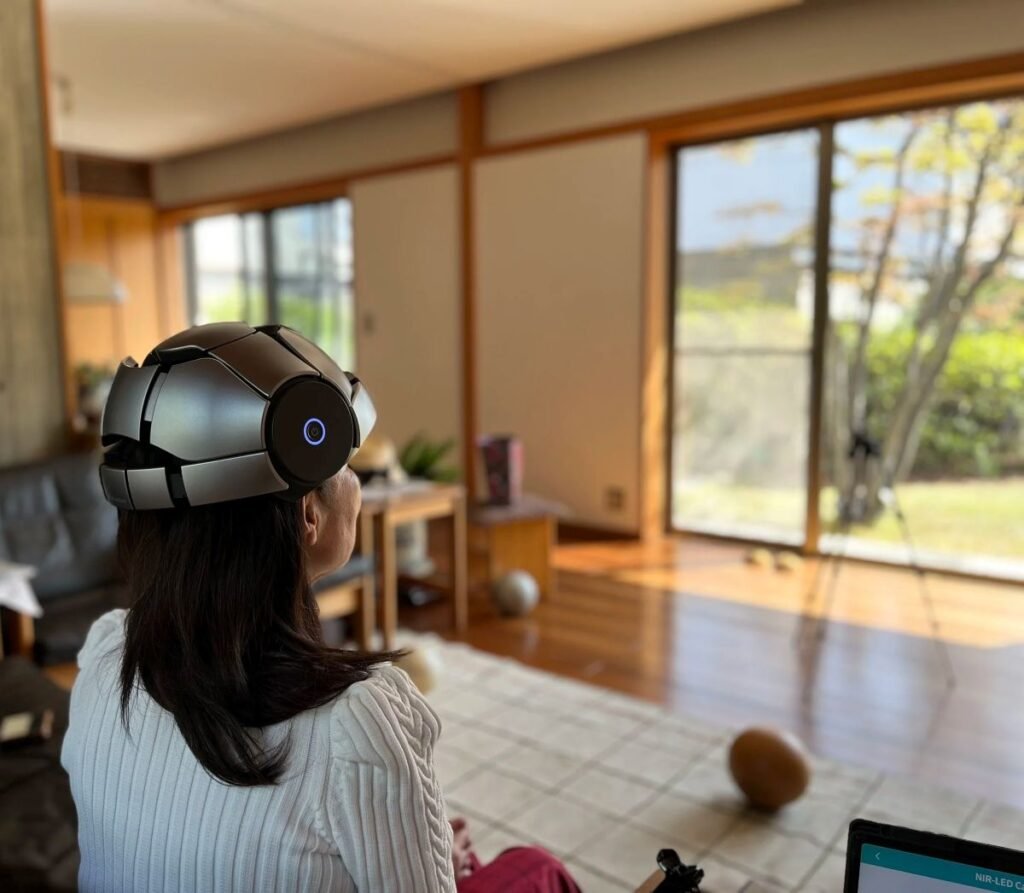
Yes, that possibility exists within the model proposed by iMediSync, although it should be understood as supervised continuity, not as a license to self-treat any neurological problem.
The company's documentation contemplates a remote care model and states that certain patients can self-administer treatment at home, while the professional reviews the data and adjusts parameters through virtual consultations.
The idea is particularly interesting for treatments that require repetition. The patient can perform certain sessions at home and maintain contact with the professional who established the protocol.
From a clinical standpoint, the value of this approach depends precisely on supervision: appropriate patient selection, correctly defined parameters, tolerability monitoring and periodic reassessment.
The longevity and brain wellness market is full of technologies that promise to optimize the body. The conceptual advantage of a system that incorporates EEG and allows measurements to be repeated lies in attempting to introduce an objective variable into that narrative.
Its true usefulness will be appreciated if the technology is integrated into reasonable clinical protocols, with trained professionals, clear selection criteria, informed consent, defined objectives and repeated measurements. It will also be necessary to continue accumulating independent clinical trials that allow us to know which parameters work, for whom, at what dosage and for what objectives.
In other words: cerebral photobiomodulation has science behind it; iSyncMe incorporates an interesting technological architecture; specific clinical indications still need different levels of evidence depending on the objective.
That combination of technological enthusiasm and scientific prudence is precisely what makes its arrival in Spain interesting.
National debut in Marbella
iSyncMe can be seen and tested at national debut in Marbella on September 21 and 22, at RE·SET Advanced Beauty & Wellness, in San Pedro de Alcántara.
The presentation will allow attendees to experience the system directly, learn about the brain mapping process and receive information about the application of photobiomodulation.
To mark the launch, a special offer for patients and a program of free training aimed at doctors and professionals, an especially relevant opportunity for those who want to learn about the technology before deciding whether it could make sense within their clinical practice.
The device arrives from South Korea with a proposal that combines three fields that until now tended to be found separately: EEG-based functional neuroimaging, artificial intelligence analysis and cerebral photobiomodulation.
The technology is novel. The biological hypothesis has scientific backing. Initial tolerability is favorable. The monitoring possibilities are attractive.