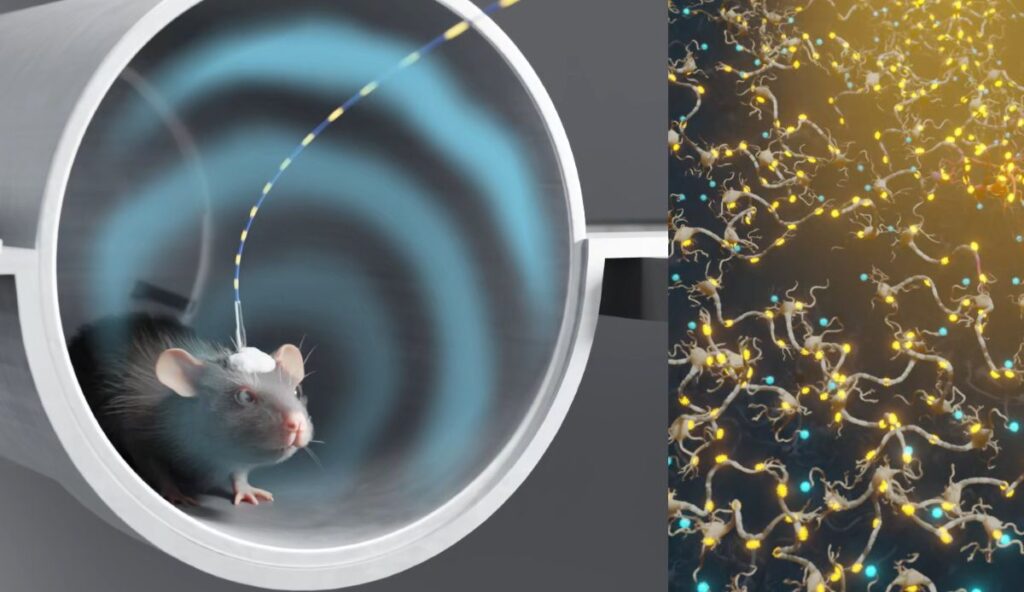
Neuromodulation has become one of the most fascinating areas of modern medicine. The ability to intervene in brain activity to restore lost functions, improve neurological symptoms, or even promote neuronal repair processes is no longer a futuristic hypothesis but a rapidly expanding scientific discipline.
However, many available technologies still face significant limitations. Reaching deep brain regions with precision, avoiding invasive procedures, and achieving selective stimulation of specific neuronal groups remain major challenges in applied neuroscience.
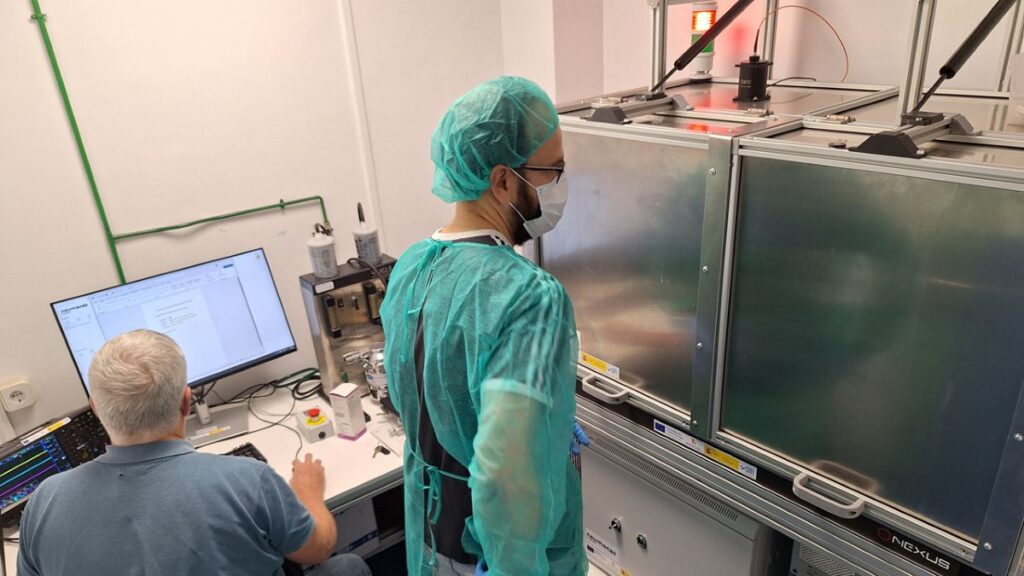
In this context, a development led by TECNALIA could represent a new step in that direction. The applied research and technological development center has presented Neumonas, an experimental prototype capable of modulating neuronal activity using nanoparticles activated from outside the body through light and magnetic fields, without the need for surgery.
The results obtained so far come exclusively from preclinical studies in animal models, but the project opens a particularly interesting line of research for conditions such as stroke or Parkinson's disease.
What is neuromodulation and why does it generate so much interest
The brain functions thanks to complex neural networks that constantly exchange electrical and chemical signals. When these networks are altered by a brain injury, a neurodegenerative disease, or a neurological disorder, certain functions can progressively deteriorate.
Neuromodulation precisely seeks to intervene in these circuits to modify their activity.
The most well-known current techniques include deep brain stimulation, which requires implanting electrodes through surgery, and non-invasive systems such as transcranial magnetic stimulation (TMS) or transcranial electrical stimulation (TES). Although they have demonstrated clinical utility in certain contexts, they present significant limitations related to depth of action, spatial precision, or the ability to reach specific brain regions.
For this reason, the search for new platforms capable of acting more selectively constitutes one of the major goals of contemporary neurotechnology.
Nanoparticles guided toward the brain
The Neumonas project proposes a radically different strategy. The system uses nanoparticles specifically designed to reach specific brain areas. Some are composed of gold and transform light energy into heat; others possess magnetic properties and convert external magnetic fields into thermal energy.
This controlled increase in temperature allows for activating selected neurons with a level of precision that, according to the researchers, could far exceed the capabilities of current technologies.
One of the most innovative features of the development is its ability to cross the blood-brain barrier, the sophisticated protective system that separates the bloodstream from brain tissue.
The blood-brain barrier constitutes one of the main difficulties for treating neurological diseases. Although it effectively protects the brain from potentially harmful substances, it also prevents many drugs from reaching their site of action.
According to the researchers, the developed system allows opening this barrier temporarily, in a controlled and reversible manner to facilitate the arrival of nanoparticles at target regions.
Promising, but still preliminary results
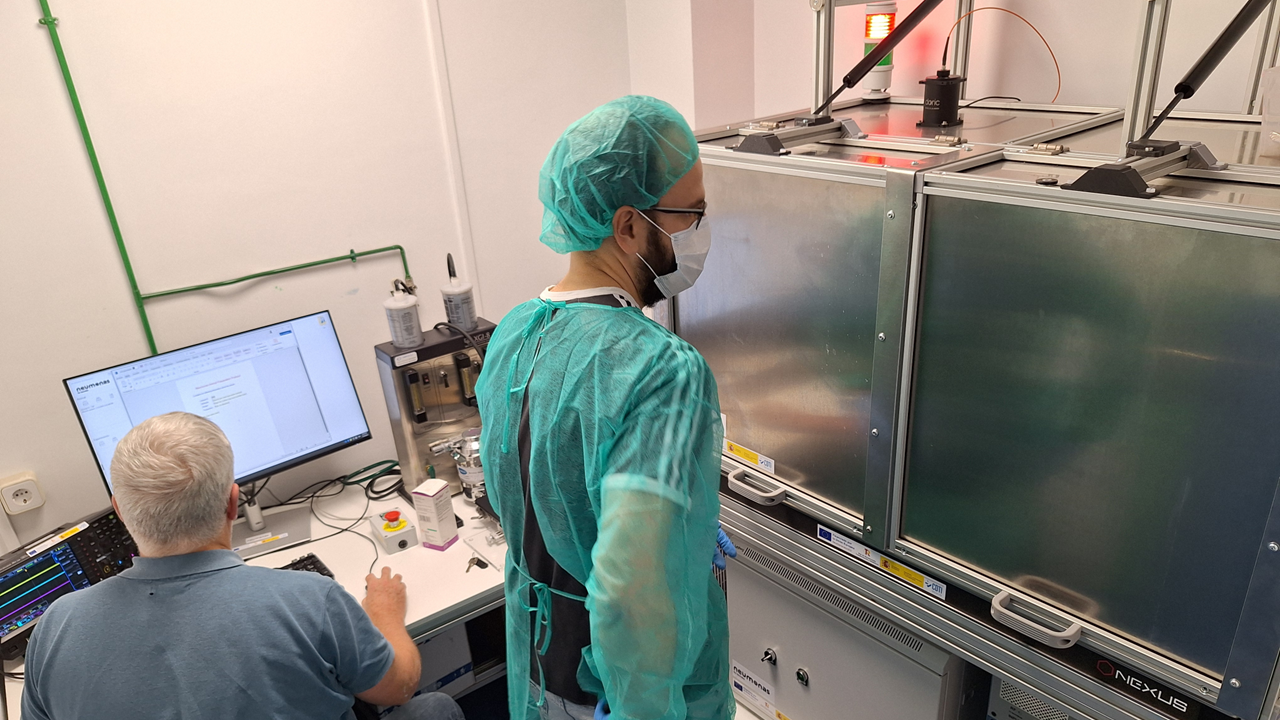
Experiments conducted in mice have shown results that justify the interest generated by the project.
In stroke models, neuroprotective effects were observed associated with a reduction in lesion volume and risk of cell death. In Parkinson's disease models, symptomatic improvements and an apparent slowing of disease progression were recorded.
These are relevant findings, but they should be interpreted with the caution that biomedical research demands.
The history of medicine is full of therapies that offered spectacular results in animals but later failed to reproduce the same impact in humans. Biological differences between species, the complexity of the human brain, and regulatory requirements make the journey from the laboratory to the clinic a long and extremely demanding process.
For this reason, current data should be considered a solid proof of concept, not a demonstration of clinical efficacy.
The big challenge: proving it works in humans
The next step for the project is to begin the transition toward clinical studies in humans.
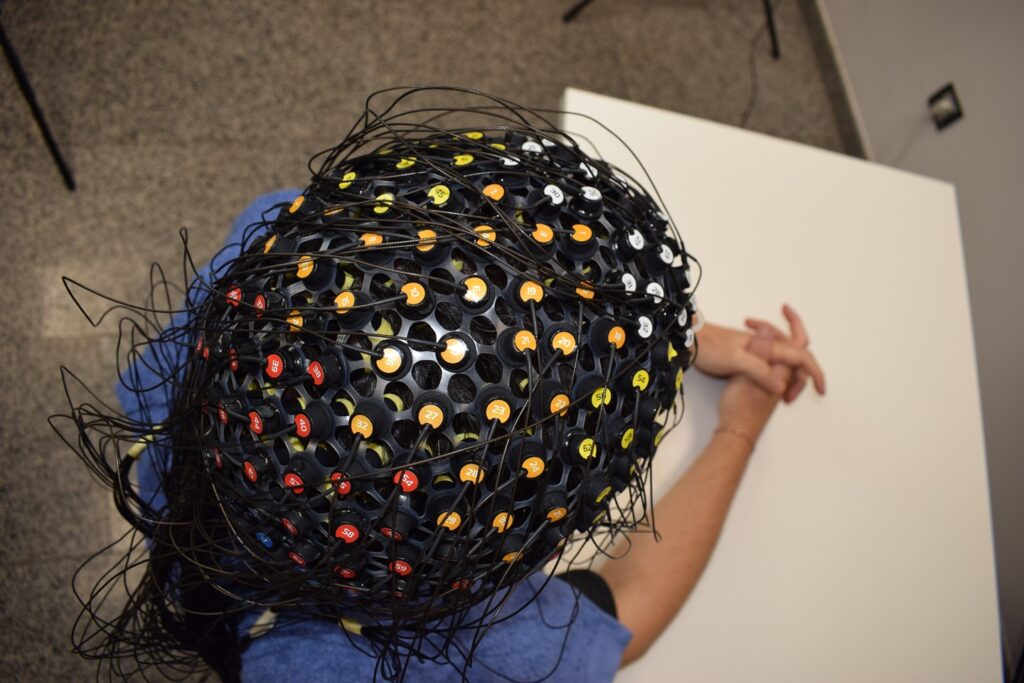
The good news is that part of the necessary infrastructure has already begun to be developed. The researchers have validated a monitoring system based on high-density electroencephalography capable of recording deep neuronal activity in patients with Parkinson's disease, facilitating real-time tracking of the effects of neuromodulation.
However, demonstrating the safety and efficacy of a technology of this complexity requires very significant investments.
Advanced clinical trials represent one of the most costly phases of any biomedical innovation. Recruiting patients, meeting regulatory requirements, manufacturing devices under clinical standards, and conducting long-term follow-ups involve investments of tens of millions of euros even before eventual health approval.
The search for funding thus becomes as important an element as the technological development itself. Without that financial backing, it is impossible to scientifically validate whether the results observed in animal models can translate into real benefits for patients.
A new generation of neurotechnologies
Beyond the specific results of the Neumonas project, this development reflects a growing trend within precision medicine: intervening in specific neural circuits with the least possible invasiveness.
The convergence of nanotechnology, neuroscience, materials physics, and computational intelligence is giving rise to tools that, barely a decade ago, belonged to the realm of science fiction.
It is still too early to know whether this platform will eventually become a clinical treatment for diseases such as Parkinson's or the aftermath of stroke. What does seem clear is that it opens a particularly attractive avenue of research within next-generation neuromodulation.
The coming years will be decisive. Only rigorous clinical trials can determine to what extent this technology maintains in humans the promising capabilities observed in the laboratory. If the results are confirmed, we would be looking at one of the most innovative approaches to modulating brain activity without surgery developed to date.
Behind this development is a broad scientific consortium coordinated by TECNALIA, in collaboration with Achucarro Basque Center for Neuroscience, Donostia International Physics Center, Centro de Física de Materiales, Fundación Biofísica Bizkaia, Bitbrain, the University of the Basque Country, and Clínica Universidad de Navarra. The project has brought together profiles from neuroscience, physics, nanotechnology, and biomedical engineering. Notable researchers include Ander Ramos, scientific lead of the project; Marek Grzelczak, whose team developed the nanoparticles; Maite Insausti, specialized in magnetic nanoparticles; Mónica Carril, responsible for nanoparticle functionalization; Aitzol Garcia-Etxarri, in charge of theoretical simulations; as well as Abraham Martin, Luis Montesano, and Maricruz Rodriguez, who have participated in preclinical validation and the development of monitoring systems intended for future clinical translation.