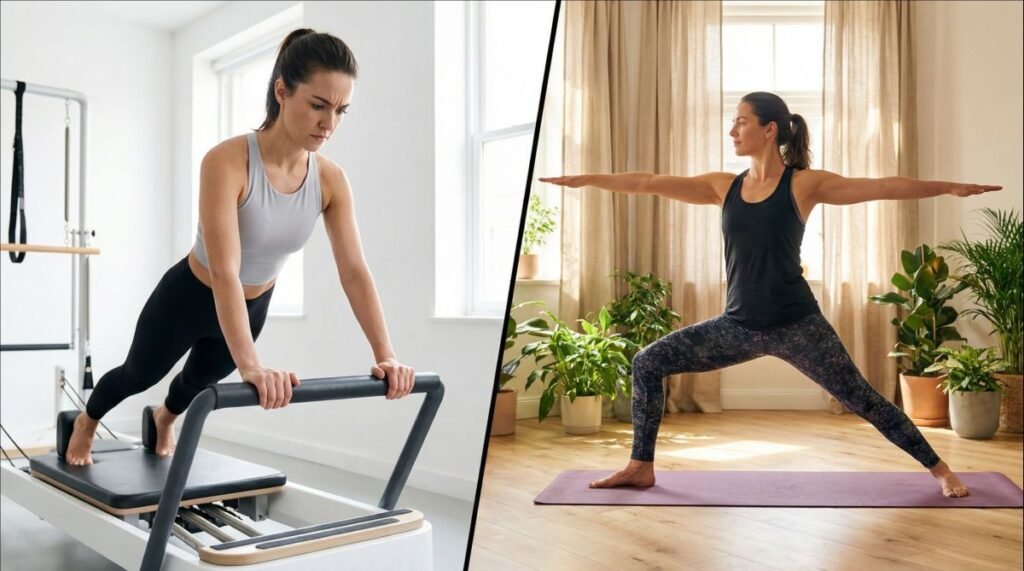
It is already being seen in many cities: there are more and more Pilates reformer, yoga and other similar discipline studios, even in neighborhoods that until recently didn't seem to have enough of an audience to sustain specialized establishments. Small spaces, aligned machines, small groups, app-based bookings and rates that sometimes far exceed those of a conventional gym. The phenomenon is reminiscent of coffee shops: there always seems to be room to open another one, even if several already exist just a few meters away.
Are we witnessing a transformation of exercise habits or a commercial expansion driven by a trend that has managed to associate exercise, aesthetics and lifestyle? And… do the benefits attributed to these disciplines really justify the price we are paying for them?
Pilates and yoga have proven physical benefits. Pilates improves core stability, coordination, balance and certain strength and flexibility capacities. Yoga combines mobility, balance, muscular work and breath control, with additional benefits for stress and some indicators of psychological well-being.
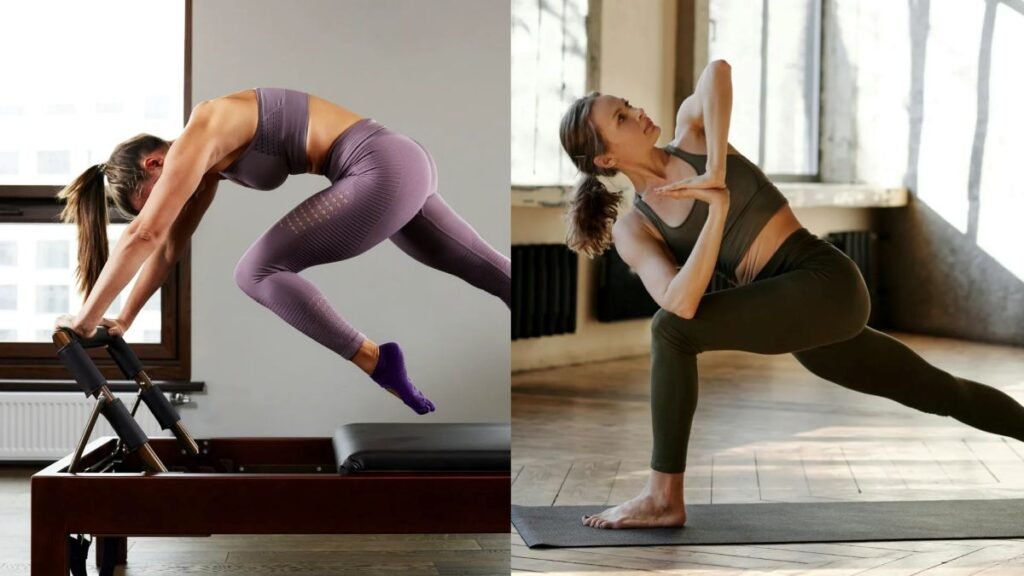
The doubt arises when they are presented as superior formulas to conventional exercise or as methods capable of achieving physical results that other activities do not provide.
The reality is that a good part of their benefits can be obtained through much more accessible activities. Swimming, brisk walking, cycling, doing gymnastics, weight training or mobility exercises allow you to work the same capacities, albeit with different stimuli and results.
Swimming, for example, provides excellent cardiovascular and muscular training with low joint impact. Strength training is especially important for preserving muscle mass and bone health, two fundamental goals as we age. Pilates can complement both, but does not necessarily replace either.
The World Health Organization recommends combining aerobic activity with muscle strengthening at least two days per week. It does not establish any discipline as superior to others. The choice should depend on goals, physical conditions and the ability to maintain a regular practice.
Therefore, paying 25 or 30 euros for a reformer session does not necessarily mean obtaining better results than training at a gym or swimming. It may mean receiving more personalized attention, working with specific equipment and enjoying a more attractive experience. These are different values and it is best not to confuse them.
Aspiration has also become a product
A significant part of the commercial success has to do with the transformation of exercise into a consumer experience. The studio no longer sells only an hour of physical activity: it sells atmosphere, community, exclusivity and belonging to a certain wellness culture.
Instagram and TikTok have contributed enormously to this construction. Minimalist spaces, perfectly aligned machines, coordinated workout sets and photographs of certain poses have created a recognizable aesthetic. Brands like Lululemon and Alo Yoga have managed to turn activewear into a lifestyle symbol.
This does not mean that all clients come for aesthetic or social reasons. Many seek to improve their mobility, recover from a sedentary period, reduce discomfort or find an activity they enjoy. However, it would be naive to ignore the weight of aspiration in a business that sells health, image and experience simultaneously.
The price also reflects that strategy. A specialized studio has costs for machinery, rent, maintenance and qualified staff. Small groups justify part of the difference compared to a conventional group class. Another part corresponds to brand positioning, decor, location and the added value that the consumer attributes to the experience.
How many studios can the market absorb?
Spain offers a particularly interesting context. The report by the Fundación España Activa and Deloitte puts the number of sports centers in the country at 9,480 in 2025, of which 5,806 are fitness centers. The sector still has a highly fragmented offer: 69% of fitness centers are managed by individual operators and 31% by chains.
Investor interest and business consolidation operations are growing, while specialized formats are gaining presence. The expansion of Pilates reformer is one of the most visible examples.
Club Pilates, belonging to the U.S. group Xponential Fitness, expects to reach 45 locations in Spain by the end of 2026, after having reached 40 studios during the year. The company already contemplates exceeding one hundred centers and expanding to cities beyond the traditional major markets. Its evolution shows that demand exists, although a franchise's expansion forecasts also respond to its own commercial objectives.
The market remains highly distributed among independent studios, small chains and gyms that incorporate these disciplines into their offering. However, there is a consolidation strategy around certain international brands.
Xponential is one of the most relevant groups internationally. Its portfolio includes Club Pilates, YogaSix, Pure Barre and StretchLab, among other brandsIn Spain it has currently decided to concentrate its bet on Club Pilates. Independent operators and national brands such as YogaOne also compete, in addition to new concepts that combine Pilates, strength training and barre.
The business has a particularity: a studio doesn't need to attract thousands of members to work. It can be sustained with a recurring clientele, small groups, and revenue per hour and per square meter higher than that of some traditional fitness formats. That economics explains why establishments can appear in areas with lower income than the neighborhoods where the expansion began.
But it also poses a risk. When several companies detect the same opportunity and open nearby locations, demand has to be shared. Loyalty to the instructor, service quality, class occupancy, and fixed costs will determine which businesses survive. Growth in openings does not guarantee that all of them are profitable.
Perhaps the most accurate comparison is with the hospitality industry. There are budget cafés, specialty establishments, and luxury venues. They can coexist because they serve different audiences and offer different experiences. fitness can also evolve toward that structure: affordable gyms for training on your own, specialized studios for those seeking attention and specific equipment, and premium clubs that incorporate additional services.
You can have expensive coffees out of pure preference or luxury, but in health the logic is different: it's that the consumer ends up paying a premium for a health promise that is not sufficiently justified.
There is also a question of professional quality. In Spain there is no single specific state accreditation for all Pilates instructors, y las formaciones privadas presentan diferencias importantes en duración y exigencia. En yoga conviven certificados oficiales de formación profesional y acreditaciones privadas internacionales. La preparación del instructor puede ser mucho más determinante para la seguridad y los resultados que la marca de la máquina o el diseño del establecimiento.
La expansión de estas disciplinas tiene fundamentos reales y responde a una demanda que probablemente seguirá existiendo. Sin embargo, el mercado tendrá que demostrar que puede mantener la calidad y la rentabilidad cuando desaparezca el efecto novedad.
El consumidor, por su parte, debería plantearse una pregunta bastante sencilla antes de contratar una cuota: ¿estoy pagando por una actividad que responde a mis necesidades físicas o por una experiencia que me gusta consumir? La diferencia puede representar bastante dinero a final de año. Y, desde el punto de vista de la salud, no siempre el ejercicio más caro es el más eficaz.